Kulik’s theory of a meteorite
The Siberian forests, too, are as impenetrable, as desolate, hostile and inaccessible as the tropical wilderness in Africa or South America. Until the 1917 Revolution of the Bolsheviks, led by Vladimir Ilyich Lenin (1870-1924), that toppled the Tsarist regime of the last Russian Emperor Nicholas II, leading to the establishment of the Soviet Union (1922-1991), fewer Europeans had ventured to enter them than had gone into the southern jungles. The Evenk people of the region were extremely primitive and superstitious and they were afraid of the place where Ogdy, god of fire and thunder, had come down from heaven to earth to destroy by fire all those who ventured there. After the blast, the villagers dashed out into the streets in absolute panic; some wept in terror, convinced that the end of the world had come. Russian mineralogist Leonid Alekseyevich Kulik (1883-1942), though self-taught and with no proper academic training, was inspired by the event, grasping the fact that the Tunguska affair was scientifically very important. In the spring of 1928 Kulik, after having hacked his way through the immeasurable fallen forest, reached the epicentre of the explosion: an open spot ringed with trees lying on the ground, all with their roots pointing in the same direction. He concluded that the awe-inspiring destruction was caused by a huge meteorite. Nevertheless, he did not come across any fragments of such a meteorite and neither did he succeed in finding the crater which must have been made. Vasili Sytin, one of his colleagues, formulated the most absurd of the 77 theories: that a very violent wind was the cause of the disaster, but Kulik adamantly clung to his belief that it must have been a meteorite. Finally, he assumed that fragments of the supposed meteorite would be found underneath 25 metres of frozen ground and marsh water must have filled the crater, but half a century later, it was clearly shown that the impassable swamp in the epicentre was a normal taiga formation. Prof. Vasiliy Grigorievich Fesenkov (1889-1972), the eminent Russian astrophysicist, admitted that the Tunguska catastrophe was not caused by a meteorite. The disturbance of such severity could not have been brought about by meteorites and the light phenomena that lasted three nights in succession in 1908 could not be due to any cloud of particles of a terrestrial origin.
Was it a comet?
Therefore, Prof. Fesenkov argued that a comet blew up above the taiga. This, in any way, was not a brand-new idea, since the American astronomer Fred Lawrence Whipple (1906-2004) had favoured this notion in 1930, supported by the Russian astronomer I. S. Astapovich. It was particularly the skies that were aglow during the nights of 30th June and 01st and 02nd July both in Siberia and Central Europe which were the major reasons for adopting the comet hypothesis. It was assumed that this glow could have been cast by the comet’s tail within the earth’s atmosphere. The periodic comet Encke orbits the sun every 3.3 years and it was in the vicinity of Tunguska on the date of the explosion. This comet was first recorded in 1786 by French astronomer Pierre François André Méchain (1744-1804) and its orbit was computed by German astronomer Johann Franz Encke (1791-1865). Yet, the hypothetical Tunguska comet cannot have been small in view of the fact that the energy released has been estimated today at 10²³ ergs at least (equivalent to about 30 million tons of TNT-fifteen hundred times as great as that at Hiroshima). If in 1908 a comet of that size had hit the earth a crater several kilometres across and hundreds of metres deep would have been made, but the swampy epicentre did not show any trace of such a thing. Another reason for rendering the comet theory highly questionable, has to do with ballistics. The felled trees proved beyond doubt that there were two shock waves: one before the explosion and the other after the object had burst. Russian aircraft designer A. Y. Manotskov, by means of electronic calculating machines and by reconstructing the flight as seen by eye-witnesses, proved that the “thing” slowed down its velocity, which at the moment of impact was 0.7-1 km per second in place of the usual 10-60 km per second for normal comets and meteorites. This comparably low velocity is close to that of modern supersonic jet aircraft and if it had plunged down at this speed-an insignificant one for planetary bodies-then according to the laws of aerodynamics, it would have needed a mass of one thousand million tons to bring about the destruction which has now been assessed and mapped. The remains of such a monster have not been found. Therefore, Prof. Felix Yurievich Zigel (1920-1988), an aerodynamics professor at the Moscow Institute of Aviation, also regarded as a founder of Russian ufology, threw away the comet theory.A guest from the cosmos?
In 1946, in the Russian magazine Vokrug Sveta (meaning Around the World), the science-fiction writer Alexander Petrovich Kazantsev (1906-2002), suggested that the Tunguska blast could have occurred when a spaceship from another planet, supplied with nuclear energy, tried to land in the Siberian forests. As this was a nuclear explosion nothing would have remained of the spacecraft, especially as it burst above ground, thus leaving no crater as such. According to the writer, this would explain why, right in the epicentre, some trees remained upright but dead whilst in other areas, trees were uprooted. Kazantsev’s theory was debunked by some scientists as being fantastic. But, in the terminal phase of the descent of the object, according to the most recent speculation, the object appears to have approached in an eastward direction, then changed the course westward over the region before exploding. The same opinion was reached by Zigel, who was involved in the training of many Russian cosmonauts. Based on the eye-witnesses’ accounts and the physical data, Zigel was convinced that the object, before it exploded, carried out a manoeuvre of which no natural object is capable. Thus, Zigel, together with the Russian rocket and aviation experts, supported Kazantsev in believing that the remarkable cylindrical object could only have been “an artificial flying craft from some other planet”. Sir Arthur Charles Clarke (1917-2008), the famous English science-fiction writer and futurist, who co-wrote the screenplay for the 1968 film, 2001: A Space Odyssey, which is regarded as one of the most influential films of all time, was a proponent of the meteorite theory, but ironically, his novel Rendezvous with Rama, set in the twenty-first century, focuses on a cosmic intruder entering our solar system, initially mistaken for an asteroid, but eventually discovered to be an interstellar craft. Clarke immigrated to Ceylon (now Sri Lanka) in 1956 to practise scuba driving. Nevertheless, the evidence of a vehicle from an advanced extraterrestrial civilisation, carrying travellers who were vapourised in a blinding flash of light, cannot be viewed as absolutely conclusive.Antimatter or black holes?
Another theory, put across in 1965, suggested that a small body of antimatter floating through space might have collided with the Earth. This accident produced gamma rays and an explosion. Scientists asserted that this would explain the absence of any residual material. In 1928, British scientist Paul Adrien Maurice Dirac (1902-1984), regarded as one of the most significant physicists of the 20th century, theorised that there must be a particle identical to the electron with a positive electric charge instead of a negative one. Four years later his theory was proved right in the laboratory. As soon as antimatter meets an atom of ordinary matter, they are destroyed, unleashing a destruction with an intense flash of light and violent radiation. The latest explanation was that a tiny “black hole” hit Siberia, passing through the entire earth and emerging in the North Atlantic. The concept of black hole, on the surface, appears to be vague and to many scientists the idea seems to have been directly lifted from science fiction. Yet some scholars, like the British physicist, mathematician and author John Gerald Taylor (1931-2012), the author of Black Holes-The End of the Universe?, have taken the subject seriously. In theory, a black hole forms when a massive star collapses at the end of its life cycle. It is a huge lump of matter that has shrunk so much that it has become invisible. Owing to its enormous density it generates gravity of such a magnitude that not even light could escape it. Taylor labelled a black hole “a bizarre object” and compared it to a “cannibal, swallowing up everything that gets in its way…” Russian experts of the Tunguska event have examined these new theories, but ultimately rejected them on the basis that they did not match the actual evidence.Other hypotheses
A test of a nuclear bomb; a consequence of testing of Nikola Tesla, Serbian-American inventor (1870-1924), who designed the modern alternating current (AC) electricity supply system; 2.5 billion cubic metres of natural gas igniting; and a chunk of the Sun that broke away and was flung towards the Earth, landing catastrophically in Tunguska.Theory of midges
American science writer and author Brian Andrew Dunning (born in 1965) has put forward another exceptional but interesting theory to account for the mysterious explosion. He says that the detonation of a cloud of midges could have caused the blast. Pointing out how sawdust, when dispersed in the air, is violently explosive, a swarm of midges, if sufficiently dense, could produce the same effect, he says. According to Dunning, the cloud, as has been calculated, would need to measure some 5 cubic kilometres to cause a blast sufficiently large to match the seismic data of the event. Midge is a small two-winged fly that is often seen in swarms near water or marshy areas where it breeds.Other natural and man-made explosions
Human History is marked indelibly with the destruction caused by great explosions. In about 1500 B. C. most of the island of Thera (later called Santorini) in the Aegean Sea, near the Greek mainland, disappeared in a volcanic blast while in 62 A. D, an earthquake, caused by the eruption of Vesuvius in Italy, toppled the ancient towns of Pompeii and Herculaneum near Naples. The Tunguska explosion, that scarred the face of the earth, is thought to be the loudest in the history of mankind. Yet, the 200 megaton 1883 volcanic eruption on 21st October on the island of Krakatoa in the Sunda Strait in Indonesia, was equally destructive and the explosion was heard 4800 km away and its soundwave travelled around the globe seven times, causing over 36,000 deaths and ensuing tsunamis. Then, on 30th October 1961, the 50 megaton Tsar Bomba, a hydrogen aerial bomb, designated as “AN602”, was tested in Russia (then the Soviet Union) by a group of nuclear physicists. The bomb was dropped by a parachute and the crown of the resulting mushroom cloud was 65 km high. The mystery surrounding the Siberian holocaust, however, cannot be erased from human memory or allowed to sink into oblivion. Even though more than 100 years have slipped by, the ultimate clue to the riddle is still confounding us. ***]]>The tiny Easter Island, a special territory of Chile since 2007, covering an area of 163.6 km² and separated from the rest of the Polynesian chain by the ocean water, is surrounded by three volcanoes that give the island a triangular shape. Although the island is full of volcanic soil, it is a picturesque place with surging breakers, precipitous cliffs, towering volcanoes and open, windswept slopes. But, what attracts the visitor most, are the island’s iconic giant stone statues with their brooding eyes staring into the far-off sky over a barren landscape, facing away from the ocean.
The statues or moai, meaning “statue” in Rapa Nui language, are carved out of buff-coloured volcanic stone called moai. The average height of the moai is about 4 m, usually weighing around 13 tons. The tallest of some 900 such statues erected, stood almost 10 m and weighed 82 tons. The heaviest moai was shorter, but weighed 86 tons. One unfinished sculpture, if completed, would have been nearly 21 m tall with a weight of about 145-165 tons.
A notable research on the statues was done in 1914-15 by Katherine Maria Routledge (1866-1935), an English archaeologist and anthropologist. She described the island as a place where the past is the present and where the shadows of the departed builders still possess the land. Other researchers include the American W. J. Thomson (1886); Alfred Métraux (1902-1963), Swiss and Argentine ethnologist; Henri Alfred Lavachery (1885-1972), a Belgian who was the first professional archaeologist to visit the island; Fr. Sebastian Englert (1888-1969), a German Franciscan missionary and linguist, known for his pioneering work on Easter Island in 1935-39, where a museum is named after him; Thor Heyerdahl (1914-2002), the famous Norwegian adventurer and ethnographer (1955-56); and American anthropologist William Thomas Mulloy (1917-1978). Due to the painstaking efforts of these scholars many toppled statues in the late 18th and early 19th centuries, possibly resulting from European contact or internecine tribal wars, were restored to their original positions.

Who built the statues and what did they signify?
The inevitable question as to who carved such magnificent statues has given rise to many surmises. Some scholars have disclosed amazingly interesting stories, saying that Easter Island was the Lost Continent. Others opined that it could have been inhabited by beings from outer space or the islanders were direct descendants from ancient Egyptians. However, modern researchers are unanimous in theorising that the people who carved the moai were none other than the Polynesians.
Contrary to these suppositions, the islanders have their own tale of descent. Their legends have it that their religious leader named Hotu Matu was defeated in a battle and was forced to leave his homeland: archipelago of Hiva. One of his men had a vision of a new homeland somewhere in the direction of the rising sun and seven men were sent to locate it, thus discovering Easter Island. Hotu Matu arrived in Easter Island with various plants and animals, but he did not live for long. Before his death he divided the island among his children: a reason for the island being divided into so many groups. Scholars do agree to this native legend to some extent. They believe that the descendants of Hotu Matu created these great statues, possibly from 1110 A. D. till 1650 A. D. the year in which all construction was halted as revealed by the radiocarbon dating.
Today many archaeologists are of the view that the statues signify symbols of religious and political authority and power and also a representation of the deceased ancestors of the indigenous clans. In ancient Polynesian religions, carved stone and wooden objects, when properly fashioned and ritually prepared, were thought to be charged by a magical spiritual essence called mana which, according to local tradition, was preserved in the hair. The more recent moai carried pukao on their heads. Pukao were hat-like structures or topknots, carved out of red scoria (a basaltic lava). Red is considered a sacred colour in Polynesia. Meanwhile, a 2019 study concluded that the moai might be related to improving soil fertility and thereby critical food supplies.
American archaeologist Jo Anne Van Tilburg, who has studied the moai for many years, believes that they may have been carved in the image of various paramount chiefs. According to her, the statues may have played the role as ceremonial conduits for communication with the heavenly gods. She asserts that their physical position between earth and sky puts them on both secular and sacred ground, thus mediating between sky and earth, people and chiefs, and chiefs and gods.
In another 1979 study, a team of archaeologists discovered that the hemispherical or deep elliptical eye sockets of the moai were designed to hold coral eyes with either black obsidian (a kind of volcanic glass) or red scoria pupils.
The transportation of the statues
The question as to how the moai were transported has given birth to many assumptions. According to the traditions of the island, the statues were filled with supernatural powers (mana) and they themselves walked to their appointed places. Another interesting story is that carpets of sweet potatoes and crushed yams were laid on the slopes and the statues were slid along them. Recently, Mulloy suggested that the statues were put on a Y-shaped curved bottom sledge, arguing that the jutting out belly and chin of the moai was not executed to give any style but was a result of the use of the Y-shaped sledge. Once the statue was placed on the sledge, the statue was pulled by the ropes on a road covered with reeds and grass.
Explorers become exploiters
The first recorded European visitor to the island was the Dutch explorer Jacob Roggeveen (1659-1729). He found it on Easter Sunday on 05th April 1722 and named it “Paasch-Eyland” (18th century Dutch for “Easter Island”). (“Isla de Pascua”, the island’s official Spanish name after it was annexed by Chile in 1888, also means “Easter Island”). But, the island has been known by many other names as well. The phrase Te pito o te henua is said to be the original name of the island. French linguist Alphonse Pinart (1852-1911), based on the Rapa Nui word pito, also meaning ‘navel’, translated the phrase as “the Navel of the World”.
Roggeveen found out that the islanders were living in thatched huts and could barely make a meagre living by doing a little bit of cultivation. In 1770 the Spanish navigator Felipe González de Ahedo (1714-1802) visited the place and named it “Isla de San Carlos” or “St. Charles’ Island”. Four years later the great English explorer Captain James Cook (1728-1779) came to the island, followed by the French Admiral Jean François La Perouse (1741-1788). All these visits were very brief and hardly gave any new information to the world about the island except that the islanders numbered 3000-4000, that they practised cannibalism, and that tribal chiefs were always warring against each other.
By the 19th century the situation changed and soon the isolated islanders were transformed into slaves. In 1805 the American ship ‘Nancy’ carried away 22 islanders as slaves while Peru also invaded the island from 1859 to 1862, about 1000 islanders being shipped off to Peru as slaves. Many of the enslaved inhabitants were skilled artists and with them the secrets of the carving trade too died out. Of the 100 islanders who were released, only 15 managed to reach the island but they were infected with the dreaded small pox which spread rapidly and the island population decreased further. By 1877 only 111 inhabitants were left and when the Chilean colonists arrived they found the islanders living in complete misery and poverty. The island became a possession of Chile and the giant statues began to arouse the interest of the world.
An ecological disaster?
It is evident that formerly Easter Island, now a UNESCO World Heritage Site since 1995, was covered with green vegetation, teeming with animal life. Around 1000 A. D. palm forests had covered about 70% of the island. Today there are hardly any trees, except for a few bushes, ferns, grasses, sedges, etc. The natives grow bananas, sugar-canes and sweet potatoes and breed domestic fowls, goats, cattle and sheep.
What denuded this once fertile island of its ancient palm woodland has puzzled many ecologists. In 2005, Pulitzer prize-winner Jared Diamond of the University of California concluded that the inhabitants of the now depopulated island had cut down the palms to build sledges for statues and roofs for homes: an act of self-destruction.
But, Terry Hunt and Carl Lipo of the University of Hawaii, presented another explanation in a series of papers. Based on DNA evidence and chewed palm remains, they proposed that Polynesian rats which the immigrants brought with them had eaten palm tree nuts, thus triggering deforestation.
However, German ecologists Andreas Mieth and Hans-Rudolf Bork from the Christian-Albrecht University of Kiel do not subscribe to this hypothesis of a major rat impact to account for the deforestation of the island. Referring to the several millimetre-thick charcoal layers from fires, distributed over large areas of the island, they presume instead that widespread fires in the woodland can be the only reason for the landscape denuded of trees.
Still a fourth suspected cause has been proposed: drought. But, according to scholars, this does not seem to have a big effect on the lush vegetation which the island was once covered with.
The unfolding of events on Easter Island may sound a note of dark warning and forebode a bleak future for humanity. “Easter Island’s isolation makes it the clearest example of a society that destroyed itself by overexploiting its own resources”, writes Diamond. He says that humanity contains the seeds of its own destruction. ***
]]>The Hindus called ‘prana’ the energy-giving substance or the force that keeps the body alive. In 1971 Dr. Dolores Krieger, now Professor Emerita of Nursing in New York University, found out that there existed similarities between haemoglobin and this particular substance known to the Hindus. Krieger developed therapeutic touch with Dora Kunz, a Dutch-American psychic and healer and also a president of the Theosophical Society in America. Krieger believes that the therapeutic touch has roots in ancient healing practices such as the laying on of hands, although it has no connection with religion or ‘faith healing’. According to her, the healer or the therapist acts as a human energy support system until the patient’s own immunological system is robust enough to take over. Sr. Justa Smith, a biochemist, had also conducted research on the effects of enzymes, particularly trypsin (an enzyme in the small intestine that digests protein molecules) when a healer touched his patients.
Krieger took a test group of 19 sick people and a control group of 9 healthy people to a farm in Massachusetts where during the 6 days of the experiment each sick person was treated by laying of hands by a healer named Oskar Estebany. All medication was stopped and ill and healthy people were given the same diet and the same routine. Haemoglobin was taken in the beginning and at the end of the experiment. The results were astonishing, for changes had occurred in the haemoglobin level of those who were sick. Krieger wrote that her experiment produced impressive evidence in support of something that is at work while hands were laid on the patients. She suggested that the topic should be researched more.
Other experiments of this kind of healing called ‘psychic healing’ or ‘therapeutic touch’ gave similar results. The scientists explain the phenomenon by saying that something yet to be discovered may happen when healers direct their energy to the sick. Whether it triggers off cure for ailments, has given rise to controversy.
It has been reported that at times without even touching the patient, the disease vanished. The treatment with therapeutic touch has supposedly gained immense popularity in America. There the nurses practise this method quite often. Krieger wrote in the American Journal of Nursing that she became convinced that healing by the laying of hands on patients is a natural potential in man. She herself first experimented with it, later expanding her research to include 32 nurses. She assured that the treated group recorded significant changes in the haemoglobin value.
In 1972 Krieger began teaching her therapeutic touch at nursing schools and soon established a national network of nurses trained in the technique. Even though the medical practitioners are unconvinced of her claims, they have failed to disprove it either.
Another magic treatment is ‘biofeedback system’ which trains people to control many bodily functions and processes such as temperature, blood pressure, muscle contraction and even heartbeat. In this technique, founded by Alice Green and her husband Dr. Elmer Green, a patient is connected to a sensitive monitor which provides a record on the relevant bodily activities. The patient is asked to visualise whatever he wants his body to do, for instance, to lower his heartbeat or blood pressure or any other thing. The patient tells his body to do it while he himself relaxes. Then the monitor feeds back the information to the patient that his heartbeat has slowed down by one count or two counts. The reported indications fill the patient with more confidence that leads to his repeating the same more confidently. The signs of disease, ultimately, disappear.
Kansas is the most famous place for the biofeedback system. According to Greens, the founders of the technique, it does nothing to the person, but it is only a tool for releasing a potential. Dr. Green has conducted experiments to examine an Indian yogi seated on a bed of nails.
Meanwhile, a biofeedback system was used to rehabilitate damaged muscles at Emory University in Atlanta. At the Centre for Behavioural Psychiatry and Psychology in Michigan, this system was used to cure migraine while psychiatrist Dr. Kenneth Greenspan from the Columbia Presbyterian Medical Centre in New York has used the system to treat post-surgical cardiovascular patients, achieving a great success by treating 22 patients over a period of 3 months and curing them completely. By the end of the treatment all the patients achieved remarkable improvement in mobility and relief from pain. Dr. Greenspan has included meditation and breathing exercises as well in his biofeedback treatment.
Another 61-year-old patient was suffering from throat cancer and all the medicines had failed to cure him. A physician named (Dr.) Corl Simonton started his experiment with brief mental exercises to be repeated three times a day with meditation for 2 ½ minutes. The patient was to silently repeat the word ‘relax’ with every relaxed breath and relax jaw and throat muscles as well. He was asked to visualise something pleasant, imagine the tumour and particles of radiation bombarding it and finally imagine the cleaning process done by the white blood cells. Following this routine for 7 weeks the growth of the tumour was arrested. The patient was discharged from the hospital, as he was declared fit.
Both techniques, although doubted by medical scientists, are unique in themselves and have reportedly cured many critically ill patients. However, these two branches of healing methods have no relation with either acupuncture, homoeopathy or the traditional age-old custom of magical witchcraft.
Acupuncture, in which thin needles are inserted into the skin, is a form of alternative medicine falling into the category of pseudoscience, and belongs to the traditional Chinese medicine.
Homoeopathy, founded by German physician Christian Friedrich Samuel Hahnemann (1755-1843), is also a pseudoscientific system of alternative medicine resting upon his inoculation-type treatment of disease by minute doses of drugs that in a healthy person produce symptoms similar to the disease. Hahnemann was one of the first to recognise that many diseases are psycho-somatic in origin. Although his theories have been strongly challenged, he was far ahead of his time in realising that physical illness was all too frequently only the outward symptom of inner psychic and spiritual disease.
‘Spirit healing’
Another concept of healing that could belong to the realm of psychic healing is spirit healing affected by untutored healer-mediums for whom Brazil and the Philippines are reputed. They are dubbed ‘psychic surgeons’ owing to their extraordinary ability to perform risky surgical operations on incurables without anaesthetics and only with most rudimentary, unsterilised medical instruments. As narrated in her fascinating book Every Wall a Door (1973), British journalist Anne Dooley took a trip to Brazil and witnessed the miracle of spirit healing aided by ‘spirit guides’ while the patient, fully conscious, fell no more than pin-prick. She had been shown by a colleague, stupefying colour photographs of extruded eyeballs and had been told how Lourival de Freitas, a handsome, grizzle-haired six-footer and a taxi driver by profession, and one of Brazil’s leading psychic surgeons, had thrust an unsterilised kitchen knife under a girl’s eyelid while he was in a trance and then laid a growth on her cheek. The girl had appeared to feel no pain whatsoever. Freitas never accepted any payment for his work. Dooley said that Freitas removed her own tonsils with a scissor insertion in mouth and even sucked out a coagulated blood clot from her back. She produced in her book photographic evidence of this feat which seems to be medically unbelievable.
Another well-known psychic surgeon of Brazil is José Pedro de Freitas (1921-1971), affectionately known to millions by his nickname ‘Arigó’. He was jailed twice, as such surgeries were illegal in Brazil, but the popularity he enjoyed is said to have rivalled that of another fellow Brazilian, the famous footballer Pelé.
‘Faith healing’
Faith healing, in particular, is a Christian practice of prayer and laying on of hands which involves a strong belief in a supreme being or a divine intervention. Although scientists and philosophers, as in the previous cases, label faith healing as pseudoscience, there have been challenging claims that faith can cure blindness, deafness, cancer, HIV/AIDS, developmental disorders, anaemia, arthritis, corns, defective speech, multiple sclerosis, skin rashes, total body paralysis, and various injuries. Not only prayer, but a visit to a religious shrine too, can effect a cure. The miraculous healing at the Marian shrines of Lourdes in southern France and Fatima in Portugal, as confirmed by physicians, is well documented. Many crutches hanging in the grotto of Lourdes are mute witnesses to those who arrived lame but left cured.
In conclusion, we are told of physicians who advise relatives and friends of critically ill persons whose death is imminent when all means within medical science have failed, to turn to their respective religions and creeds as a last resort. ***
]]>
The eighteenth of June of this year was a day of significance for the staff, old and present students and well-wishers of Maris Stella College of Negombo as the day marked the centenary celebrations-a major milestone-of this prestigious seat of learning in the country.
The origins of this Catholic college date back to 1922 when on 13th July 1917 four Marist brothers came to the fishing town of Negombo, 34 km north of Colombo, and took over the management of St. Mary’s College, the leading school in the area at that time. They had arrived first in Batticaloa on the eastern coast in 1911. In 1922 the school moved to its present site under its new name of Maris Stella College. The history of the primary school goes back to 1921 when Bro. Lewis Gervaise, a Frenchman, was the principal of the elementary school (1922-1926). Three long cadjan sheds housed eight primary classes.
The brothers who had joined St. Mary’s College, were in dire need to expand their sphere of education in the island (then Ceylon) and searched for new land. In 1920, Anthony Coudert, the then French archbishop of Colombo, transferred to the Marist brothers the property known as ‘Coppara Handiya Estate’ which was in extent of eight acres and 19 perches. The property was a gift to the Catholic Church from two sisters -Mrs. Rosa Isabella De Croos Dabarera and Mrs. Mary Christine De Croos Rajchandra. The two donors wished that the property must be used for founding a Catholic college to provide education for boys of the area.
When World War II broke out in August 1939, the school was requisitioned in part the following year by the Royal Artillery as its headquarters. Although the Royal Artillery moved out in November, the Royal Air Force occupied the buildings in 1941. The college was put under the protection of Our Lady of Perpetual Help. There were frequent practices of Air Raid Precautions. Trenches were dug for shelter against possible aerial bombing. The school had been closed for Easter holidays in 1942 when the Japanese launched an air raid though the invaders were turned back.
Marist vision and mission

Following the 1789 French Revolution, the Catholic Church in France suffered severely at the hands of the revolutionaries when the bishops, priests and religious were killed in their thousands. But, when Napoleon Bonaparte came to power in 1815, this persecution ended, thus ushering in a period of religious freedom that brought about a religious re-awakening among the young people who were interested more and more in becoming priests and religious. Inspired by this new trend favourable to the Church, a young priest by the name of Marcellin Joseph Benedict Champagnat (1789-1840), born near St. Etienne (Loire), France, and ordained in 1816, founded the following year the religious Congregation of Marist Brothers devoted to Mary and dedicated to education of the poor, the marginalised and the underprivileged under the name of ‘Little Brothers of Mary’. Although at his death there were only 280 Marist Brothers in the south of France, this number grew to 1500 Brothers in 1856. Today, there are about 5000 Marist Brothers and tens of thousands of Laypeople who follow in the footsteps of the saint in spreading Marist education in 74 countries around the world. The feast of St. Marcellin Champagnat falls on 06th June which is his death anniversary.
When Maris Stella College of Negombo proudly steps into the next century it would be worthwhile here to highlight the Five Pillars of Ethos on which the Marist vision is fashioned, namely, Presence, Simplicity, Family Spirit, Love of Work and Inspiration of Mary the Blessed Mother.
A centenary Mass was celebrated on the picturesque and environment-friendly premises of the college on 18th June. Malcolm Cardinal Ranjith, Archbishop of Colombo, in his homily at the Mass, said that the current state of the country is indeed pathetic and miserable. “A revolution of attitudes is much needed right now with every citizen placing the country above themselves”, he added. The archbishop pointed out that a majority of the country’s youth is planning to leave the country behind in these turbulent times. “If this continues, the politicians will not have any citizen to serve …Everyone must take this into mind and work together for the betterment of the country leaving behind political debates and elections”, the prelate reminded.
Bro. Sunanda Alwis, the principal, said that Maris Stella College has produced 24,119 productive citizens along with four bishops and 89 clergy for the Catholic Church within the last century.
Notable alumni of the college
Maris Stella College, the motto of which is Iter para tutum (‘Show us the way’ in Latin), has produced a number of prominent citizens in various professions. Among them are academics Prof. Carlo Fonseka, a former president of the Sri Lanka Medical Council; Prof. Leslie Panditharatne, a former chancellor of the University of Peradeniya and chairman of the University Grants Commission, perhaps the oldest living Maristonian at age 92; A. N. S. Kulasinghe, founding chairman of the State Engineering Corporation of Ceylon; J. F. A. Soza, Supreme Court judge; politicians Wijayapala Mendis, mayor of Negombo and a former Minister of Textile Industries; P. B. G. Kalugalle, a former cabinet minister and diplomat; Jeyaraj Fernandopulle, a former Minister of Civil Aviation and Airports Development; Paul Perera, a former Minister of Science and Technology; artists Eddie Jayamanne, popular comedian and actor; Ranjan Ramanayake, popular actor and politician; Ashan Dias, actor and TV host; Sunil Mihindukula, journalist and author; Camillus Perera, popular newspaper cartoonist and publisher; Rohan and Rohitha Jayalath, famous Sri Lankan reggae duo of the Jaya Sri Band; Dinesh Subasinghe, talented composer and violinist; entrepreneur Merrill Fernando, founder of Dilmah tea company; and international cricketers Graeme Labrooy, Dushmantha Chameera and Dasun Chanaka, and Wendell Labrooy, former domestic cricketer. ***
- The present writer is happy to write this note of achievements of the college as Alma Mater of his late father.
More than 2000 years ago, Herodotus (484-425 B. C.), the ancient Greek historian, described the Sahara as a region of sand and heat, with high dunes and salty hillocks, and vast waterless areas. He said that it was inhabited by people with strange and exotic customs. But it was not always like this. The Sahara was once a green and fertile country. What transformed this region of lush vegetation into an arid desert? What caused the rainfall to stop abruptly, bringing about a drastic climatic change? Will the Sahara green up again?
The Sahara, meaning “desert” in Arabic, covers an area of 9,200,000 km² and it is the largest hot desert in the world. The desert comprises much of North Africa. To the south, it is bounded by a belt of semi-arid and tropical savanna around the Niger River valley and the Sudan region of Sub-Saharan Africa.
Few know that this vast Sahara desert was not always a horrid wasteland with sand dunes where people and animals die of thirst. Centuries ago, the Sahara was a pleasant fertile land where rainfall was a common feature and where trees and grass grew and streams flowed abundantly. Many wild animals had made it their habitat while art and culture too were very impressive.
The Negroid people, who lived there, hunted a large variety of land and water animals as geological and archaeological factors corroborate this fact. The number of rock paintings and engravings in the Sahara, left behind by early Holocene artists of the current geological period, is much higher than those found anywhere in the world. For instance, the cave paintings, discovered at Tassili N’Ajjer in Southern Algeria, highlight this bewildering truth. It is a UNESCO World Heritage Site having one of the most important groupings of prehistoric cave art in the world and covering an area of more than 72,000 km².
How this green fertile land became one of perfect death as it is today has always puzzled scientists. They now attribute the change to monsoon rains. Northern Africa, according to their latest research, was wetter between 15,000 and 11,000 years ago and this ended around 5000 years ago. Geologists and modern climate scientists call this span of time the African Humid Period (AHP), also known as the “Green Sahara”. The area of the present-day Sahara was covered with lush vegetation, stretching right up to the Arabian Peninsula. The main factor behind this humid period with heavy monsoon rains, in fact, is planetary in scale: cyclical changes to both the tilt and orbit of our planet Earth, resulting in about 4%-8% more solar energy hitting the planet than it gets today. Solar radiation is always changing due to natural orbital cycles. This warmed up the northern hemisphere, causing powerful winds to move towards it, shifting up the monsoons which drench South Africa today, thus pouring water onto the Sahara and allowing the vegetation to grow there. Dust records indicate that there was a dramatic decrease in moisture around 5500 years ago when a slight wobbling once more of the Earth’s orbit caused a decrease in the solar energy. At this point the AHP ended quickly and the Sahara returned to a sandy desert as it is now and people clustered back around the Nile and other water resources for their existence, founding the great pharaonic civilisation. Meanwhile, some geologists have even hypothesised that 230 green Sahara periods may have occurred in the past eight million years.
The orbital shifting and the resulting climatic changes were not the sole factor that has led to this depraved condition of the Sahara. Human beings too have had their part in these climate changes. The increasing number of domestic animals destroyed plant life while mountainous woodlands were burnt off and reduced to grazing land. Vegetation, gradually, deteriorated: from savanna it became steppe and from steppe it became desert. The only remnants left were paintings and artefacts that boast of the past glory and legacy of this once hospitable land of luxuriant foliage and moist environment. In Algeria and Libya, scholars have found astounding evidence of earlier human occupation. Along the waterways that are nothing but sand today, vestiges of fireplaces, grinding stones, hunting tools and even mounds of fish bones have been found. In 2000, a team of archaeologists hunting for dinosaur bones stumbled upon a graveyard in Niger: traces of a community who had lived in the Green Sahara. Languages of Mali in Western Africa and Ethiopia in Eastern Africa are very different from each other, but strangely they still have similar words for “hippo”. Some linguists claim that this could bear abundant evidence of the fact that people from these cultures, though separated by a vast distance today, once lived in the same place among these semi-aquatic African mammals.
Early explorers of the Sahara
The first adventurers were English explorer Dixon Denham (1786-1828), Scottish explorers Bain Hugh Clapperton (1788-1827), Walter Qudney (1790-1824) and Major Alexander Gordon Laing (1794-1826). Laing became the first European to cross the Sahara and reach the fabled city of Timbuktu in Mali, a landlocked country in West Africa. Although he was murdered there, the French explorer René Caillié (1799-1838), who came there, disguised as an Arab, succeeded in leaving the place unscathed. He reached Morocco after facing torrid heat, whirlwinds and scarcity of water and often lured by the torment of the mirage.
Caillié’s journey through the Sahara was a remarkable feat as it paved the way for further regular encroaching journeys of the French. Frenchmen soon embarked upon colonial activities, military campaigns and building of the Trans-Saharan Railway through Algeria to Sub-Saharan Africa to the south, intended originally to connect coal mines and boost trade throughout North Africa. For their excursions they had to produce the definite maps of the area that revealed the true picture of the Sahara with high mountains, dotted with olives and cypresses. These maps were prepared by the German explorer Heinrich Barth (1821-1865). His findings sowed the seeds for archaeological research that proved that the Sahara period was divided into two pre-camel and post-camel periods: a finding supported by French geologist G. B. M. Flamand who did a comparative study of the cave engravings of Southern Oran in Algeria.
By 1956 the scientific interest in the Sahara had grown and numerous French expeditions were sent to Tassili N’Ajjer. The earliest paintings were found to be produced by a Negroid ethnic group, but other primitive artefacts, found at various places, showed that this region may have been inhabited from the very dawn of man’s existence.
Besides the art, research equally unmasked the political history of the Sahara desert: the continuous struggle between the tribes. The semi-nomadic Tuareg people, who practise Islam and belong to the Berber branch of the Afroasiatic family, are the predominant ethnic group that inhabits the region. The frequent warfare diminished the population and the kingdoms disintegrated. The severe droughts may have been the cause of such warfare. In 1913, a terrible famine struck the region and over one million people perished of hunger, disease, murder and fratricide. In 1972-74 the disaster hit the Sahara again: famine and influenza epidemic aggravating the horror of the region. Hunger made people commit the most dreadful acts: murder, looting and killing one’s own children. Despite such natural disasters, the Sahara continues to exist and people are still inhabiting the area.
Ecological link between the Sahara desert and the Amazon rainforest
The Sahara desert in Africa and the Amazon rainforest in South America are so different and far apart from each other, but surprisingly, both share a vital ecological link. A new geophysical research proves that without the more than a hundred million tons of dust that blows in the wind across the Atlantic Ocean from the Sahara desert, the Amazon rainforest, the largest on earth, would cease to exist. The research paper says that this dust from Africa contains the vital source of plant nutrient: phosphorus. It is a tiny 1/10th of 1% of the Sahara dust but in total 22,000 tons of it fall upon the Amazon annually. This amount of the nutrient is equal to what the constant rainforest rains wash away each year. What an astonishing and perfect balance of nature!
A large part of the African dust blows from the Bodélé Depression in Chad in north central Africa. The 500 km long, 150 km wide and around 160 m deep depression is an ancient lake bed containing huge deposits of dead microorganisms loaded with phosphorus. Ocean pastures of the Atlantic and Amazonian soils, in turn, are short of this important chemical element. Thus, the entire Amazon ecosystem depends on the fertile Saharan dust to replenish the loss of a vital plant nutrient caused by rains. ***
]]>Vesak that commemorates the Birth, Enlightenment and Death of the Lord Buddha is the most important day on the international Buddhist calendar and on an initiative taken by Sri Lanka it was declared a holiday by the United Nations.
Sri Lanka was unable to celebrate this religious festival in a proper manner for the past three years due to the 2019 Easter Sunday terrorist attacks and the global coronavirus pandemic that hit the county in the ensuing two years.
To help celebrate the festival the government suspended the lengthy power cuts on the Vesak day and the day that followed.
Vesak of this year, however, was scaled down due to political upheaval owing to the economic crisis that had dampened the enthusiasm of the people. Compared to other years, there were fewer dansal (wayside stalls that offer free food and refreshment to passers-by) and thoran (pandals), giant illuminated structures, erected in Colombo and other towns to depict the Jathaka tales (past lives of the Buddha). Fuel and cooking gas shortage, the difficulties in organising events and the possible night curfew were the main reasons for the lower number of dansal and thoran this year. Despite the increased price of coloured tissue papers, elders and children were eager to buy them to make their own Vesak kuudu (Vesak lanterns) that would illuminate their houses at night while others were seen buying such colourful lanterns from wayside vendors to hang in front of their homes to signify the light of the Triple Gem: Buddha, Dhamma and Sangha.
The Buddhist Flag, flying at the homes of Buddhists and public places, is also a common sight during the festive season. The flag, used by Buddhists throughout the world, was originally designed in 1885 by a committee of Sri Lankan Buddhist monks and laymen. Its vertical bands represent blue, yellow, red, white and orange colours of the aura which Buddhists believe emanated from the body of the Buddha when he attained Enlightenment.
The festival of this year focused more on religious ceremonies than on State festivals in the aftermath of a week of civil strife marked with violence, arson, destruction of properties and death, for Vesak has always been an occasion for unity, harmony, joy and happiness in society; a time to reinforce and propagate the message of peace and compassion to all people, as preached by the Buddha.
During the week of Vesak, the selling of alcohol and meat is usually prohibited and slaughter houses are also closed. Alms giving activities are given prominence while private and government organisations sing bhakti gee (Buddhist devotional hymns). Devotees clad in white throng temples throughout the island to make offerings to the Buddha, observe his five precepts, meditate and listen to homilies of monks. Temples echo as the devotees sing gatha (Buddhist chants).
During the festive period, the capital Colombo witnesses at night a massive influx of people from other towns and villages in the country who come in busloads to see pandals with illuminated paintings and mechanically operated multi-coloured lanterns that move around a mother lantern, and to partake of free meals and drinks provided at refreshment stalls. Vesak kalapa or Vesak Zones are also set up to entertain visitors.
Sri Lanka’s role in declaring Vesak as an international public holiday
Although Buddhist festivals have traditions dating back to centuries, the first conference of the World Fellowship of Buddhists (WFB), held in Sri Lanka in 1950, put forward the decision to celebrate Vesak as the Buddha’s birthday across the many Buddhist countries. The WFB was founded in that year in Colombo by Sri Lankan academic and diplomat Gunapala Piyasena Malalasekera (1899-1973), born in Panadura, south of Colombo, who was the then Ceylon’s first ambassador to the Soviet Union, Ceylon’s High Commissioner to Canada and the United Kingdom and Ceylon’s Permanent Representative to the United Nations (UN) in New York. He was the Professor Emeritus in Pali and Dean of the Faculty of Oriental Studies.
Acting on a proposal to declare Vesak as an international public holiday, which was tabled at the UN General Assembly by Lakshman Kadirgamar (1932-2005), a distinguished Sri Lankan statesman and the foreign minister (1994-2001) of the then government of Sri Lanka who was assassinated in Colombo by an LTTE sniper, the UN adopted on 15th December 1999, resolution 54/115, internationally recognising the Day of Vesak as a public holiday at UN Headquarters and other UN offices around the world. The first international Vesak celebration was held in the UN in New York on 15th May 2000 with the participation of 34 countries.
UN Secretary-General António Guterres in his Vesak message for Buddhists around the world, reminded that this year Vesak arrived at a moment of multiplying crises: an unequal recovery from COVID-19, the punishing effects of climate change, conflicts, divisions and violence. “Each crisis reminds us of how far we have fallen away from Lord Buddha’s timeless teachings”, he said, urging people to honour Buddha’s wisdom by coming together as one, in solidarity, and shaping a better, more peaceful world for all people. Guterres, a Portuguese politician and diplomat, who assumed office in 2017, served as Prime Minister of Portugal from 1995 to 2002.
Meanwhile, the UN Resident Coordinator Hanaa Singer-Hamdy in a press release assured that the United Nations stands with Sri Lanka and she admired the resilience shown by its people, and expressed hope of a peaceful recovery from the current crisis. ***
]]>For centuries, Sri Lanka has been a popular destination among foreign travellers who were enticed into visiting and exploring the island. The Chinese monk Fa-Hien (337-422 A. D.), the Venetian merchant Marco Polo (1254-1324) and the Moroccan scholar and explorer Ibn Battuta (1304-1369) are among some of these early visitors to Sri Lanka.
The government initiatives to promote tourism date back to 1937 when the Ceylon Tourist Bureau was founded. But, when World War II broke out, it was closed down in 1939 and after Sri Lanka’s independence from the British in 1948 the development of tourism was considered anew by re-establishing the Ceylon Tourist Board that replaced the Ceylon Tourist Bureau.
In 1965, Junius Richard Jayewardene (1906-1996), as Minister of State of the then government and later the first executive president of Sri Lanka, pioneered the first major development of the tourism industry in the country with the Ceylon Tourist Board Act No. 10 of 1966 and the Ceylon Hotels Corporation Act No. 14 of 1966 that led to the establishment of the Ceylon Tourist Board and the Ceylon Hotels Corporation. Since then the Ceylon Tourist Board has served as the State agency responsible for promotion of tourism in Sri Lanka while the Ceylon Hotels Corporation looked into government investments to construct hotels needed to accommodate tourists.
In October 2007, according to Sec. 2 of the Tourism Act No. 38 of 2005, the Ceylon Tourist Board was replaced by the Sri Lanka Tourism Development Authority (SLTDA).
Records indicate 18,969 foreign tourist arrivals in Sri Lanka in 1966. There was an upward trend of tourist arrivals until 1982, with the exception of 1971 when southern Sinhalese Marxist youths led an unsuccessful armed insurrection against the then government of Prime Minister Sirimavo Bandaranaike, the world’s first female premier.
Between 1976 and 1982, tourist arrivals had increased by 24% per year and according to the tourist traffic in 1982 there was a significant growth in the number of tourists, with 407,230 arrivals. However, when the LTTE (Liberation Tigers of Tamil Eelam) separatists started to wage an ethnic war for over 25 years in the north and east of Sri Lanka, clamouring for Tamil autonomy, led by its military leader Velupillai Prabhakaran (1954-2009), the number of tourist arrivals dropped drastically to around 300,000 annually. Due to haphazard suicide bombings in public places and buses and trains in the capital Colombo and suburbs by Tamil secessionists, killing unwary innocent civilians, most western countries advised their citizens against visiting Sri Lanka. The now infamous communal riots in July 1983, that tarnished the good image of the country, also adversely affected tourism.
Sri Lanka’s hospitality industry suffered another setback with the armed revolt by the same Marxist and nationalist youths that reached its peak in 1988 and had an impact on all civilians. The insurgents resorted to subversion, assassinations and raids on military and civilian targets but the Sri Lankan government managed to quell the revolt through counter-insurgency operations during which many youths disappeared without a trace.
The tsunami disaster that devastated the southwestern, southern and eastern coasts of Sri Lanka in December 2004 too caused a substantial impact on the resources and capacities of the tourism industry in the county when many beach hotels were destroyed by the huge surging waves.
In 2009, under the presidency of Mahinda Rajapaksa, the former prime minister, the lengthy civil war was finally ended when the government forces defeated the LTTE separatists and killed their leader. The ushering in of a war-free period of peace began to attract more and more tourists. SLTDA statistics show that in 2008 there were only 438,475 overseas visitors, but in 2009 this number rose to 447,890. In 2015 the arrivals numbered 17,98,380, indicating over 300% growth in six years. The number continued upwards in the ensuing years and 23,33,796 foreign tourists visited the island in 2018.
Almost 10 years after the end of the civil war, Sri Lanka was recognised as the best country in the world to visit in 2019 by the Lonely Planet, an Australian company, publishing travel guide books, founded in 1973. Moreover, the Trip Expert, a leading global travel agent, named Sri Lanka “The Best Emerging Destination for 2019” owing to the lure of its pristine beaches, mountainous terrains and UNESCO World Heritage Sites.
Unfortunately, this welcoming growth of the tourism industry was disrupted abruptly with the Easter Sunday terrorist attack in April 2019 on Christian churches and leading hotels in Colombo, causing a loss of tourism income amounting to US$ 1.5 billion. Despite these adverse effects, the tourism managed to recover rapidly owing to efforts by the government, security forces, the SLTDA and the Sri Lanka Tourism Promotional Bureau. Although only 37,802 arrivals were recorded in May 2019 after the massacre of devotees and tourists (compared to 129,466 in May 2018), this number soared gradually in the following months and there were 241,663 arrivals in December 2019. Tourism was the third largest foreign exchange earner for Sri Lanka in 2019.
Then came the Covid-19 global pandemic that struck a great blow to the emerging optimism with regard to the revival of tourism in the island. It was mainly the tourism sector that was deeply affected by this viral outbreak. In March 2020 the tourist arrivals dropped to 71,370.
The country reopened for tourism in January 2021 under a health protocol involving pre-flight and post-flight Covid tests on arrival. Tourists were able to visit a series of designated locations under ‘bio bubble’ concept avoiding contact with locals and stay at certified hotels. Prior to this official reopening, a controversy broke out over tourists brought from Ukraine by a former ambassador to Russia, where health protocols were breached, but it was later described as a pilot project.
India has been Sri Lanka’s biggest tourism market before the pandemic and this trend continued even after it. In 2019, Indian tourists represented the largest number of international arrivals with a share of 19%. UK came second and China was a close third.
Tourist arrivals from January-March in this year exceeded 280,000, compared to 194,000 arrivals in the previous year for the same period. So, there is a glimmer of hope for the revival of tourism. Yet, a vital question remains: Faced with the ongoing political turmoil and unrest resulting from the worst economic crisis which the 74-year-old independent Sri Lanka is presently undergoing, with power cuts, long fuel queues, road blocks of protesters, soaring prices of transport and food items, etc., can we expect our tourism industry to resist such challenges with physical and psychological resilience? Will our renewed hopes for the revival of tourism in Sri Lanka wither away? ***
]]>The tradition of Passion Play has been in existence in Sri Lanka for over three centuries but its roots cannot be found in the island. According to Fr. Dr. Anthony Fernandopulle, Director of St. Nicholas’ International College in Colombo, even though some crude forms of folk drama such as demon and fertility rituals and mask dances and dramas were present in the Sri Lankan Buddhist culture, it was the Catholic Church that first introduced Drama in Sri Lanka in its authentic form, coming down to us from the Europeans.
Fr. Fernandopulle, who has earned his PhD at the University of London, writes in his enthralling book entitled The Origin and Development of Passion Play Tradition in Sri Lanka that there is no evidence of drama in the early history of Sri Lanka, stating boldly that the traditional religious idea of Theravada Buddhism viewed drama as an incitement to passion while some have equally suggested that dancing and acting too was not encouraged as lower caste people were involved in it.
In his book the priest scholar refers to various types of Nadagam, Jathaka (Buddha’s Reincarnation) stories, sokari, kolam, kavi nadagam, etc. He says that despite their abundance of dancing, drumming, feasting and public demonstrations at Court, there is a paucity of evidence of any development of literary drama at any time in the history of the Sinhalese literature.
Dr. Edmund Peiris, the erudite late bishop of Chilaw (1897-1989), Dr. Ediriweera Sarachchandra (1914-1996), playwright, novelist, poet and literary critic and Professors Ashley Halpe, scholar, and Sunil Ariyaratne, scholar, film director and lyricist, have also accepted the fact that it was Frs. Joseph Vaz (1651-1711) and Jacome Gonsalves (1676-1742), Oratorian missionaries from India from St. Paul’s Jesuit University in India who brought with them the Passion Play tradition to Sri Lanka on their arrival from Goa, India. Goa has exerted a significant influence on Sri Lankan culture, politics and also the Church.
This new Passion Play tradition emerged during the persecution of the Catholics by the Dutch. It was immensely helpful, enabling the faithful to visually reflect on the important events in the life of Jesus, particularly His passion, death and resurrection, and it spread rapidly to different parts of the island.
Passion Play in Duwa
The colourful Passion Play in the coastal village of Duwa near the traditionally Catholic town of Negombo, could be the oldest and the best known Catholic drama not only in Sri Lanka but also in Asia. It has come down from generation to generation with well-preserved traditions. It could be the second oldest Passion Play still performed (though cancelled recently due to the pandemic) after the world famous Passion Play in the Bavarian village of Oberammergau in Southern Germany. Originally, the Duwa pageant was enacted with statues alone based on the script of Fr. Gonsalves. When Fr. Marcelline Jayakody (1902-1998), musician, lyricist, author, journalist and patriot, known as the “Priest in the Temple”, and respected by the Buddhist majority, became the parish priest of Duwa in 1939, he introduced a new script and humans for most of the cast, replacing statues, counting over 250 actors, all from this fishing hamlet. In 1982 the State honoured the priest with the title “Kalasuri” (Master Artist) and in 1983 he won the Ramon Magsaysay Award from the Philippines, considered the Asian Nobel Prize.
Passion Play in Boralessa
In the 1920s and 1930s the village of Boralessa in the diocese of Chilaw became famous for its Passion Play staged by layman Lawrence Perera with a different approach. He modelled his drama on the technique of the world famous German Passion Play at Oberammergau, using human actors for all the scenes, but at the same time imparting traditional dramatic features to his drama with a blend of Christian and Oriental music played with Western instruments. Perera’s Passion Play, which fascinated even the foreign spectators, was a landmark performance at the time, but the Catholic Church banned it for using female actors for the play.
Passion Play in Halpe
The Passion Play, named Aho Mage Senageni (Oh! my people!), enacted in 2000 in the village of Halpe in the Colombo archdiocese, was unique in that the creators of this drama were given the opportunity for the first time to use costumes from the renowned Passion Play in Oberammergau. It was directed by Alexius Fernando from the village of Wadduwa, south of Colombo.
Passion Play in Thambakanda
For the first time in the history of the country, the Passion Play, staged in 2012 at St. Bruno’s church in the village of Thambakanda in the northwestern Kurunegala diocese, brought together many leading cinema and TV stars in Sri Lanka. It was produced by Prem Fernando and coordinated by veteran Sri Lankan film star Cletus Mendis. Jeewan Kumaratunga, a former senior cabinet minister and popular actor, played the role of Jesus and the music was composed by Dinesh Subasinghe. This drama on the passion of Jesus created history in the island: 1.) It was the first Passion Play in the world with the highest number of senior artists on the silver screen. 2.) It was the first time in any part of the world that a cabinet minister of a country portrayed the character of Jesus.
The late Fr. Ernest Poruthota (1931-2020), veteran film critic of the Sri Lankan Catholic Church, also known as the “Priest of the Sinhala Cinema”, highly lauded this presentation. The priest rendered a yeoman service to Sri Lanka’s film industry and founded the Sri Lanka branch of the OCIC (International Catholic Organisation for Cinema and Audiovisual), headquartered in Brussels, Belgium. Sri Lanka OCIC has been instrumental in moulding many who have become veterans today in the field of cinema and television in the country.
Passion Plays have been staged in various other parishes in Sri Lanka as well in addition to the above venues for these religious pageants. ***
]]>According to historic records, there were three saints by the name of Valentine. One of them was martyred in Africa with his companions but nothing much is known about him. The other two-one a bishop from Genoa in northern Italy and the other a priest-were martyred on 14th February in the 3rd century during the reign of the Roman emperor Claudius II, also named “Gothicus” (214-270 A. D.). As both of these saints were decapitated at the behest of the emperor on the same day, though of different years, many believe that their martyrdom originates from a single legend which became splintered and the gruesome incident, therefore, refers to one and the same person.
Folklore and certain documents record that the priest Valentine (some say that it was bishop Valentine of Terni near Rome in central Italy) defied an edict of Claudius II who banned or postponed the marriage of youths in his empire, who were to be recruited to his army, as it would diminish their military prowess and make them homesick for their wives and children when they were in the battlefield. Valentine, who clandestinely married the youths, was thrown in prison to be beheaded. The legend has it that the jailor of the prison, named Asterius, challenged Valentine to prove the power of his God by restoring the eyesight to his blind daughter named Julia. On praying over her eyes, Julia was miraculously cured of her blindness and Asterius embraced Christianity. The emperor, angered at his conversion, had him decapitated along with Valentine. Another legend says that Julia loved Valentine but the veracity of the story cannot be confirmed. However, on the eve of his execution, Valentine wrote a letter to Julia, signed as “From your Valentine”. This has given rise to the custom of the greeting cards of today on Valentine’s Day carrying these words. The name of the sender is never mentioned and everyone becomes a ‘Valentine’. It is said that this custom, to a certain extent, helped to link the saint with lovers and married couples.
Lupercalia: fertility festival of the Romans
Anyone visiting souvenir shops in Rome could buy a special souvenir that symbolises the city: a small statue of a she-wolf suckling two little children. The story of this souvenir is very interesting. Amulius (794-752 B. C.) was a Roman king who ordered to drown his twins in the river Tiber as a punishment for the disobedience and infidelity of his wife Rhea Silvia who was seduced by god Mars, god of war in Roman mythology, thus conceiving the twins. The servant who was commissioned with this task sympathised with the children and put them in a basket and floated it down the river. They were saved by god Tiberinus, Father of the River, and the twin brothers survived under the shade of a tree by the river bank, whereupon a she-wolf suckled them in a cave now known as Lupercal. Finally, they were brought up by a shepherd named Faustulus. The twins, named Romulus and Remus, grew up and founded Rome.
Since the 6th century B. C. this she-wolf was honoured on 15th February in a Roman festival named Lupercalia. It was also held for the fertility of women, to appease evil spirits, purify the city and bring health. The festival was also known as “Februa” giving the name to the month of February.
The priests, taking part in the ritual, killed a goat and a dog and applied blood on the forehead of two other priests who then stripped off their clothes. The blood was wiped off with a piece of cotton soaked in milk (the red roses given on Valentine’s Day symbolise the colour of the blood). Then the two priests spanked the bums of young married women with the skin of the goat they had just slain, to initiate fertility. The women believed that they, without fail, would be conceived due to this ritual. With the passage of time, the festival rid itself of its improper rites when a matchmaking lottery was introduced, in which young men drew the names of women from a jar. The couple would then live together for a year and sometimes get married or be separated thereafter if the match was not right. Therefore, this festival, at that time, was considered one for uniting couples.

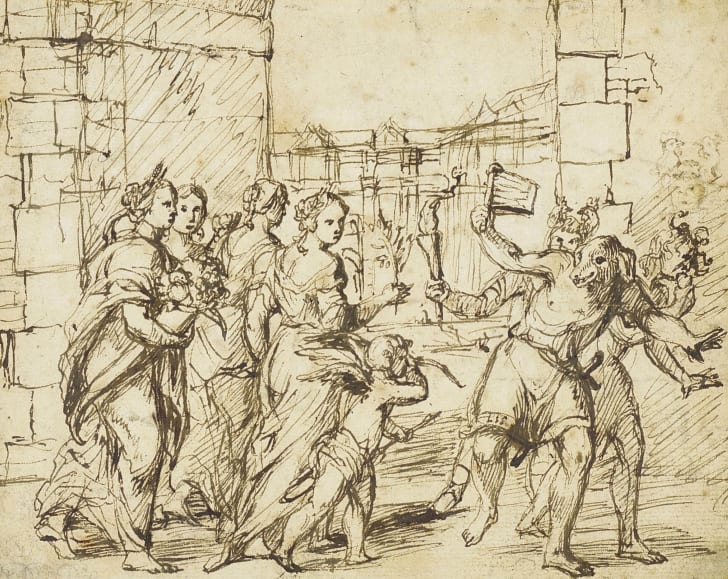
Cupid, the little winged Roman god of desire, erotic love, attraction and affection, is also associated with Valentine’s Day. In Roman mythology, Cupid is the son of Venus, goddess of love and Mars, god of war.
Pope Gelasius I, who died in 496 A. D., observing that the rites associated with Lupercalia, were diametrically opposed to Christian morals and decorum, sought to superimpose Christian principles on the pagan rites of the Romans, thus diverting the attention of the people to give an ethical basis to the celebration, by introducing a Christian feast-feast of St. Valentine-on 14th February. By doing so, the church leader wanted to emphasise the importance of martyrdom of the saint for the cause of uniting couples in holy matrimony.
The event which attained its present status with the customs of lavish spending of money on mass-produced greeting cards-known as “Valentines”-flowers, chocolates and other gifts, dining in restaurants, etc. is said to have no connection whatsoever with the saint or the Roman festival of fertility and purification or Pope Gelasius I. It all began with the 14th century English poet Geoffrey Chaucer (1340-1400) who was also a government servant. The 1575th verse in one of his poems reads thus: “On this feast of St. Valentine all birds come to find their mates”. Chaucer penned his verse on the occasion of the engagement of King Richard II of England (1367-1400) to princess Anne of Bohemia or of Luxembourg in 1381. (The princess died in 1394, supposedly of a plague at the age of 28) This verse inspired the people of England, particularly the nobility. Meanwhile, a duke named Charles, who was incarcerated in London Tower, wrote a poem to his wife in 1415 ending in these words: “From me, your loving Valentine”. This letter is still kept in the London Museum. Besides, king Henry V (1836-1422), hired a poet to write a ‘Valentine verse’ for the princess whom he loved.
Saint’s name deleted from the Roman calendar
After the Second Vatican Council (1962-65) the hagiographies (literature of the lives and legends of saints) were subjected to re-examination in the wake of which the names of certain saints were removed from the General Roman Calendar in 1969 due to paucity of historical records. Among them were saints Valentine, Christopher (patron saint of travellers who died c. 251 A. D.), Barbara (patron saint of lightning and fire of the 3rd century) and Bibiana (patron saint of mental illnesses who died in 360 A. D.). The church fathers replaced St. Valentine with two other saints, namely Saints Cyril and Methodius and their feasts are now celebrated instead on 14th February.
Valentine’s Day is primarily celebrated in the western world, but it is equally celebrated in many East Asian countries with Singaporeans, Chinese and South Koreans spending the most money on Valentine gifts. In India, Valentine’s Day celebrations were spread due to commercial TV channels, radio programmes and love letter competitions, but a 2018 online survey found that 68% of the respondents commented against the event. Hindus, Muslims and Christians of India do not welcome this day. The holiday has been regarded by Indian traditionalists as a cultural contamination from the West and as a celebration “alien to Indian culture”. In 2017, the Islamabad High Court in Pakistan prohibited Valentine’s Day celebrations in public places.
In the predominantly Christian Philippines, Valentine’s Day is the most popular day for weddings while in Lebanon men take women out to dine and buy them a gift. Women are also asked to marry on that day. St. Valentine is the patron saint of a majority of the Lebanese.
In 2012, the religious police in Saudi Arabia reportedly arrested more than 140 Muslims for celebrating the day and confiscated all red roses from flower shops. Only non-Muslims can celebrate the event, but only behind closed doors.
Valentine’s Day in Sri Lanka
In the predominantly Buddhist Sri Lanka too this day has come into vogue in recent times, the commercial enterprises and the media playing a key role to promote the day. In the past some Buddhist monks and Catholic priests organised spiritual and meditation programmes for youths on this day to neutralise or counter the western traditions of the celebration. Sri Lankan Catholic priest Fr. Cecil Joy Perera, an authority on liturgy and director of the “Daham Sevana” seminary in Kalutara, 43 km south of Colombo, deplores the commercialisation of Valentine’s Day even in his own country, similar to the western world. “When the country is undergoing a critical period in its economy our young generation does not need red roses, gifts, symbols of love, etc. We should not encourage such things either”, he told Namo on Feb. 13. Fr. Perera exhorted the young Sri Lankans, irrespective of their creed, to use this day for a deeper understanding of the true meaning of love, without falling a prey to the profit-oriented electronic media.
The priest also assured that Valentine’s Day was not introduced into the island by the Catholic church. “Some might see this as an indecent attempt by the Catholic church to ruin the country’s culture and its cherished values, but this is not so. We should try our best to conscientise the people about the origins and the current practices of this event”, he told Namo.***
]]>Lata Mangeshkar was born on 28th September 1929 as the eldest in a Maharashtrian Brahmin family in Indore in present-day Madhya Pradesh. Her father, Deenanath Mangeshkar, was a classical singer and theatre actor. Receiving her first lessons in music from her father who, unfortunately, died of heart disease when she was just 13 years, Mangeshkar started to work as an actress in her father’s musical plays. Lata was named “Hema” at birth, but her parents later renamed her Lata after Latika, a female character in one of her father’s plays. Her siblings-three younger sisters and one younger brother-are also talented singers and musicians.
Mangeshkar was a recipient of many accolades and honours, among them “Bharat Ratna” (2001), the highest civilian award in the Republic of India, “Padma Vibhushan” (1999) and “Padma Bhushan” (1969), the second and third-highest civilian awards in the country respectively. She was also honoured with “Dadasaheb Phalke Award” (1989), India’s highest award in the field of cinema.
In 2007, France conferred on her its highest civilian award, the National Order of the Legion of Honour. It was established in 1802 by Napoleon Bonaparte and was retained by later French governments with slight alterations. In 1974, she was among the first Indian playback singers to perform at Royal Albert Hall in London.
In June 1985, the United Way of Greater Toronto invited her to perform at a concert at Maple Leaf Gardens. At the request of Morna Anne Murray (born in 1945), a Canadian singer, Mangeshkar sang her song “You Needed Me”, drawing a crowd of 12,000 and raising $ 150,000 for the charity.
Mangeshkar, also a music composer and film producer, has earned for her throughout her musical career the honorific nicknames of the “Nightingale of India”, “Voice of the Millennium” and “Queen of Melody” and has sung some 30,000 songs over 36 Indian languages, primarily in Hindi, Bengali and Marathi, and in a few foreign languages. The Sinhalese patriotic song she sang for “Seda Sulan” (Heavy Winds), a film screened in Sri Lanka in 1955, will be remembered forever by the Sri Lankans for its haunting, melancholic melody. The song, which is a tribute to Sri Lanka’s glorious past, was composed by Ananda Samarakoon (1911-1962), a born Sinhalese composer and musician. He composed the Sri Lankan national anthem “Namo Namo Matha” (officially adopted in 1951) and is regarded as the father of artistic Sinhalese music and the founder of the Geetha Sahitya (Song Literature). Samarakoon, who was born a Christian, but later embraced Buddhism, studied art and music at Visva-Bharati University in Shanti Niketan in West Bengal, India.
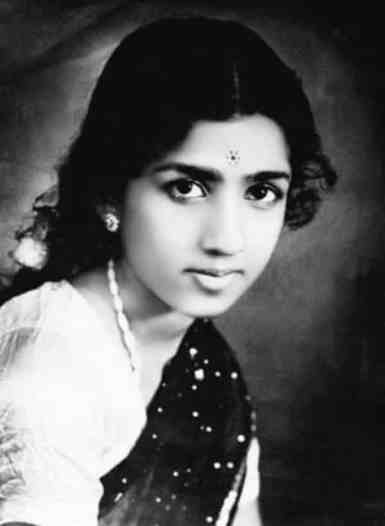
Mangeshkar, who was also a member of parliament in the Rajya Sabha (1999-2005), was a cricket fan. Sri Lanka’s World Cup winning captain Arjuna Ranatunga told media that he cannot forget his first meeting with this beloved singer and “an ever-enterprising lady” when they played the charity match to raise funds for her cancer hospital in Pune in 2003.
Meanwhile, Sri Lankan leaders have deeply condoled on the passing away of this Indian singing legend. Sri Lanka President Gotabaya Rajapaksa said in a message that her demise is an insurmountable void in the field of music itself. He noted that the song she sang in Sinhalese is one of the greatest contributions to the Sri Lankan film industry.
In his message of condolences, Prime Minister Mahinda Rajapaksa too admitted that her song is an immortal memory for the whole of Sri Lanka and thanked Mangeshkar for the decades of entertainment that transcended borders and gave life to the phrase ‘music is a universal language’. ***
]]>