The source said his jet landed at Bangkok’s Don Mueang Airport and his whereabouts in Thailand will be treated confidentially.
Thai Ministry of Foreign Affairs spokesperson Tanee Sangrat said in a social media post Wednesday that Thailand had received a request from Rajapaksa to enter the country,
and as a holder of a Sri Lankan diplomatic passport, he can enter Thailand without a visa for up to 90 days, emphasizing the ousted leader’s stay is temporary and he is not seeking political asylum.
Who paid for the private jet is unknown.
]]>He masterminded the Sept 11, 2001 attacks on USA and indicted in absentia for 1998 bombings of U.S. embassies in Kenya and Tanzania killed over 224 people. Osama Bin Laden’s No. 2 took over Al Qaeda after his death and the FBI listed a $25 million reward for his information.
“People around the world no longer need to fear the vicious and determined killer. The United States continues to demonstrate our resolve and our capacity to defend the American people against those who seek to do us harm,” U.S. President Joe Biden said from the Blue Room Balcony of the White House.
]]>Veteran journalist Shireen Abu Akleh was shot and killed while reporting on an Israeli army raid in the Israeli-occupied West Bank for Al Jazeera, the TV network reported on Wednesday. Al Jazeera says an Israeli force killed Abu Akleh; Israel’s government says it believes she may have been hit by Palestinian gunfire.
Abu Akleh, a 51-year-old Palestinian American, had been covering a military raid on the Jenin refugee camp “when she was shot in the face by a single bullet, despite wearing a press vest,” Al Jazeera said. It said the TV correspondent had been “assassinated in cold blood” after she was targeted by the Israeli forces.
Israeli Prime Minister Naftali Bennett issued a statement saying, “According to the information we have gathered, it appears likely that armed Palestinians — who were firing indiscriminately at the time — were responsible for the unfortunate death of the journalist.”
]]>January, my favourite month of the year, has just passed. Those crisp, cold, misty winter mornings that bring with them a feeling of holidays and nostalgia. A time to look back, but also to look ahead.
And although it’s been 36 years now, it seems only yesterday that we fetched up at the Air Force Academy (AFA) in early January 1986, a bunch of bright-eyed youngsters with long hair, straight out of college and the blue- and- white AFA bus picked us up from outside Secunderabad Railway Station.
At the Academy, our ‘senior course’ was waiting- and the long hair was soon gone, as the ‘Academy Barber’ set upon us with relish. Another whole new course of Flight Cadets straight off ‘civvy’ street- the 79 GDOC as we were called. And in no time all of us looked the same- a set of dazed, crew- cut Zombies who didn’t know what had hit them!
One of my coursemates, now an Air Commodore, had gone back to the Air Force Academy for his son’s passing out parade, recently. Incredibly, he found Satya, our Barber from long ago, still ruling over the Cadets Mess Barber Shop and sent us photographs of the register recording our haircuts from a lifetime ago. Three regulation haircuts for the month of Jan ’86, one every ten days, duly signed for and neatly recorded against my name in the register.
One in 45-50 days is good enough for me now…and I guess I am a lot luckier than some!
We blustered and threatened him with dire consequences once we became “Officers,” but Satya just laughed and snipped away…
He was a very young man then, probably in his first year of employment like us, which is why he has lovingly preserved those registers for so long. The records for 78 and 79 GDOC are the only ones that he still has.
I doubt Air HQs would have records that old now.
Back in the Cadet’s Mess blocks, our immediate senior course fell on us with similar relish and cries of “79 GDOC Fall Out” rang out with alarming frequency, by day and night, as we assembled at all hours. Sometimes in drill boots, sometimes in dressing gowns and sometimes in our ‘whites and tie’- and did front rolls and push ups and star jumps – while our six-month old ‘seniors’ standing watchfully by, told us in all solemnity that they were trying to make “soldiers out of us, from the pathetic little ‘cissies’ that we were…”
By the end of the first month of training, we had passed our Saluting Test and earned the luxury of our first ‘Book Out’ to town on a holiday. A whole day to ourselves, to eat out, watch movies and roam around, even if only in our regulation Academy Whites and Tie and crewcuts! How we had prayed that our Drill Sergeant, Sgt Andrews would ‘clear’ us in the first go and liberate us from the confines of the Academy.
We also got to wear our first Air Force uniforms around this time and felt that we finally belonged…
A month later I was playing in my first Air Force Cricket Championship at Delhi, ‘living out’ with my elder brother who was a Flight Lieutenant then and sister- in- law, at 57-C Rock View, Air Force Station Palam -an unheard-of luxury for a Junior Term Cadet. Ma-Baba and Didi (sister) had come visiting and it was a much –remembered, much-cherished reunion.
Training Command emerged joint winners that year and I got a good Fifty in the final against star-studded Western Air Command (my elder brother was playing for them and predictably, got a hundred), to get selected in the Air Force Team.

By the time I got back to AFA, my seniors eyed me with new found Respect…
Soon, it was on to the rigours of the FCTC camp (Field Craft Training Camp), as we set up Residence near the Narsapur Forest, some distance away from the Academy. Living in tents, wearing overalls and World War ‘Tommy’ style helmets, we went on long marches at night, carrying dummy rifles, maps and compasses. We played soldiers in earnest, monkeys crawling our way across ropes strung up between trees and crossing imaginary rivers on crazily swaying ‘Burma Bridges’ made of sets of parallel ropes.
And then came the Big Day… 06 Dec 1986… the unforgettable day when we were commissioned as young Pilot Officers into the Indian Air Force, proudly wearing the near-invisible, single stripe on our shoulders. And in one, much- rehearsed handshake with the Chief of Air Staff on the Academy Drill Square, we transformed from boys to men! As we glided out in threes in Slow March, with the Band playing Auld Lang Syne, a flight of Polish Iskra fighter jets swung low over our heads, dipping their Wings in Salute to the newly commissioned Officers. And our Drill Sergeants who had been so tough with us during our one year of training, stood at attention and gave us our first salutes as we went by. What a moment that was!
Life waited. And the world was at our feet, so to say…
Back at the Cadets Mess after the Passing Out Parade, the CTA, Chief Trainee Administrator, gave us our first pay packets – 2100 princely rupees. Few of us had ever had that kind of money in our Pockets before – money that we‘d earned ourselves! Our monthly allowance as Cadets, had been a miserly Ninety Rupees till then and this suddenly felt huge… whatever would we do with it?
We’d all got our Posting Orders and would soon be moving out to different Air Force Stations. Some of us would not meet again, ever, over the course of our entire service careers. As for me, I was to stay on for another six months at AFA and train to be an Air Traffic Controller.
But we had a months’ leave first and I was going home to my parents and my friends!
Back then we used to have the letters DLTGH written at the top right hand corner of the chalk-and-duster Board in our classrooms. With a number in front that would grow one less, each passing day. The number of Days Left To Go Home, after the Course.
At the time, we were still naive enough to believe that at the end of the course, we’d be done with it all. That we would go back home again after the Passing Out Parade.
But we never really ‘went home’ after that, ever again… not in any real sense. We just moved on – to our new lives, as our parents watched proudly – going home to them only now and then, on leave.
Life happened to each one of us in different ways as we picked up service experience and qualifications over the years. Picked up new ranks, new appointments, got married, had families… moved into ‘Status Houses’ with gardens, got posted to different Air Force stations, near and far, from one corner of the country to another every two and half to three years, accumulating boxes, both wooden and steel. And on each new posting, there would be a couple of them that remained unopened in our garages, as we acquired new stuff.
Comfortably ensconced in our own little worlds, secure behind Guard Rooms, watch towers and perimeter walls, the Blue Uniform was what defined us, shaped our personalities, made us who we are.
And the years passed quickly… till one day it was time for the Big Decision to leave and move on to other things.
Big Moment again, as I left my Office at Air Force Station Race Course in the heart of New Delhi and headed home to Dhaula Kuan Officers’ Enclave, where I took off my uniform a final time -25 years after I’d first worn it at the Air Force Academy. I put it on a Hanger as always- Rank Braids, Name Tab, Ribbons, Commendation Badge, Belt, all neatly in place.
Only, I wouldn’t be needing it again….I’d lived my Air Force Dream.
And now, in the flash of an eyelid, it’s been 36 years since that day at Secunderabad Railway Station. Most of us have taken Premature Retirement from the IAF, or superannuated, our Journey done. Our Parents have passed on and we all have our own families now and even our children are mostly settled in their lives.
And it’s time to hand over the Baton… to another generation of long-haired, bright-eyed youngsters.
As life turns the page.
]]>Last week, Sri Lankans were woken up to a gruesome news from a close ally Pakistan that indeed shocked the nation. Priyantha Kumara Diyawadana, Sri Lankan expatriate worker in Sialkot, Pakistan was mobbed by a gang of about 150 men and beaten to death on the street before being burnt alive. Strangely, Priyantha had worked in Pakistan for 9 years, enough to grasp the danger of committing blasphemy. The bone of contention was that he was said to have torn down a religious poster to the resentment of Muslim extremists. However, many different versions of stories that led to this inhuman killing are still going viral in social media. Priyantha, General Manager of the same factory for 9 years had reportedly done a great service to uplift the standard of the factory. He was a tough master and for that very reason, he was disliked by workers and unpopular. Destroying a religious poster in Urdu language which he couldn’t read or write, would have instigated his sordid fate in an alien country. Blasphemy is a serious matter in a Muslim country like Pakistan. Barely a year back, there was this story about a young Muslim boy in Pakistan who was ordered to be executed for farting in a mosque notwithstanding the fact whether it was intentional or accidental. Pakistanis considered it as blasphemy. On the other hand, Pakistan is a country of Muslim extremist elements. It could have been a revenge killing under the guise of blasphemy. Nobody knows the real facts in the underlying. Priyantha should have been more careful in handling affairs in a hostile society. It is a known fact that law enforcing authorities of Muslim countries are somewhat lenient on offences committed in the name of blasphemy.
What is Blasphemy?
According to the Oxford Dictionary, the definition of the word ‘Blasphemy’ is described as ‘behavior or language that is offensive or shows a lack of respect for God or religion’. In Sri Lanka, people do not react to blasphemy in such magnitude. It may be due to the reason that it is none other than Buddhist monks who commit blasphemy for Buddhism in Sri Lanka nowadays. Only cases of blasphemy in Sri Lanka in modern times can be traced back to 2014 where a British national mental health nurse Naomi Coleman was detained for 4 days in Sri Lanka for sporting a tattoo of Lord Buddha on her forearm. In fact, Sri Lanka doesn’t have laws to deal with blasphemy. It was not known whether she had the so-called tattoo out of genuine reverence to the Lord Buddha or just as a fashion art. She successfully challenged the government authorities and won compensation to the tune of 4000 British Pounds. Sri Lanka had to pay dearly for its folly without being able to define what blasphemy was, in their own courts. Some years ago, the writer witnessed an incident at Gal Viharaya, Polonnaruwa where a foreign lady attempted to take a photograph sitting on the lap of one of Buddha’s statues. Despite hundreds of devotees being present, only one old and frail disciple opened his mouth to prevent it, picking up words from the little English he knew. Others were utterly ignorant. It was a time that there was no protective fence to house the statues. It was a clear case of blasphemy but the question is whether the foreigners are being educated on this matter. In Thailand, some hoardings are erected to educate the foreigners of respecting Buddhism or at least to prevent them from disrespecting Buddhism. Similarly, if you happen to take any religious object to Maldives, it will end up in a bin at the airport itself. Muslims don’t approve of image veneration. That is their law. In Maldivian tiny museum, there are a number of Bodhisattva images but no description was given to identify what they really were. It is worthy of note that Maldives was a Buddhist country during ancient times.
So serious about blasphemy
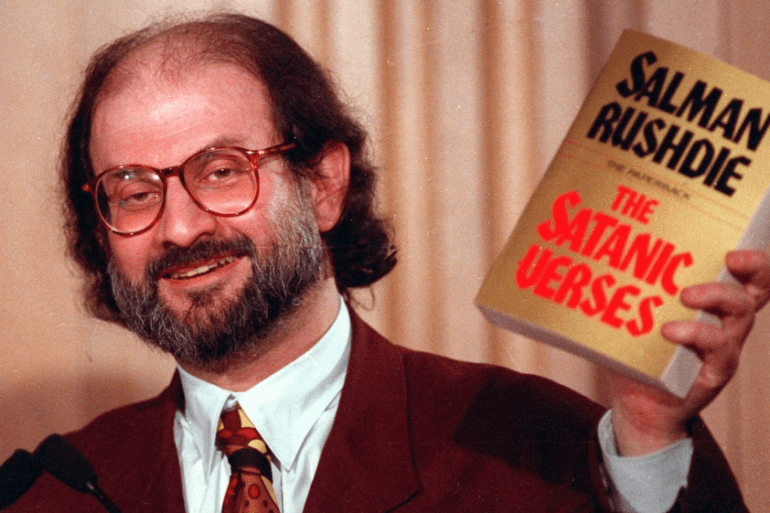
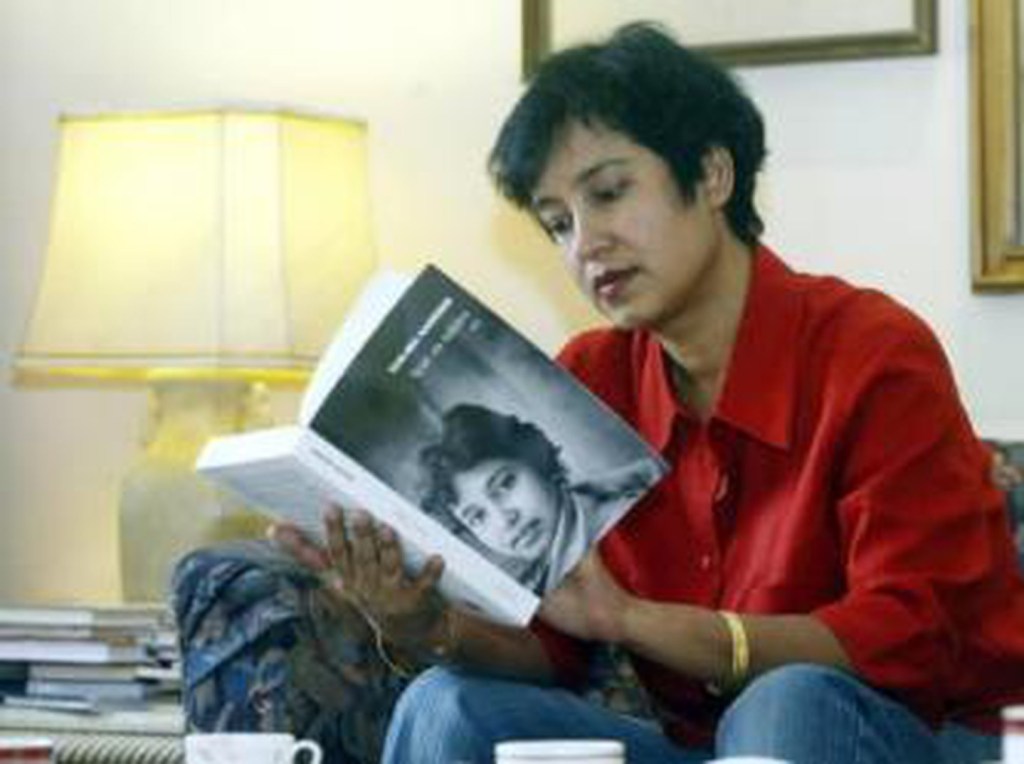
Muslims are very serious about blasphemy and do not condone it at all. The religion of Islam is their way of life. Having written ‘Satanic Verses’ which undermines the religion of Islam, Salman Rushdie still lives in fear, absconding Muslim countries as he was served ‘Fatwa’ (death sentence) by many Muslim countries. By doing so, he could be killed in any Muslim country for publishing his disparaging book. Ironically, his killing will not entail any court hearing. It is the same case as Taslima Nasrin, Bangladeshi writer who lives in exile in Sweden. She was also served ‘Fatwa’ for publishing her controversial book ‘Lajja’. This 1993 book was critical of Islam fundamentalism which irritated the Muslims all over the world. So, she will never be able to return to the country of her birth, Bangladesh for being a Muslim country of its own. According to the US Commission on International Religious Freedom (USCIRF), there are 71 countries in the world which enacted blasphemy laws, ranging from Canada to Pakistan. Most of the blasphemy cases are reported from Indonesia, Egypt, Saudi Arabia, Iran, Pakistan and the Russian Federation. Majority of such cases are the blasphemy against Islam religion by Muslims. USCIRF reports that ‘Blasphemy laws are a global concern, present in all of the world’s regions. These laws, which penalize expression or acts deemed blasphemous, defamatory of religions, or contemptuous of religion or religious symbols, figures, or feelings, have punishments ranging from fines to imprisonment and death. They also embolden vigilante groups who mete out their own extrajudicial “justice,” including killings, often with state impunity’. In short, some civilized countries see it as an impediment to human evolution and freedom of speech. How much ever the pressure is mounted, the Muslim countries are not likely to give up on blasphemy laws. It is also a part and parcel of their religion. In this sense, it is important to educate Sri Lankans especially who proceed to Muslim Countries for employment, of the laws of blasphemy so that they will not fall victim to this blasphemy trap. Priyantha’s incident is of course an eye opener for Sri Lankans to act fast on this matter. With Priyantha’s death, his family received US$ 100,000/- from the Government of Pakistan, continuous salary benefits to his family and the Sri Lankan Government donated Rs 2,500,000/- as compensation but nobody could give life back to his dead body. It is a permanent loss for his grieving wife and children since his memory will fade away in the minds of the general public with time.
]]>It feels so good to pick up my first cup of tea from a passing vendor and sit quietly sipping it, staring out of the window. waking up slowly to a new day. I am traveling back to Guwahati In the North East of India on the Rajdhani Express from Delhi – a long, 2-night journey. I have a comfortable side lower berth which is totally private after the curtains are drawn and a large window, all to myself.
Outside, the scenic landscape of rural India flashes by. Green fields, occasionally yellow with mustard flowers, sometimes brown with a crop of maize. Endless farmlands stretching to a horizon that is blue in the distance.
Clumps of dark green trees here and there, dreaming in the winter sunshine. A lake suddenly – the blue waters dotted with a hundred specks that are migratory birds who spend the winter here in our warmer climes, flying thousands of miles from snowy Siberia before the cold sets in.
Small huts of mud and thatch dotting the landscape…
Simple village folk idly standing by, or going about their daily lives. A bright orange saree stands out against the beautiful soft green of the rice & paddy fields.
A gnarled old tree, branching out in every conceivable direction, mounts a silent vigil in a vast treeless plain. A secluded temple, recently whitewashed, bright against the green and blue haze, a small red flag on top. And in the middle distance, half-lost in the haze, a flock of startled egrets takes to graceful flight in a celebration of white – whiter than the advertisements for our best detergents can ever dream of.
A solitary boatman silhouetted against the pearly waters of an unknown river as it flashes by, half submerged boats lying around near the bank, alongside the railway bridge. A dusty red farmtrack crossing the railway line – a rickety old bus and a farm cart drawn by an impatient bullock wait at a level crossing as the train rushes past. An early swallow and a kingfisher sit placidly on the telegraph wires. Summer is still a month away at least and the landscape is still a dreamy green and blue in the haze.
The most dominant impression here is a feeling of space… and the relaxed pace of life.This is rural India. Haven’t we all seen it from our carriage windows, whenever we’ve cared to look?
The train is passing through North Bihar now. This is the fertile hinterland of the river Ganges, dotted with tiny railway stations, familiar from our childhood and days of early youth. Stations that have disappeared from my immediate consciousness, since life is now too far removed from these parts.
The tiny station of Khagaria – we’d come here to play an inter-college cricket tournament, a lifetime ago. I was in my first year of college and had got into the University team from here. And I still remember strolling down to the quiet railway station with my friends, on a cold, foggy winter evening. We sat down on a wooden bench on the deserted platform and bought piping hot pakoras from a lonely vendor. Outside, the local bazaar, bustling and crowded, dirty, like any other bazaar anywhere. And after a while, we’d taken a couple of cycle rickshaws and gone back to the college hostel where our team was put up. We’d flopped down on our makeshift beds on Holdalls spread on the floor and thumped our suitcases and sung songs, off key mostly, and laughed and chatted, late into the cold winter night..
Soon, the train is thundering past Thana Bihpur Railway Station. Just across the Ganges from here is the small district town of Bhagalpur, where we grew up. Before the Barrage came up at Farakka and the Broad Gauge trains started playing, our route to the hills of North-East India lay through here.
And I remember, when I got commissioned in the Indian Air Force, my friends were so happy for me that four of them came to meet me at Calcutta when I returned after completing my training at the Air Force Academy and escorted me home to Bhagalpur, an overnight journey away. They were so pleased to have me back…
That is what smalltown friendships were typically like, then- and perhaps still are today.
Thinking of friends reminds me of the ITC Cup matches that our club used to play every year at the nearby town, a short distance away from our hometown. We would initially travel by train to get there and then hire a large open Jeep, called a Trekker, to the picturesque Indian Tobacco Company campus, with about 20 of us packed into the vehicle, laughing, singing, and having fun.
And from my train window today, I can see a Trekker now in the distance, ploughing a lonely furrow in a trail of dust. Not much seems to have changed here since the Trekkers still look impossibly overcrowded.
On the outward journey to Delhi this time, I had actually passed through Bhagalpur railway station and it had brought on such a rush of nostalgia, seeing the familiar knot of people on the platform, milling around to board the train. And as it slowly pulled out of the station, I saw again the imposing buildings of our old college and the Tilla Kothi, the house on the hillock, in the distance. And a glimpse of the overgrown old English Graveyard, as the train picked up speed.
All so familiar, all so far removed from our lives now…
Today, nearly 20 years on, sitting alone by the window on this long train journey, watching familiar stations going by, those scenes flash in my minds’ eye again, the images still fresh.
And it seems as if it were Only Yesterday…
Dusk is beginning to fall. It’s been a long day on the train, but now the sky is flushed a delicate pink and mauve, with a dash of Orange to set it off against a flaming sunset, as the sun sinks below the horizon. Trees and bushes are now clumps of darkness silhouetted against the fiery western sky. Birds heading home; simple village folk preparing for the long, cold night ahead. In most homes, a lantern or a bonfire will be the only source of heat and light. The evening meal is being cooked on smoking, coal or cow dung-cake fired mud braziers, which the womenfolk are tending to, outside the houses.
A pall of smoke hangs low, trapped under the cold, heavy surface air. The day’s work is done, the animals are home and fed and it’s now time to rest.
And the train thunders on into the darkness with a shrill shriek of the whistle…its destination still far away.
]]>The rains have finally stopped and the autumn air is suddenly cooler. The skies are a glorious deep blue again and the odd, stray build -up of a massive, puffy white cloud bank reaches high up into the heavens. A time for the first, almost imperceptible winter chill settling in the air, towards the late evenings and early mornings, heralding the coming of winter.
It is that time of the year when thoughts turn homeward and each one of us thinks of ‘going home,’ to friends and family, to the places we grew up in, to our roots…
Some years ago, for me that would have meant a trip back to a sprawling old house built in 1918 by my great grandfather, in a picturesque small town tucked away in the middle of nowhere in Eastern India. Not anymore, but the memories remain.
This time when I went to Kolkata, just prior to the commencement of Durga Puja, I felt so happy to see Dada- Boudi (my elder brother and sister- in- law) and Didi- Jamaibabu (my sister and brother- in- law) again, after a gap of two years. Meeting up with family (and close friends) always gives so much strength and positivity.
My mind casts back to Durga Puja holidays from the past in that little town of ours, when our grandparents were still alive and we lived in the old ancestral house so dear to all of us.
Every year, during the Puja vacation there would be a grand reunion of various uncles and aunts who would be ‘coming home’ from the big cities to meet their parents, Dadu-Dadi (grandparents) to us.
And the big house would be teeming with assorted cousins, and uncles and aunts.
I remember the impatient excitement of their impending arrival, the long line of cycle rickshaws, finally stopping outside our gate. In the open spaces of the small country town then, you could see them coming from a long way off.
And the next few days were pure pleasure and fun for everyone. A wooden cot would turn into a Table Tennis Board after the bedding was removed. People gathered around and sang songs, chatted till the wee hours, went boating in the Ganges, or visited the must -see places in the vicinity, including the ruins of the once famous centre of learning of the ancient world, the Vikramshila Vishvavidyalay. (The Vikramshila University).
Evenings would sometimes become ghost story telling sessions, especially when the lights went off and a gust of wind blew out the flickering lamp- and no one got up to light it again.
Those idyllic times slowly died out with the demise of the joint family. An entire way of life that no longer exists, and it’s sad that our children will never get to experience its conservatism and traditional values.
Personally, I always thought that the joint family was originally a great idea… if only it could also provide everyone the space they needed to be themselves.
There was so much support and empathy and warmth there in tough times… and in the good times as well. When you experience that now on brief visits back to your roots, it almost makes you weak, as the carefully crafted facade of tough independence falls away and you become once more who you once were, in the company of your closest family members.
And when it’s time to come away… it tugs at the heartstrings so deeply, a gut-wrenching feeling that takes days to get over. It almost makes you wish you hadn’t wallowed in that short- lived oasis of sweetness and caring, miles away from the normal shut-in routine of usual workaday life.
A life lived amongst strangers, even if they are colleagues and acquaintances whom you’ve worked with for years… People who will never really know you…or you them.
You have the new car, the luxurious new house, the golf and tennis at the club and the tall drinks afterwards, the parties and the new friends, a whole new life to live and yet, with all that, you still crave the old one suddenly at times.
With a longing that’s almost physical…
Sometimes, when a deeply cherished experience that comforts and makes you feel warm and happy, lasts only for a brief, fleeting time and you are back, even before you have properly savoured it, to the professional isolation of the life that you have mentally steeled yourself to live in the new world, it seems almost logical to stay away and not grant yourself the luxury of that brief Interlude of sweetness and warmth.
If only to spare yourself the suffering afterwards.
For most of us however, these interludes are still so very necessary, even if they can be ours to enjoy only for very brief, transient periods. And even if they only serve to make us yearn for something that we can no longer have, at least not for any extended period in our lives… the company of those related to you in flesh and blood and in the unforgettable memories of parents and childhood homes and shared growing up years.
Which sometimes makes you wonder, can we not, all return to our roots for good at some point in our lives and enjoy once again, the luxury of the feeling called ‘home?’ Although for most of us, the actual place may have long ceased to exist by then. And it also makes you wonder whether this isolation and staying away from what is essentially a part of yourself at some deeper level, really worth it, or necessary, beyond a point?
For sometimes, it can be such a joy to discover the unexpected caring and warmth of feeling for a sibling, even if it’s only a distant cousin whom you’ve only heard of till now…
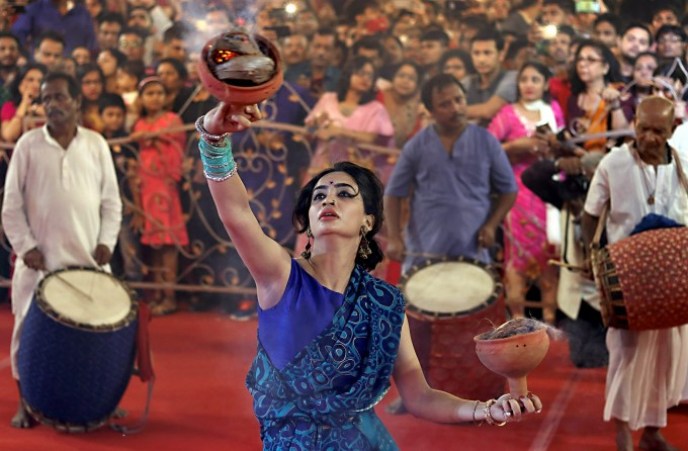
But then, isn’t that also an extension of the Durga Puja Spirit… of Ma Durga visiting her mythical maternal home on Earth for a brief sojourn each year, before returning again to her Heavenly Abode?
And so also for thousands of people living away from their Homes and ancestral lands, flocking on brief visits to the people and places that they have left behind, to partake of the festivities and the company of loved ones, before flying away once again to the faraway climes from whence they came.
In a week of snatched togetherness that would have to make do for the rest of the year.
And perhaps the year after…
And then, like all good things, Durga Puja comes to an end, with the immersion of the Goddess on Vijaya Dashami, the last day of the festival and the brief interlude is over. And it’s time once again, to go back to the Business of Living.
The long farewells, the promises to meet again soon, the familiar lump in the throat as you touch your elders’ feet one last time as you take leave. With the cherished hope in your heart, that one day, you’ll be back – for good.
But till then, there’ll always be “Promises to keep… and Miles to go before I sleep”
]]>A common question
Since of late, a hot topic of general conversations among Sri Lankans entails a sure question. What has happened to the game of Cricket in Sri Lanka? But, nobody seems to have a ready answer. There could have been a number of factors that brought this beautiful game to this abyss which Sri Lankan Cricket is in, at present. No doubt that Cricket is the most popular sport in Sri Lanka. Besides, Cricket in Sri Lanka has a sub-culture deep embedded in the society. Therefore, dismal performance of the national team is certainly a concern for all Cricket loving citizens of the country. In fact, this article would attempt to unravel and unearth the facts that contributed to this situation.
Game Changer
Sri Lanka won the World Cup in 1996 and shot to fame overnight. This famous victory made a colossal amount of money pouring into the coffers of Board of Control for Cricket in Sri Lanka (BCCSL) as it was known those days. This happened to be the origin of successive corrupt Cricket Administrators which have been the curse of the game. Sri Lanka Cricket is administered by three types of administrations namely Executive committee, Interim committee or a competent authority in accordance with the Sports Act of 1973. An Executive committee is an elected body which comes for a tenure of one year by elections. Minister of Sports exercises powers to dismiss an Executive committee and appoint an Interim committee instead for a period as determined by him. In contrary, a competent authority usually assumes duty only to cover the interim period between administrations before board elections.

Cricket Elections
After presidential and general elections, SLC board election is the most hotly contested election in Sri Lanka. All in all, it has only 147 votes from stake holders. 29 controlling clubs, 5 provincial associations, 22 district associations, Nationalized Services Cricket Association, Mercantile Cricket Association, Defense Services Cricket Association, Sri Lanka Schools Cricket Association, Sri Lanka Universities Sports Association and State Services Cricket Association are eligible to vote at SLC election. The controlling clubs and associations have two votes while other minor clubs have only one vote to cast. The election is conducted through secret ballots. In some instances, SLC even sought the technical assistance of the office of the Commissioner of Elections to conduct the elections. Unlike other elections, the results are announced then and there for each post in the Executive Committee. When the results for all important position of the president is declared, there is a tendency to turn the tide for the faction fielded by him. Rarely, a person from other faction or party gets elected. In recent time, election of Mr. Kangadaran Mathivanan was such ‘one off’ incident. However, he opted to resign a couple of times, citing reasons that he was sidelined from the decision making process because he represented from the rival party.
Ugly Scenes in the run up to the elections
In the run up to the elections, all factions attempt to consolidate their positions. Specially, the faction led by bookie turned politician was unleashing all the dirty tricks from his sleeves. It is common knowledge among the Cricketing circles that he used to accommodate all the voters in his favor in a star class hotel two weeks prior to the elections. They were not allowed to move out of the hotel premises nor make calls to any outsider. They were provided with sumptuous food, unlimited foreign liquor and women. Unconfirmed sources say that sexual acts of some unreliable stake holders were filmed secretly and they were eventually blackmailed into voting for the candidate till the end of time. They were having gala time inside but under the strict travel restriction imposed on them. On the day of the election, they were escorted to the venue in a private vehicle sharply on time, without leaving a chance for them to mingle with others. This is how this person bribed his men to be loyal forever. Therefore, one insider of Sri Lanka Cricket jokingly said even if he fielded a dead body as a candidate, it would surely win.
Miniature Parliament
In fact, Sri Lanka Cricket is like a miniature Parliament. To win SLC elections, the main candidate makes a plethora of promises. They can be special grants, foreign trips, high positions in sub committees, favors for club players, sons or relatives, employment in SLC and so on. The aforesaid corrupt politician while in office never gave a chance for players from his rival clubs to emerge and escalate into national sides. That was the very reason why players keep changing clubs haphazardly even now. On the other hand, each and every player has a manager of their own. They are mainly ex-Cricketers of some repute and sometimes stake holders of SLC as well. These so-called managers are very influential so that they would go to any length to make sure that their players would don the national cap. When this happens, the real up and coming players would be ignored or sidelined. Therefore, the national squad always comprise of only the favourites. It is like a mafia in operation. The officials of this faction always remain in office, swapping positions. The reason being, SLC is a treasure trove for them. The fact is that there is enough of money in its coffers but no ownership. The Executive Committee has the powers to spend money as they wish. Each time, when an EXCO is in office, the officials go on a shopping spree. Main source of income for SLC is the award of Television rights. It is a multi-million dollar deal. When this is advertised for renewal, you could see the top brass of SLC flying to Dubai and Singapore and so forth. A few million dollars would be gone for a six at the end.
Changing the system
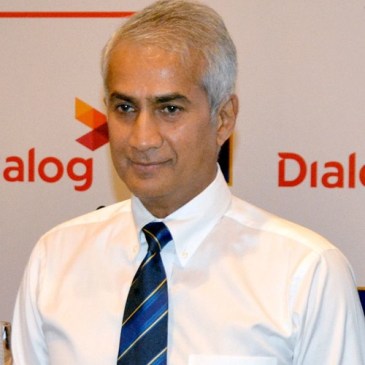
Mr. Sidath Wettimuny was once appointed to head an interim committee. He attempted to change the system with the government backing. Sri Lanka Cricket is just another sports association of Sri Lanka which is regulated by the Sports Act of the parliament. Only exception is that SLC has money in abundance. He proposed to enact a new act exclusively for SLC by the parliament, with a view to doing away with the corrupt officialdom. The faction in question somehow thwarted this act in connivance with then Minister of Sports. It never saw the light of the day. Similarly, 250 odd workforce at SLC is another concern. Out of 250 staff, only a few minor staff members and a handful of managerial cadre are permanent numbering only about 25. Even the Chief Executive Officer (CEO) is on contract so that they could appoint a man of their favour at any time. As a result, the contractual staff have divided loyalties. Everybody has to go behind EXCO members to get their contracts extended at each time. CEO has no power to sign a cheque even. Can you expect a team from this system to perform? This is the naked truth behind SLC. The corrupt politician has been barred from contesting SLC elections but his team is still calling shots in the system. Over to you, Cricket fan.
The writer is the former Senior Manager-Human Resources & Administration for Sri Lanka Cricket for 8 years. During his tenure, he was privy to some sensitive information about the system. He reveals his story based on his own experience for the benefit of Cricket fans of Sri Lanka without prejudice to any interested party concerned.
]]>Despite prostitution being illegal, there seems to be little effort to crack down on it. It’s common to see sex workers waiting for clients within a few feet of police in Thailand. The police either sympathize with the girls and decide not to enforce the law or they know that even attempting to do so would be an unending task.

The Thai sex industry is worth an estimated $4.5 billion a year, with the majority of this money coming from tourists visiting Thailand for sexual services. The total number of visitors to Thailand in 2015 was recorded at 30 million, which means that 5% (or 1.25 million) were sex workers or their clients.
In some parts of Asia there’s little difference between prostitution and travel agencies: they both offer “tour packages” complete with hotels, meals and entertainment – you can even book your own room. And it’s not uncommon for the agency operators to also provide escorts or masseuses as part of their service offering.
Thailand isn’t unique in this respect; other countries such as Cambodia are renowned for being hotspots for sex tourism, where women are available on every street corner and bars have full-time staff dedicated solely to servicing male customers. In many cases these women will be working illegally but if caught they can expect to be deported.
The closure of these businesses also comes at an interesting time since it coincides with the Thai government’s decision earlier this year to crack down anyone caught working as a prostitute in Thailand. This law could lead many women into prostitution into jail for up six months or more – on top of any fines which may be imposed by local authorities. This new legislation came as part of the government’s ‘War on Prostitution’ campaign which has been in place since last year.
Although the Thai government isn’t keen on its country’s image as being a sex tourist hub, it must acknowledge that for many people it is their sole means of income and that they lack the experience to enter another profession. The collapse of the sex industry, whether through the pandemic or government programs could also trigger a wave of jobseekers saturated the employment markets of other professions.
The majority of these women are from rural areas and have little choice but to work in this trade due to a lack of education or job opportunities; they are often sold into prostitution by their parents at a young age and have no other option than to continue working within the industry once they’re old enough.
The Thai government has had some success with campaigns such as ‘Turn Off The Red Light’ – which aim to educate tourists about how their actions can lead directly towards human trafficking, child exploitation and rape – many still don’t really understand what it takes for these women (and men) to survive each day.


It’s a step in the right direction to educate tourists on the human rights abuses they may be funding through hiring sex workers but in reality it’s only solving half of the problem. The government needs to implement education programs to wean sex workers off of their preferred trade and get them back into the conventional labour market.
And so far, not one government department has stepped up to offer financial support for any kind of rehabilitation project that would allow them out of this life-long cycle. This situation doesn’t just affect those who work on the streets though: the closure of sex tourism businesses has also affected the hundreds of thousands of Thai people that work within the industry, as well as those who rely on it for their livelihoods.
The Kingdom’s sluggish vaccine rollout is also worsening the collapse of its tourism industry. Thai officials say they are waiting to see how effective their new vaccine will be before moving forward with widespread vaccinations, but some experts warn that this strategy may backfire as more people become infected in the meantime.
The Thai government’s decision to wait has been criticized by both local and international health authorities who fear the country’s tourism industry will suffer if it does not quickly implement a vaccination campaign.
In 2020 Thailand was praised for its efforts to control the spread of the virus and, minus the drop in tourism, managed to maintain a somewhat normal standard of life for everyone. Bars and restaurants were open for most of the year, even nightclubs were full. It was easy to forget what was happening all over the world if you were living in Thailand in 2020.
Unfortunately, the tables have turned at the time of writing this article (May 2021). Thailand has been hit by a surge of the so-called Indian variant which has a higher transmission rate than previous Covid strains.
Cases and deaths have spiked and the country is now in its third and worst wave of the pandemic so far. Although there are no curfews like there were this time last year, life in Thailand is far from normal and seems like it won’t return to pre-Covid normalcy until the rollout of the vaccine.
The government’s rollout of the vaccine has been disappointingly slow so far, with only 2.9% of the population receiving one dose and 1.4% fully vaccinated. This rate lags far behind its poorer neighbour, Cambodia, that has given 13.8% of its population one dose and 10% are fully vaccinated.
Granted, Cambodia’s population is only a fraction of Thailand’s, but it goes to show how detrimental the Kingdom’s culture of bureaucracy and fragmented government departments can be when it comes to agile decision-making.
While it’s likely that Thailand’s infamous sex industry will return to its previous heights, or even exceed them, it’s a matter of when and it doesn’t seem like it will be any time soon or even this year, for that matter.
Mass vaccinations are due to roll out on June 7th and they will include everyone in the country. Priority will be given to locals and based on profession, with expats given secondary status.
Their plight, in fact, is regrettable. It is mere poverty that has plunged them into the world’s oldest profession, in most cases, against their wish. It is a pity!
]]>