The decision ushered in a shift in its centre of gravity from the ‘developed’ to the ‘developing’ world.
This in turn helped convince Kwame Nkrumah in the run up to Ghana’s independence in 1957 that his own radical, Pan-Africanist agenda was wholly compatible with Commonwealth membership. Ghana became a member not because Britain wanted it to, but because Nkrumah wanted it.
Thereafter, the struggle to free Southern Africa from white minority rule – in Rhodesia which illegally declared its independence in 1965, and South Africa under the policy of apartheid – became the issue that gave the Commonwealth a sense of mission and purpose.
An organizational milestone came in 1965 when a secretariat was created at the urging of Nkrumah and Ugandan leader, Milton Obote. Zimbabwe joined the Commonwealth in 1980 after gaining independence in what appeared to be a major victory for the Commonwealth.
The organization had played a major role in ensuring an orderly transfer of power. Although by the same token, Zimbabwe’s departure from the Commonwealth in 2003 seemed to many to be a failure of Commonwealth diplomacy.
When Lusophone Mozambique joined in 1995, the door was opened to other states that had not been colonized by the British. With its joining shared values apparently became more of a uniting factor than a shared history.
Rwanda joined in 2009. It is the only other current member not to have links to the British Empire. In short, the development of the Commonwealth has owed at least as much to African as to British diplomacy.
The Commonwealth as currently constituted is not a particularly effective organization. Membership carries few economic benefits, unless one believes the rather flimsy research from the Secretariat pointing to a Commonwealth trade advantage. The lack of consistent comparative data on trade costs, and the wide variations in the extent to which Commonwealth countries trade with fellow members, make it very difficult to prove the existence of this ‘advantage’.
It had been suggested that Brexit would deepen economic ties with Commonwealth members in Africa. But a recent trade summit between the UK and African countries produced very little.
This, plus the pandemic, has taken the shine off some earlier predictions of a boom in UK-African trade.
Meanwhile, the secretariat itself and its development arm have seen their budgets slashed in recent years. Donors have withdrawn or withheld funding in some very public displays of no-confidence in the leadership of the current secretary general, Patricia Scotland.
Finally, its record in enforcing adherence to shared Commonwealth values, particularly in the field of human rights and democracy, is far from impressive.
In 2013, the organisation adopted a charter full of laudable aspirations about justice, democracy and human rights. As such, membership signals to the broader international community that countries share those aspirations.
Yet the Commonwealth took no action when in January 2021, long-serving Ugandan President Yoweri Museveni clung to power after a deeply-flawed electoral process.
Other repressive regimes have found the Commonwealth a useful mechanism for ‘reputation laundering’. In 2013, President Mahinda Rajapaksa of Sri Lanka hosted the Commonwealth summit. At the time, his government stood accused of presiding over war crimes in the country’s bloody civil war. In hosting the heads of government meeting, he clearly hoped that the Commonwealth’s benign image would distract attention from the accusations.
Paul Kagame of Rwanda seems to be hoping for a similar boost to his reputation when he hosts the heads of government meeting in June. This is despite repeated signs that he is intolerant of opposition.
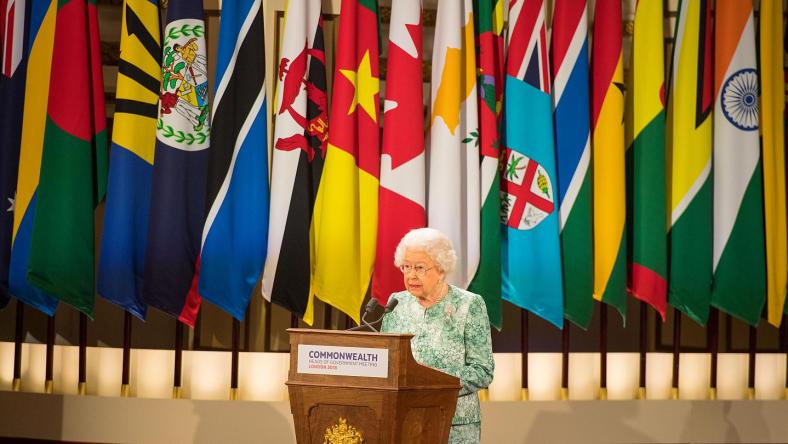
It’s important to remember that despite its Imperial origins, the Commonwealth also has a strong radical tradition. In the 1960s and ‘70s it played a leading role in condemning racial discrimination, most notably with its landmark Singapore Declaration of Commonwealth Principles in 1971.
In the 1980s and ’90s it campaigned for debt relief for some of the world’s poorest nations.
The organization consists of a variety of networks developed over decades. These include a range of organizations such as the Commonwealth Parliamentary Association and the Association of Commonwealth Universities.
In recent times, campaigners have used these networks to raise awareness around climate change, LGBTQ+ rights, and other global issues. They have often challenged the policies of their own governments.
Online technology offers fresh opportunities to reinvigorate these networks by connecting grassroots activists around the world, and in the process reconnecting the Commonwealth to its radical past.
If it is to continue to be relevant to Africa in the 21st Century, that radicalism certainly needs to be rediscovered.
]]>- Get enough sleep! Most adults need at least 7 hours of sleep a day, while adolescents need at least 8 hours.
- Develop good sleeping habits such as sticking to a sleep schedule.
- If you have a sleep disorder or have symptoms of a sleep disorder such as snoring or feeling sleepy during the day, talk to your physician about treatment options.
- Avoid drinking alcohol or taking medications that make you sleepy. Be sure to check the label on any medications or talk to your pharmacist.

Drowsy Driving Is Similar to Drunk Driving
Your body needs adequate sleep on a daily basis. The more hours of sleep you miss, the harder it is for you to think and perform as well as you would like. Lack of sleep can make you less alert and affect your coordination, judgement, and reaction time while driving. This is known as cognitive impairment.
Studies have shown that going too long without sleep can impair your ability to drive the same way as drinking too much alcohol.
- Being awake for at least 18 hours is the same as someone having a blood content (BAC) of 0.05%.10-12
- Being awake for at least 24 hours is equal to having a blood alcohol content of 0.10%. This is higher than the legal limit (0.08% BAC) in Sri Lanka.12-13
Additionally, drowsiness increases the effect of even low amounts of alcohol.
80 mg is 0.08 grams. 0.08 grams of alcohol in 100 ml is 0.08% This can also be expressed as 80 mg/dL or a BAC of 0.08.

Lack of sleep can make you less alert and affect your coordination, judgement, and reaction time while driving. This is known as cognitive impairment. Studies have shown that going too long without sleep can impair your ability to drive the same way as drinking too much alcohol..
Who Is More Likely to Drive Drowsy?
- Drivers who do not get enough sleep.
- Commercial drivers who operate vehicles such as tow trucks, tractor trailers, and buses.
- Shift workers (work the night shift or long shifts).
- Drivers with untreated sleep disorders such as one where breathing repeatedly stops and starts (sleep apnea).
- Drivers who use medications that make them sleepy.