Lata Mangeshkar was born on 28th September 1929 as the eldest in a Maharashtrian Brahmin family in Indore in present-day Madhya Pradesh. Her father, Deenanath Mangeshkar, was a classical singer and theatre actor. Receiving her first lessons in music from her father who, unfortunately, died of heart disease when she was just 13 years, Mangeshkar started to work as an actress in her father’s musical plays. Lata was named “Hema” at birth, but her parents later renamed her Lata after Latika, a female character in one of her father’s plays. Her siblings-three younger sisters and one younger brother-are also talented singers and musicians.
Mangeshkar was a recipient of many accolades and honours, among them “Bharat Ratna” (2001), the highest civilian award in the Republic of India, “Padma Vibhushan” (1999) and “Padma Bhushan” (1969), the second and third-highest civilian awards in the country respectively. She was also honoured with “Dadasaheb Phalke Award” (1989), India’s highest award in the field of cinema.
In 2007, France conferred on her its highest civilian award, the National Order of the Legion of Honour. It was established in 1802 by Napoleon Bonaparte and was retained by later French governments with slight alterations. In 1974, she was among the first Indian playback singers to perform at Royal Albert Hall in London.
In June 1985, the United Way of Greater Toronto invited her to perform at a concert at Maple Leaf Gardens. At the request of Morna Anne Murray (born in 1945), a Canadian singer, Mangeshkar sang her song “You Needed Me”, drawing a crowd of 12,000 and raising $ 150,000 for the charity.
Mangeshkar, also a music composer and film producer, has earned for her throughout her musical career the honorific nicknames of the “Nightingale of India”, “Voice of the Millennium” and “Queen of Melody” and has sung some 30,000 songs over 36 Indian languages, primarily in Hindi, Bengali and Marathi, and in a few foreign languages. The Sinhalese patriotic song she sang for “Seda Sulan” (Heavy Winds), a film screened in Sri Lanka in 1955, will be remembered forever by the Sri Lankans for its haunting, melancholic melody. The song, which is a tribute to Sri Lanka’s glorious past, was composed by Ananda Samarakoon (1911-1962), a born Sinhalese composer and musician. He composed the Sri Lankan national anthem “Namo Namo Matha” (officially adopted in 1951) and is regarded as the father of artistic Sinhalese music and the founder of the Geetha Sahitya (Song Literature). Samarakoon, who was born a Christian, but later embraced Buddhism, studied art and music at Visva-Bharati University in Shanti Niketan in West Bengal, India.
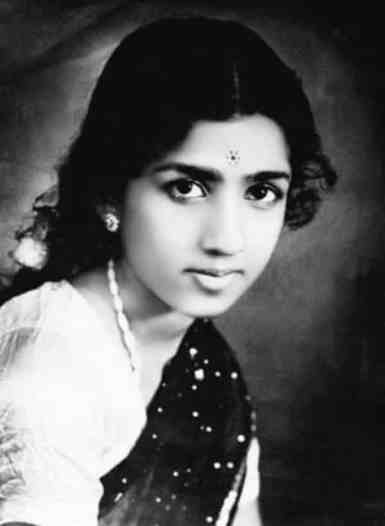
Mangeshkar, who was also a member of parliament in the Rajya Sabha (1999-2005), was a cricket fan. Sri Lanka’s World Cup winning captain Arjuna Ranatunga told media that he cannot forget his first meeting with this beloved singer and “an ever-enterprising lady” when they played the charity match to raise funds for her cancer hospital in Pune in 2003.
Meanwhile, Sri Lankan leaders have deeply condoled on the passing away of this Indian singing legend. Sri Lanka President Gotabaya Rajapaksa said in a message that her demise is an insurmountable void in the field of music itself. He noted that the song she sang in Sinhalese is one of the greatest contributions to the Sri Lankan film industry.
In his message of condolences, Prime Minister Mahinda Rajapaksa too admitted that her song is an immortal memory for the whole of Sri Lanka and thanked Mangeshkar for the decades of entertainment that transcended borders and gave life to the phrase ‘music is a universal language’. ***
]]>
It draws parallels
Yohani is the eldest daughter of Major General (Retired) Prasanna De Silva, a hero in the final battle of 30 year war who commanded 55th Division to a comprehensive victory in 2009. Having done his part in his illustrious military career, he is on a happy retirement today, rejoicing success of her daughter’s music career. Similarly, Bathiya Jayakody is the son of late Major General Nihal Jayakody who rendered a yeomen service in the decisive phase of the war before succumbing to a heart attack while still being in the military service. There is a generation gap as far as Bathiya’s and Yohani’s music careers are concerned. Bathiya embarked on his music journey in late nineties whereas Yohani stepped into the scene barely a couple of years back. Bathiya and Santhush (B & S) duo would have dreamed of taking Sri Lankan musical identity to the international theatre of music some two decades ago. In fact, it was B&S combination who introduced ‘rap’ music genre to the local music culture. Yohani too promotes ‘rap’ culture in her own inimitable style which appeals to the music lovers across the borders, being the secret of her success story. However, Yohani is truly lucky as she stepped ahead of B&S in this endeavour within a short span of time. Sometimes, even she would have not imagined such a leap forward to the stardom. She commenced her career as a YouTuber initially and adopted and reproduced Sathishan Ratnayake’s original song ‘Manike mage hithe’ to a new remix version which turned out to be an instant hit as we witness today. It is noteworthy that 28 year old Yohani is evenly academically qualified, having been armed with a degree in logistics management from Kotalawala Defence University and master’s degree from an Australian University. She had her education at Visaka Vidyalaya, Colombo up to ordinary level and proceeded to England for advanced level. Sri Lankans are surely proud to see the offspring of two eminent Major Generals of SL Army nurturing new generation music in the country.
Gaining steadfast popularity
The cover song ‘Menike mage hithe’ indeed took the world by storm. Today, it is an amazingly popular single in India, Bangladesh, Nepal and Maldives with enormous commercial success. This iconic song was hailed by none other than Amitabh Buchchan, Big Sam of Indian cinema who tweeted that he couldn’t resist listening to this lovely melody. Besides, Madhuri Dixit, Parineeti Chopra, Tiger Shroff and Sonu Nigam adored this song and even went on to perform dance acts to its music. This bolstered the fame of this song beyond imagination. This new wave prompted grandchild of Amitabh Bachchan, Navya Naveli Nanda to change the background music of her film ‘Kaliyah’ to the tune of Menike mage sithe. Today, the lyrics of this song has been translated into a number of languages such as Tamil, Hindi, Punjabi, Nepali, Bengali, and Malayalam to name a few. This trend will transcend the language barriers of other countries soon. Today, it is a popular song on reality show platforms as well especially in India and video clips are going viral on YouTube. As this song came to be prominently featured in Amazon and Spotify charts, its popularity is on a meteoric rise everywhere in the world and a likelihood remains that it will soon reach US market, topping the charts. Yohani is in the limelight internationally which no Sri Lankan singer has ever made. Her popularity in India is such that she was invited to perform at two exclusive mega shows in India. She received a rousing welcome in India with a reported gathering of 450,000 fans at the airport. These two shows are speculated to gather Indian blend of elite in the calibre of politicians, film stars, musicians and millions of fans. However, the reaction of Sri Lankans to her superstar status is said to be a matter of concern. Not much of high-end artists truly appreciated her feat except a handful including songstress Nanda Malini who wished Yohani a long music career recently. Nevertheless, this petite songstress has a good following among the young generation of Sri Lankans as her looks matches her music talents perfectly. Now, going by the trending, it is widely believed that she is going to be first multi-millionaire female vocalist in Sri Lanka soon. Whatever said and done, she has made Sri Lanka proud by her dazzling performance so far but she has a long way to go with brickbats and flowers in the Sri Lanka’s context. Wish you all the very best, Yohani.
]]>
This cinematic classic is based on the 1952 French novel entitled “Le pont de la rivière Kwaï”, written by author Pierre Boulle who was a prisoner himself during the World War II. It was translated into English in 1954 by British author and journalist Xan Fielding. David Lean, with a slight adaptation of the original novel, directed the film and Sam Spiegel produced it. William Holden, Alec Guinness, Jack Hawkins and Sessue Hayakawa starred in the film, playing the principal roles. What is of interest for us is the fact that four Sri Lankans were also involved in the making of the movie: Willie Blake (as assistant cameraman), Gamini Fonseka (veteran actor and director in the Sinhalese cinema), Chris Greet and Vijaya Abeydeva.
Although a large part of the plot of the movie is fictional, it centres on the true story of the construction of the 415 km railway line (1942-1943) during the World War II, linking Thailand to Burma (now Myanmar) to carry Japanese troops and materials to the battlefront in Myanmar. The railway project, ordered by the Japanese Empire, was nicknamed the “Death Railway” on account of the hundreds of soldiers of the Allied Forces and other conscripts who died while the construction was in progress.

In the story of the film some British prisoners of war build a bridge for the Japanese army as part of the railroad when it comes to the River Kwai. One of the prisoners escapes the site and returns to blow up the bridge on the very day it was opened for traffic.
For the first time a film company in Sri Lanka bought an entire train (it was one of the trains that ran on the then narrow Kelani Valley Line) to blow it up later. The six-month construction project is said to arouse the curiosity of the villagers of Kitulgala. The significance of it was beyond their grasp. Most of the villagers gave up their jobs of tapping rubber trees and joined the film project for a better remuneration which was almost seven times higher than what they had earned per day.
The then Prime Minister S. W. R. D. Bandaranaike (1956-1959) of the Dominion of Ceylon (now Sri Lanka) is said to be among the invitees present to witness the blow up of the bridge. Before the blow up the police chased away the villagers from the vicinity. They were at a loss to understand why this wooden bridge, built at an enormous cost, should be destroyed along with the train.
The whole story was filmed in locations in Sri Lanka. The tourist town Mount Lavinia on the southern suburbs of Colombo was also one of the locations. This town is connected with actual events that unfolded themselves while the World War II was being raged. Mount Lavinia Hotel served as a place of relaxation and recovery for injured Allied Troops. Furthermore, Admiral Lord Louis Mountbatten, Supreme Commander of South-East Asia, was also stationed in Kandy in the Central Province of the country.
This film evokes nostalgic memories of my school days when I watched this film with my mother as a child. Many years later, I was able to be present physically at the very location where the movie was shot. A notice by the side of the road points out the exact location of the bridge. A lady who lived by the side of the river (whose name I do not remember now) voluntarily offered us to help reach the river bank. First she invited us to see her family and some old black and white photographs from the late 50’s which she proudly keeps as a family treasure. The photos showed her husband along with other villagers who had been employed for the project as ‘extras’. “I still cherish memories from those days and the massive explosion that shook the whole area still echoes in my mind”, she said, adding that, after the explosion, village children amused themselves amid the submerged carriages of the train, picking up rubber dummies of Japanese soldiers clad in khaki uniforms.

Then the lady accompanied us to the bank of the river. If we had not longed to see the remains of the bridge we would have avoided that unpleasant experience as those blood-sucking leeches abounded on the wet and muddy ground for we were in one of the wettest places in Sri Lanka that receives two monsoons yearly. Those worms stuck to our feet and legs menacingly at every step. With exhaustion and discomfort we finally managed to come to the river bank where we could see the wooden foundation of the bridge. A soothing calmness prevailed over the surroundings only to be disrupted by the chirps of the endemic birds of this wet zone rain forest and the flow of the waters of the River Kelani that drain into the Indian Ocean near Colombo.
Kitulgala, located in the Sabaragamuwa Province in Sri Lanka, derives its name from the Sinhalese word ‘Kitul’. The sap of this solitary fishtail palm, Caryota Urens, is concentrated into a delicate syrup and crystalised to form jaggery which locals call ‘Hakuru’ or pieces of a kind of sweet sugar, brown in colour. It is also fermented to produce palm wine while the pith produces sago and ropes are made from its fibres.

Today tourists flock to Kitulgala not only to see “the bridge on the River Kwai” but also to practice white water rafting to navigate the rapids of the river in inflatable rafts. Locals here help visitors to go through this memorable aquatic sports adventure that became popular the world over since 1950’s.
]]>I share my views on “Jayasri” with a lot of pride as not only they are world-renowned musicians but as they are my relatives too. I had the pleasure of growing with them and within the family circle, they were known as Aiya, Malli. Even to date majority of the elderly relatives affectionately call them, Aiya & Malli.
Daily at dawn, they paddle the bicycle from home to the Naththandiya railway station to catch the train. I too join from Kochchikade railway station and get onto the same compartment. The destination is Marist Stella College Negombo. What fun we had traveling together to school, While Rohitha was an academic star in our school I and Rohan were known to be a little notorious. My mother’s frequently used term was “birds of same feathers flocks together” and she was right as usual, we flocked together looking for trouble.
Let’s go to the next chapter, since there are many shocking historical facts I don’t want to write.
They had a gift for music even as kids. I recall Rev. Bro. Milton who was a music lover himself gave them guitar lessons. They performed for the first time in front of an audience at a college event. Rohan sang and Rohitha was at drums. It was indeed a good start for the twins to begin their musical journey and what a memory they left for the audience that day.
Our time was spent listening to a lot of pop music. Whether it be Rap Roots, Rock Reggae, or Dancehall we grew up listening to different types of music in that era. It would be too long to write all the good and embracing moments we encountered. Let’s leave that part to another day.
Uncle Jayalath, Rohitha, and Rohan’s father was a real cool guy. Respect and discipline were on top of his priority list. Things moved faster and methodically under his supervision. He financed and managed the band “Serendib” and everything was running like a Swiss watch. No wonder, uncle Jayalath was an ex-serviceman. Serendib saga continued and they became one of the best pop cover bands in Sri Lanka. They reached their peak in the early nineties and a temporary setback occurred when Anil, their keyboardist joined another musical band. Subsequently, they found Anton, whose skills were second to none. The real turn up took effective when Rohitha had to leave to Europe for higher studies. Younger brother Rohan, now been a season guy took over, with his father backing him up and started moving forward.
‘We actually talked musics… We grew up with it’
Successful years passed by. Then Aiya wanted Malli to come to Austria and join him. With the twins teaming up, Austria itself was to embrace a dramatic musical change. Twins were getting some exposure by now and they put their talents and experience to the practice. It worked and they were heading for success. The Austrians went crazy and went on to name them as the local Milli Vanilli.

Meanwhile I too had decided to move to Canada. I use to chit-chatting with them more often. I remember one-day Rohitha said, they are more focused on playing reggae versions in clubs and concerts. This was really good news for me since, instantly my mind said this would be the opportunity for them to move to the international stage one day. I believed this was a great move as the Caribbean music especially the versions from Jamaica was loved by all. Rohan and Rohitha’s skill and their unique style of music composing had many similarities to reggae music. As a result of that decision, their names are now besides the legends, UB 40, Alpha Blondy, Wailers, Morgan Heritage plus heavy rock bands like Scorpions.
Jayasiri’s finest moment came when they won the European Music Awards in 2003 and indeed it was a proud moment for all Sri Lankans and Maristonians.

Edmonton, Canada performance in 2018.
Good musicians Great performers.
]]>
Bono, Penélope and more stars in animated series on vaccine importance
With the health concerns of one Covid 19 vaccine, some countries have imposed temporary halts on vaccinating their population against the Pandemic. Concerns have arisen whether it is the correct decision after all. As usual, someone can come to the conclusion, if these decisions were based on political reasoning or scientific reasoning. Further adding fuel to the fire it’s believed that few so-called “rich” countries have stockpiled vaccination doses in addition to their requirements. Where will all these lead? Some low-income countries have not got a single vaccination dose to date. Will some be left behind at the end? What will be the solution way forward?
What is the best Vaccine? What ever you can get – WHO
Meanwhile, ONE Campaign an organization based in the United States has taken the initiative to produce a seven-episode animation release called” Pandemica” to draw positive global attention on vaccine access to all, in order to bring an end to the current pandemic crises. The animated episodes will be released in the United States, Canada, some countries in Europe and Africa, and South Africa in few days.
Renowned celebrities have shown their concerns too and have agreed to join the campaign to help voice the animated characters. Their effort is to bring awareness to the importance of vaccinating everyone against the Pandemic. U2 frontman, Penelope Cruz, David Oyelowo, and many more will lend voices to the success of this animated series. They believe creating opportunities for all to be vaccinated will help to see the light at the end of the tunnel.


No matter what the final outcome may be their efforts are to be commended. Looking at a positive perspective we must hope for better results as animation-based movies and TV series and their messages have managed to bring powerful messages to all ages and groups.
The series is illustrated by artist Andrew Rae with animation by Titmouse and music and sound design by Father, and created and produced in partnership with Hive.
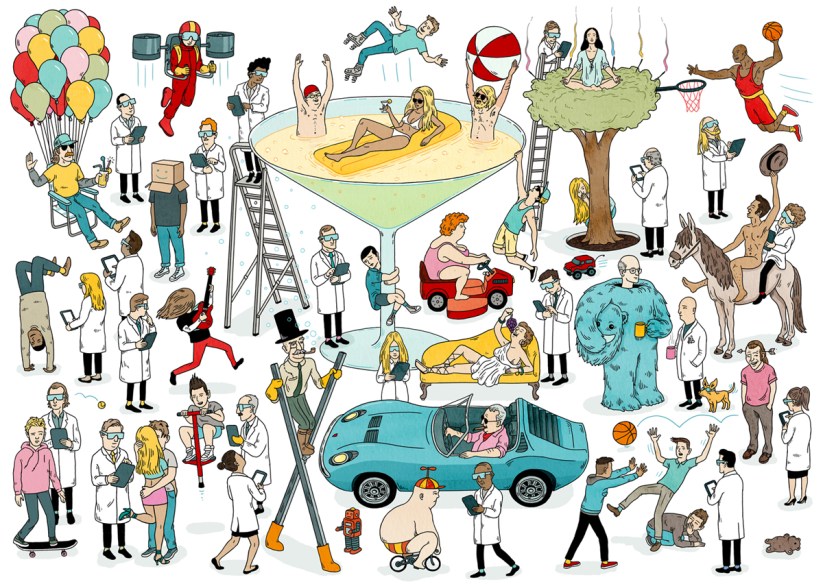
Andrew Rae work – “The science of Happiness” published in the New York Times.
Who is this Andrew Rae?
 Andrew Rae is an illustrator who uses simple hand rendered line and a combination of paper, felt pens, watercolour, ipad, iMac and Wacom pads and screens to render irreverent images of characters, ghouls, robots, machines and creatures which are used in an editorial, publishing, advertising, animation and mural context. He is a regular contributor to The New York Times Magazine and has worked for many clients worldwide including Apple, The London Science Museum, Google and The Guardian.
He was art director on the award winning BBC animation Monkey Dust, his graphic novel “Moonhead and the Music Machine” is published by Nobrow and he has illustrated “This is Warhol”, “This is Dali”, “Where’s Warhol” and “My Crazy Inventions Sketchbook” published by Laurence King. He currently lives and works in London near Highgate Cemetery.
]]>It’s hard to believe that you could make a good definition of “Tasteless” music. They are certain genres that I detest that others are obsessed with liking. There are some words to songs that I consider absolute trash and destructive to our society. Yet others, even people that are within your circle listening to it all the time.
I would say at least this; If you make a change to the instrumentation, does it still hold up somewhat? If it doesn’t then it’s not really the music that you are enjoying. If you remove or change the words, replace them with different words or La La La etc., do you still think the song is somewhat interesting? If not then it really isn’t the music that you find interesting. If it is a different singer singing the exact same song, does it still kind of work, etc.? I really do think that the Iraj wrote good musical songs, but I don’t think that Mathinta and Victor Rathnayake is a good musical composition because of what I have suggested.

For me, this is hate music of any kind.
I might find some genres like pop a little fluffy and bubbly. In wester world, like twerk, juke and booty house can be demeaning to women (but it was developed in and to strip clubs so we can not expect much). I love a dark, satanic thrash at time to time but look at that as a stage show instead of a religious slight. In the end you could probably find some form of issue with most genres if you really wanted to, but there is only one music form that really makes me sick.
That is hate music. In Sri Lanka the most known kind of hate music made popular by Iraj and his hate filled fans. There are other forms in Sri Lanka just less known. Frankly, I have no desire to know them better. Just enough to stay away from them.
It’s a disgusting use of music in my mind and probably the one type of music I refuse to open my mind to.
I am going to end this by stating something a little off the topic. Which is my reference to people who hate every thing. Haters are not all racist. The movement was originally a working class, multi-racial movement that mainly listened to reggae and ska offshoots. Some eventually highjacked the movement and now we have a hard time (especially in Sri Lanka) separating Nationalists from racism. There are many types of Nationalists and yes a lot of them listen to hate music and it can be confusing to ones not familiar with the subculture. Sorry for ending with an off topic rant. I just feel more should be aware of this when talking about hate music and the cultures involved.
There are more stupid people in Sri Lanka than people with above average intelligence, and those with average intelligence apparently like fitting in with the lowest common denominator.