The Hindus called ‘prana’ the energy-giving substance or the force that keeps the body alive. In 1971 Dr. Dolores Krieger, now Professor Emerita of Nursing in New York University, found out that there existed similarities between haemoglobin and this particular substance known to the Hindus. Krieger developed therapeutic touch with Dora Kunz, a Dutch-American psychic and healer and also a president of the Theosophical Society in America. Krieger believes that the therapeutic touch has roots in ancient healing practices such as the laying on of hands, although it has no connection with religion or ‘faith healing’. According to her, the healer or the therapist acts as a human energy support system until the patient’s own immunological system is robust enough to take over. Sr. Justa Smith, a biochemist, had also conducted research on the effects of enzymes, particularly trypsin (an enzyme in the small intestine that digests protein molecules) when a healer touched his patients.
Krieger took a test group of 19 sick people and a control group of 9 healthy people to a farm in Massachusetts where during the 6 days of the experiment each sick person was treated by laying of hands by a healer named Oskar Estebany. All medication was stopped and ill and healthy people were given the same diet and the same routine. Haemoglobin was taken in the beginning and at the end of the experiment. The results were astonishing, for changes had occurred in the haemoglobin level of those who were sick. Krieger wrote that her experiment produced impressive evidence in support of something that is at work while hands were laid on the patients. She suggested that the topic should be researched more.
Other experiments of this kind of healing called ‘psychic healing’ or ‘therapeutic touch’ gave similar results. The scientists explain the phenomenon by saying that something yet to be discovered may happen when healers direct their energy to the sick. Whether it triggers off cure for ailments, has given rise to controversy.
It has been reported that at times without even touching the patient, the disease vanished. The treatment with therapeutic touch has supposedly gained immense popularity in America. There the nurses practise this method quite often. Krieger wrote in the American Journal of Nursing that she became convinced that healing by the laying of hands on patients is a natural potential in man. She herself first experimented with it, later expanding her research to include 32 nurses. She assured that the treated group recorded significant changes in the haemoglobin value.
In 1972 Krieger began teaching her therapeutic touch at nursing schools and soon established a national network of nurses trained in the technique. Even though the medical practitioners are unconvinced of her claims, they have failed to disprove it either.
Another magic treatment is ‘biofeedback system’ which trains people to control many bodily functions and processes such as temperature, blood pressure, muscle contraction and even heartbeat. In this technique, founded by Alice Green and her husband Dr. Elmer Green, a patient is connected to a sensitive monitor which provides a record on the relevant bodily activities. The patient is asked to visualise whatever he wants his body to do, for instance, to lower his heartbeat or blood pressure or any other thing. The patient tells his body to do it while he himself relaxes. Then the monitor feeds back the information to the patient that his heartbeat has slowed down by one count or two counts. The reported indications fill the patient with more confidence that leads to his repeating the same more confidently. The signs of disease, ultimately, disappear.
Kansas is the most famous place for the biofeedback system. According to Greens, the founders of the technique, it does nothing to the person, but it is only a tool for releasing a potential. Dr. Green has conducted experiments to examine an Indian yogi seated on a bed of nails.
Meanwhile, a biofeedback system was used to rehabilitate damaged muscles at Emory University in Atlanta. At the Centre for Behavioural Psychiatry and Psychology in Michigan, this system was used to cure migraine while psychiatrist Dr. Kenneth Greenspan from the Columbia Presbyterian Medical Centre in New York has used the system to treat post-surgical cardiovascular patients, achieving a great success by treating 22 patients over a period of 3 months and curing them completely. By the end of the treatment all the patients achieved remarkable improvement in mobility and relief from pain. Dr. Greenspan has included meditation and breathing exercises as well in his biofeedback treatment.
Another 61-year-old patient was suffering from throat cancer and all the medicines had failed to cure him. A physician named (Dr.) Corl Simonton started his experiment with brief mental exercises to be repeated three times a day with meditation for 2 ½ minutes. The patient was to silently repeat the word ‘relax’ with every relaxed breath and relax jaw and throat muscles as well. He was asked to visualise something pleasant, imagine the tumour and particles of radiation bombarding it and finally imagine the cleaning process done by the white blood cells. Following this routine for 7 weeks the growth of the tumour was arrested. The patient was discharged from the hospital, as he was declared fit.
Both techniques, although doubted by medical scientists, are unique in themselves and have reportedly cured many critically ill patients. However, these two branches of healing methods have no relation with either acupuncture, homoeopathy or the traditional age-old custom of magical witchcraft.
Acupuncture, in which thin needles are inserted into the skin, is a form of alternative medicine falling into the category of pseudoscience, and belongs to the traditional Chinese medicine.
Homoeopathy, founded by German physician Christian Friedrich Samuel Hahnemann (1755-1843), is also a pseudoscientific system of alternative medicine resting upon his inoculation-type treatment of disease by minute doses of drugs that in a healthy person produce symptoms similar to the disease. Hahnemann was one of the first to recognise that many diseases are psycho-somatic in origin. Although his theories have been strongly challenged, he was far ahead of his time in realising that physical illness was all too frequently only the outward symptom of inner psychic and spiritual disease.
‘Spirit healing’
Another concept of healing that could belong to the realm of psychic healing is spirit healing affected by untutored healer-mediums for whom Brazil and the Philippines are reputed. They are dubbed ‘psychic surgeons’ owing to their extraordinary ability to perform risky surgical operations on incurables without anaesthetics and only with most rudimentary, unsterilised medical instruments. As narrated in her fascinating book Every Wall a Door (1973), British journalist Anne Dooley took a trip to Brazil and witnessed the miracle of spirit healing aided by ‘spirit guides’ while the patient, fully conscious, fell no more than pin-prick. She had been shown by a colleague, stupefying colour photographs of extruded eyeballs and had been told how Lourival de Freitas, a handsome, grizzle-haired six-footer and a taxi driver by profession, and one of Brazil’s leading psychic surgeons, had thrust an unsterilised kitchen knife under a girl’s eyelid while he was in a trance and then laid a growth on her cheek. The girl had appeared to feel no pain whatsoever. Freitas never accepted any payment for his work. Dooley said that Freitas removed her own tonsils with a scissor insertion in mouth and even sucked out a coagulated blood clot from her back. She produced in her book photographic evidence of this feat which seems to be medically unbelievable.
Another well-known psychic surgeon of Brazil is José Pedro de Freitas (1921-1971), affectionately known to millions by his nickname ‘Arigó’. He was jailed twice, as such surgeries were illegal in Brazil, but the popularity he enjoyed is said to have rivalled that of another fellow Brazilian, the famous footballer Pelé.
‘Faith healing’
Faith healing, in particular, is a Christian practice of prayer and laying on of hands which involves a strong belief in a supreme being or a divine intervention. Although scientists and philosophers, as in the previous cases, label faith healing as pseudoscience, there have been challenging claims that faith can cure blindness, deafness, cancer, HIV/AIDS, developmental disorders, anaemia, arthritis, corns, defective speech, multiple sclerosis, skin rashes, total body paralysis, and various injuries. Not only prayer, but a visit to a religious shrine too, can effect a cure. The miraculous healing at the Marian shrines of Lourdes in southern France and Fatima in Portugal, as confirmed by physicians, is well documented. Many crutches hanging in the grotto of Lourdes are mute witnesses to those who arrived lame but left cured.
In conclusion, we are told of physicians who advise relatives and friends of critically ill persons whose death is imminent when all means within medical science have failed, to turn to their respective religions and creeds as a last resort. ***
]]>
“You have nothing to fear. You don’t need your defensive thorns. I will protect you and hold your lives in very great regard and affection”, Luther Burbank, the eminent American botanist from Santa Rosa, California, used to say this to his plants. He affirmed that the plants could understand his words of endearment and respond to these gentle and loving remarks.
Burbank (1849-1926) was famous for his nurseries and he succeeded in developing a spineless cactus (useful for cattle-feed) and the plumcots (hybrids between different species of plums, peaches, etc.) . He is credited with developing more than 800 strains and varieties of plants, including fruits, flowers, grains, grasses and vegetables. His experiments in the field of agricultural science, spanning many years, earned him the name the “Wizard of Horticulture”. Burbank also propounded the theory that plants have more than twenty sensory perceptions.
Another famous scientist who conducted experiments in the 1900s on the ‘twenty sensory perceptions of the plants’ was the Indian botanist and physicist Sir Jagdish Chandra Bose (1858-1937) who is considered the father of Bengali science fiction. Being professor of physics at Presidency College, Calcutta, in British India, he discovered that although plants are devoid of a nervous system or a brain, they respire and digest food. Plants can move as well without there being any muscles. In the early 20th century Bose invented crescograph, a device for measuring the growth in plants. Later he made a number of pioneering discoveries in plant physiology. A crater on the moon has been named in his honour.
The experiments of Burbank and Bose have established beyond any shadow of doubt that plants, like animals, react to stimuli. The responses given out by plants were similar to the responses of animals. Seemingly, there is a close resemblance between the skins of reptiles and amphibians on the one hand and the skins of plants of fruits and vegetables on the other. Plants too get tired of ‘continuous stimulation’ as in the case of animals. The leaves of the plants respond to light just as the eyes of the animals do to the same stimulus. Plants could also be rendered ‘unconscious’ if chloroform was administered.
Botanical research has demonstrated that plants are capable of responding to a broad range of stimuli: chemicals, oxygen and carbon dioxide concentrations, light, temperature, moisture, gravity, infections, parasite infestation, disease, physical disruption, sound and vibrations and touch.
Cleve Backster (1924-2013), a New York polygraph expert and an interrogation specialist with the CIA (Central Intelligence Agency), found that when he attached the electrodes from the machine to the leaves of a plant, it responded to his thoughts and intentions. Once he thought idly about burning the plant, and the needle on the graph paper fluctuated wildly.
Pierre Paul Sauvin, an officer of the International Telephone and Telegraph in New Jersey, U. S. A., had a radio transmitter attached to his leg under the trousers. Through this transmitter he would talk to his pet plants at home in a very affectionate manner. His conversation would last for a few minutes and he would also listen to the responses he received from the plants.
Research conducted by Professor June Nasrallah discovered that the plants’ pollination mechanism also serves as a mechanism against self-reproduction that bears scientific evidence that plants could be regarded as self-aware organisms. Nasrallah received her B. Sc. degree in Biology from the American University of Beirut, Lebanon and her Ph. D. in Genetics from Cornell University, New York.
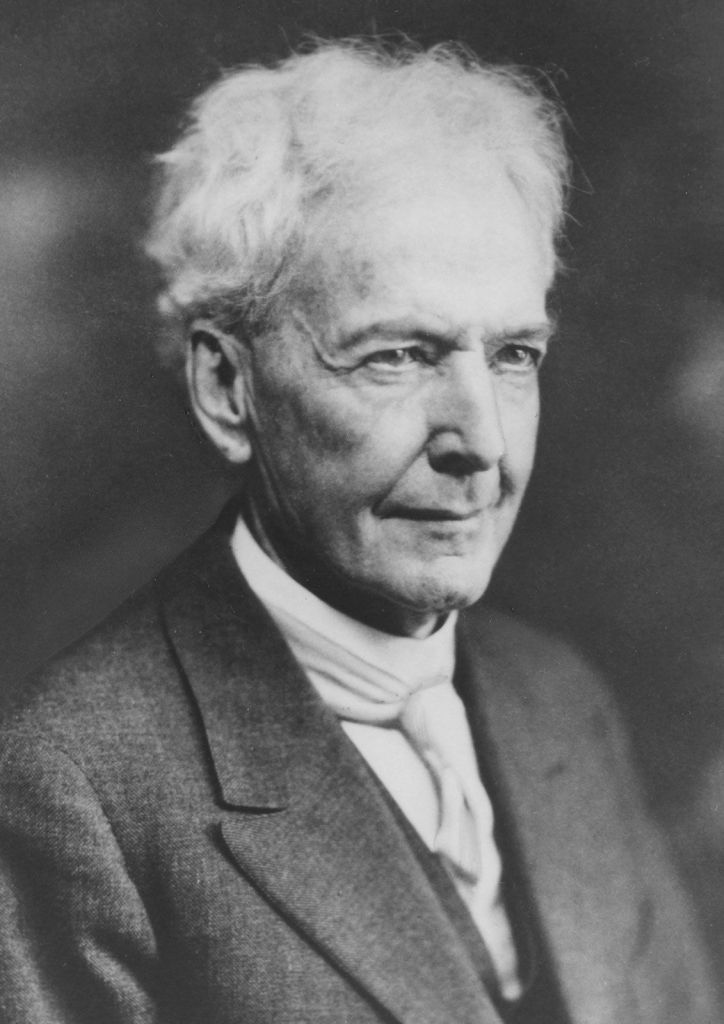
Luther Burbank 
Sir Jagdish Chandra Bose
Plants’ reaction to music
Dorothy Retallack, another lady scientist from Denver, in the U. S. state of Colorado, performed experiments in 1968, taking a mixed group of plants consisting of philodendron, corn, beans, radishes, pelargoniums and African violets. The musical notes were played on the piano and the ‘sitar’ (a plucked stringed instrument used for Hindustani classical music) for twelve hours a day. After a period of three weeks, she observed that petals turned towards the source of music and seemed to flourish, recording an accelerated growth. The classical music of German composer and musician Johann Sebastian Bach (1685-1750), Austrian composer Franz Joseph Haydn (1732-1809) and the East Indian ‘sitar’ music had created positive effects on the plants. Retallack also noted that when her plants were forced to listen to acid ‘rock music’ (originating from black American music in the U. S. in the late 1940’s) on her record-player they ‘cringed’ and ‘died’ except the African violets. Folk music and jazz (originating in the African-American communities of New Orleans, U. S. A.) seemed to have a neutral effect on the growth of plants. The plants which were in the ‘control’ group and were not subjected to noise, had grown normally.
Does prayer help plants to grow? Many plant owners would swear that this is true. In the Power of Prayer over Plants, the Rev. Franklin Loehr describes a series of 700 experiments by 150 persons with 27,000 seeds. The seeds that had received the prayer treatment grew more rapidly than the ‘control’ group of seeds that were ignored.
Some psychics claim that they can see auras, supposed emanations surrounding not only people and animals but also plants. Ethel DeLoach of Morristown, New Jersey, has spent hours watching the aura of a leaf as it dies. When the leaf is cut in half, the auras of the two halves reach out to each other. When the leaf is dead, the aura is gone. The Kirlian process developed in Russia has photographed auras of many living organisms, including plants. Kirlian photography is a collection of photographic techniques used to capture the phenomenon of electrical coronal discharges, named after Semyon Davidovich Kirlian (1898-1978), Soviet inventor of Armenian descent, who made the discovery accidentally in 1939. A coronal discharge is an electrical discharge caused by the ionisation of a fluid such as air surrounding a conductor carrying a high voltage.
Banyan tree and basil plant
There is a particular day in the month of June when the married women in India worship the banyan tree (Ficus benghalensis, native to the Indian Subcontinent and ranked among the largest trees in the world by canopy coverage) and pray for the long life of their husbands. The women are attired in an elaborate dress, keep a fast and go to the banyan tree, which is the National Tree of India, and entreat it to protect their husbands from all dangers and grant them a life of happiness and prosperity. Should there be any other expectations or hopes to be fulfilled, the same may be spoken of to the tree. It is firmly believed that the tree listens to the words of the ladies and responds accordingly. Similarly, the basil plant is worshipped almost daily by the devotees, praying for protection of the family in times of difficulty.
Carnivorous plants
The fact that plants can perform and direct conscious activities is corroborated well by their ability to entrap and kill insects and arthropods (invertebrate animals) as a source of nutrients for their survival. These carnivorous plants have adapted to grow in places where the soil is poor in nutrients, especially nitrogen. They can be found on all continents and many Pacific islands except Antarctica.
Carnivorous plants execute certain movements when solid bodies come into contact with them or touch or strike their surfaces. Many such plants have developed this irritability to contact or impact and entrap and hold insects as an unsuspecting prey. The tendrils of climbing plants coil around supports and lift the foliage and flowers into sunlight. Many ‘sensitive’ plants quickly fold their leaves when they receive a stimulus, thus avoiding injury from hail or grazing animals.
Five basic trapping mechanisms are found in carnivorous plants:
- Pitfall traps that capture insects in a rolled leaf that contains a pool of digestive enzymes or bacteria [eg Mulu pitcher plant (Nepenthes muluensis), endemic to Borneo].
- Flypaper traps that use a sticky mucilage (thick, gluey substance) (e.g. Sundew or Drosera, native to every continent).
- Snap traps that perform rapid leaf movements [eg Sleepy plant or Touch-me-not Shameplant (Mimosa pudica), now a pantropical weed].
- Bladder traps that suck prey into a bladder that generates an internal vacuum where the aquatic invertebrates are digested (e.g. Utricularia vulgaris, a free-floating plant found in Asia and Europe).
- Eel traps that use inward-pointing hairs or bristles to force prey into a digestive organ [e.g. Corkscrew plant (Genlisea violacea), distributed throughout Africa and Central and South America]. ***
About an hour before the tsunami hit Thailand in December 2004 the villagers of Bang Keoy recalled watching a startled herd of buffaloes on the beach lifting their heads, looking towards the sea and then scurrying for higher ground. The villagers who followed them were reportedly saved.
When the same giant waves ravaged the southern and eastern coasts of Sri Lanka, killing many thousands of coastal dwellers and flooding the Yala National Park, home to many elephants and several leopards, up to 3km inland, wildlife officials were quoted as saying that seemingly no dead wild beasts were found in this animal reserve as they had left the coastal area well in advance, sensing the oncoming disaster. Some visitors who were at a bungalow in the park claimed that around an hour before the tsunami struck the coast, a herd of spotted dear had climbed up the sand dune behind the bungalow and were gazing out at the sea, oblivious to the presence of humans around.
During World War II when England was being pounded almost nightly by the German Air Force, many English families learned to rely more on their cats than on radar alerts for warnings of danger.
In earthquake-prone China authorities encourage people to report unusual behaviour of animals. In many cities earthquake warnings are said to be based on such behavioural reactions of animals.
When the earthquake devastated the Yugoslavian town of Skopje in 1963 the animals of the local zoo reportedly aroused the zookeepers from their sleep. Elephants charged bars of their cages and tigers paced the cages, roaring incessantly. Police officers on patrol noticed the absence of birds in the battered town.
When Bezymianny volcano in Kamchatka Peninsula in the then Soviet Union erupted during the winter of 1955-56 not a single bear was killed even though many lived in its vicinity. Russian scientists claimed that the bears interrupted their hibernation and went to safer spots before the volcano’s activity was first recorded on instruments. A similar happening is described by Nandor Fodor (1895-1964), the American parapsychologist of Hungarian origin. Prior to the eruption of Mount Pelée in the West Indies island of Martinique, the cattle became extremely restless, dogs howled continuously and birds stopped singing and left the area.
Such happenings, inevitably, tend to give credence to the widely-held notion that animals possess a sixth sense in addition to the known five senses: sight, smell, touch, taste, and hearing. It is now recognised that there could be many more, and senses used by other non-human organisms could be even greater in variety and number.
Author Bill Schul, writing on the amazing world of animals in his enthralling book The Psychic Power of Animals, says that many kinds of animal behaviour cannot be attributed to our present knowledge of the five senses and hence they may be traceable to the definition of extrasensory perception (ESP). He writes about crabs who are capable of monitoring ocean tides a thousand miles from the sea. Schul cites the case of a cat named Henry who never failed to show up every Thursday evening at an auction house less than two blocks away, but never on other days. He would arrive fifteen minutes ahead of the crowd and perch himself atop a wooden file cabinet to watch the entire proceedings. He narrates the incident of another cat who paid his last respect at the grave of his master to whom the cat had been extremely close. Another anecdote was the case of a man who owned a large cattle ranch and who cared much for his animals. During the funeral procession of the man herds of animals gathered from the surrounding pastures in long lines, tossing their head, pawing the ground and lamenting in tones. When John Gambill, founder of a wild goose reservation in Texas, died in 1962 hundreds of geese flew into the hospital, honking their requiem. The author also writes about the bees who attended the funeral of their keeper.
Animals’ conception of death
This, then, raises a very interesting question: do animals understand the nature of death? Although some animals seem to know nothing of its approach, others get ready for the event. For example, certain dogs and cats search for places to be alone at the time of death, knowing that it is imminent. Researchers have found that chimpanzees demonstrate a haunting fear of death. Also puzzling are the cases in which an animal has come to know the death occurring to its master many miles away and animals who have willfully given up life upon the death of their masters or shortly thereafter.
Interesting cases of animal spirits (mostly of dogs, cats and horses) also abound. If animals do survive bodily death, the question arises as to what awaits them on the other side. Schul queries whether animals can experience reincarnation and thereby evolve towards higher states of awareness. He points out that animal qualities such as love, loyalty, dedication and sacrifice are not temporarily expressed and such virtues are not seen in all creatures. Meanwhile, the reaction of animals to ghosts and apparitions has been postulated to bear further evidence for an unknown sixth sense.
Navigational skills of birds and fish
Way back in the 1960s, Dr. Lester Tarkington, a scholar, had theorised that birds navigate by means of geomagnetic fields. Schul concurs with him, but argues that this theory does not explain how monarch butterflies can locate targets fifteen hundred miles away, how the green turtles navigate nearly fifteen hundred miles of open ocean, swimming from Brazil to tiny Ascension Island, or how a cat can know the exact time of the day. Scientists are still breathless over the discovery of dolphins having larger cerebral cortexes than humans. This grey folded mantle enveloping the rest of our brain to provide us with superior reasoning power is more complex in the dolphins than in ourselves. According to one study, dolphins’ brains work sixteen times faster than a man’s.
Animal naturalist William Lon spent his life researching the communication patterns of animals separated by many miles and concluded that the distance was no obstacle to their communication.
The ability of our pets to determine the arrival of a family member also clearly reaches beyond familiar sounds of parking cars or footsteps. Many family pets are able to determine such things well in advance. Animals also seem to know when they are going to the vet.
Animals with special attributes
The Romans viewed owls as an ill omen of impending disaster. In practically every culture, the belief is rife that howling of a dog at night would forebode death of someone.
In many ancient cultures elephants were seen as sacred animals endowed with special powers and attributes. But snakes, regarded as the cleanest of all animals on earth, were revered much more. The Hopi Indians of New Mexico and Arizona, though not worshipping them, rather believe that the snakes are highly psychic and communicate with the higher spirits. A god named Kukulkan was worshipped by the early Mayan Indians of Yucatan, Mexico. The Indians of Asia too accept the supernatural wisdom of these creatures while in Egypt and Greece snakes were held in high esteem. Roman gods of medicine were depicted holding a staff with a snake coiled around it. An exception was the Judeo-Christian tradition, as according to Genesis, Adam, the first man, was deceived by the serpent and hence it was despised for this Fall of man. Yet, the verses in Job 12: 7-10 clearly acknowledge the wisdom of all animals inhabiting land, air and sea. Jesus Christ is depicted as the Good Shepherd who lays down his life for his sheep. St. Francis of Assisi (1182-1226), founder of the Franciscan Order, always viewed the animals surrounding him as his little brothers and sisters. Buddha preached that all living creatures should be treated with kindness and compassion. One of the great defenders of animals in our times was Albert Schweitzer (1875-1965), the Alsatian-German theologian, philosopher and mission doctor in Equatorial Africa, who received the 1952 Nobel Peace Prize for his philosophy of “Reverence for Life”.
Many scientists, in agreement with mystics, are now speculating that the brain and mind are not the same and part of the mind is in touch with everything in the universe, ignoring form, space and time. South African biologist Lyall Watson (1939-2008), trying to explain natural and supernatural phenomena in biological terms, tells in his groundbreaking book Supernature that there is one life which embraces every animal and plant on the planet and we are all part of the whole. Mad Bear, an Indian medicine man of the Iroquois in North America, says that there are other ranges of consciousness-invisible, inaudible and intangible-that most people have no contact with. The Cherokees, the Sioux and the Crow tell of the strange psychic exchanges between them and nature.
Some researchers claim that animals, less belaboured by the complexities of life arising from the five senses, are more in tune with nature and psychic dimensions than humans. John Burroughs (1837-1921), an American naturalist, called it the “hidden heart of nature”.
Arguments against the sixth sense
However, all scholars do not subscribe to the “sixth sense theory”. British biologist Ivan Sanderson (1911-1973) contends that it could be “supersensory” perception rather than “extrasensory” perception that enables animals to predict earthquakes.
Matthew van Lierop, a specialist on animal behaviour at Johannesburg Zoo in South Africa, says that though there has been a lot of anecdotal evidence of animals’ predictions of disaster, it has not been proven and no specific studies have been conducted due to difficulties in lab or field testing.
John Caprio, a neurobiologist at Louisiana State University in Baton Rouge, who is studying taste and smell in fish, says that scientific evidence for a sixth sense in animals is slim. According to him, animals must be responding to real sensations, without using a hitherto unknown faculty. Caprio says that strange behaviour of animals cannot be viewed as something paranormal. He argues that over generations, animals have developed their senses in ways that allow them to detect sounds, smells, vibrations, or other sensations that people cannot detect.
Our ears are tuned to a certain range of sounds—those with frequencies between 20 and 20,000 hertz. One hertz is equal to 1 cycle (or vibration) per second. As frequency goes up, pitch does, too.
Dogs can hear sounds up to 45,000 hertz. Bats can hear up to 120,000 hertz. Dolphins and some of the fish can hear frequencies greater than 200,000 hertz.
According to Caprio, elephants and whales, on the other hand, communicate using frequencies that are lower than those we detect. Flies can even hear each other when they land on a blade of grass. “If your dog suddenly starts whining, it means that he has heard something your ears cannot detect”, he explains.
A whole spectrum of light and sound lies beyond what we normally see or hear. The human eye can detect light of only certain wavelengths (from violet to red), but some animals can detect ultraviolet light or infrared light. ***
]]>In 1979 Geoff and Pauline Simpson and Len and Cynthia Gisby, two married couples, went to Spain on vacation. While they were driving through France bound for Spain, they stayed overnight at a hotel. Both couples observed that the hotel was extremely outdated, as the bedroom had no window panes, only shutters. Nor did it have pillows or sheets, only calico fabric. Even the hotel bill they paid seemed too less for the time. When the vacationists had their photos developed, the pictures of the hotel were completely missing from the roll. The couple later returned to the same hotel to spend a holiday, but they could not find it.
An old man from Norfolk, England (let us call him ‘Mr. Squirrel’ for the sake of convenience), had a hobby of collecting coins and keeping them in plastic envelopes. In 1973 he went to a shop in Great Yarmouth, a seaside resort town, to buy these envelopes. This was his first visit to the shop. On entering the shop, he found the atmosphere quite quaint. A woman in Edwardian dress served the customer who bought a bunch of envelopes and came out. When after a week Mr. Squirrel went there again to buy some more envelopes, he was shocked to notice that the place had completely changed. Still having envelopes in hand, he inquired about the woman at the counter, but the staff knew no such woman who worked there. Mr. Squirrel was disconcerted when he was told that those envelopes were never sold at the shop. Then he checked the date of manufacture of the envelopes and came to know that they were manufactured before World War I (1914-1918) and hence they were antique pieces.
Aviators in World War I reported that while circling airports in England, they were utterly amazed to see huge, gleaming metal aircraft of today, totally different from the primitive airplanes of their time.
Unique case of the two English tourists
The classic and much publicised case is the experience which two English unmarried ladies underwent on a visit to the Petit Trianon in Versailles in Paris in 1901. They were Anne Moberly (1846-1937) and Eleanor Jourdain (1863-1924). Moberly, daughter of Bishop of Salisbury, lived in a cultured, donnish society and was appointed Principal of St. Hugh’s. Jourdain, daughter of a Derbyshire vicar, held a doctorate from the University of Paris, specialising in French literature.
While visiting the place on 10th August 1901, they passed some farm buildings which Jourdain described as “deserted”. She noticed agricultural tools, among which was a plough lying about and found that the place gave a “saddening” impression. At a window Moberly saw a woman shaking a white cloth, but Jourdain did not see her. When they walked forward, a queer feeling of depression and unreality began to envelop them. Next they met two men in greenish uniforms with three-cornered hats, obviously gardeners, working with a wheel-barrow. Jourdain saw a cottage in the doorway of which a girl and a woman were standing and the woman was handing a jug to the girl. Their unusual mode of attire, quite different from the style of the early 1900’s, caught the attention of Jourdain: both wore white kerchiefs tucked into the bodice. Then both ladies saw a man, with a dark complexion, marked by smallpox, sitting in a garden kiosk, wearing a heavy black cloak and a slouch hat. His evil expression and repulsive appearance, according to the ladies, filled them with fear and unease. The man turned to look at them, but his eyes were somehow unseeing. He looked through them. This tableau of a past event in the 1700’s, according to the ladies, had an eerie, lifeless and other-worldly appearance- “like a wood worked in tapestry”, as Moberly put it. “There were no effects of light and shade and no wind stirred the trees”, she said. Later they encountered a dark-eyed, handsome man with crisp, curling black hair beneath a large sombrero hat. Though they heard him running up towards them, he appeared unaccountably beside them. He uttered a few words excitedly in French and ran on. They had no idea of where the man went, although they could still hear the sound of his running. Suddenly he was just not there. Moberly and Jourdain walked over a small rustic bridge which crossed a little ravine. A cascade fell down a green bank with ferns and stones. Beyond the bridge a small country house stood in the distance. On the terrace in front of the house Moberly saw a lady with a pretty face, sitting sketching. This lady, who was not young, looked up as they passed by. But, strangely, Jourdain did not see her. When they visited the same place again, the scenery had changed and they could not find any trace of what they had seen before. The two ladies later co-authored a book in 1911, entitled An Adventure, to recount their uncanny experience. Their intensive research to solve the mystery led them to conclude that the repulsive-looking man at the kiosk was Comte de Vaudreuil (1740-1817), a Creole from a French colony in the West Indies and one of Queen Marie-Antoinette’s friends who was responsible for her downfall. The running man was a messenger who had come to warn the queen of the approaching mobs from Paris, due in an hour. The girl seen in the cottage doorway was the gardener’s daughter Marion. The pretty lady was none other than the queen who was guillotined in 1793 during the French Revolution. Moberly, on seeing in 1902 a portrait of the queen by the Swedish painter Adolf Urik Wertmüller (1751-1811), was struck by its resemblance to the lady on the terrace. Moberly and Jourdain theorised that as Queen Marie-Antoinette was going through mental agony in the Hall of Assembly on 10th August 1792, she cast her mind back to her last day at the Petit Trianon on 05th October 1789. The English pedagogues surmised that they had inadvertently entered into the act of the queen’s memory when alive, exactly 109 years later, on 10th August 1901, thus accounting for the weird feeling of depression that gripped them.
In the incidents narrated above, persons have unwillingly or randomly leapt into the past or future and journeyed back to the present after some time. Such incidents are termed “time slips”, “time travels” or “time reverberation”. As these spontaneous occurrences, that are not commonplace, cannot be explained conclusively by modern physics, they are often rejected as complete bunk; classified as hauntings or visiting ghosts, hallucinations, delusions and even cases of reincarnation. But, when one studies the case of Mr. Squirrel who ‘returned’ from the past with tangible or physical evidence, namely the envelopes he had bought, such explanations seem to be no longer tenable.
The author Andrew Tomas in his thought-provoking book Beyond the Time Barrier, touching on the Petit Trianon mystery, says that on 10th August 1901 electric storms swept over Europe and the static in the atmosphere could have amplified the temporal field. He notes that certain peculiarities of the phenomenon have the distinguishing marks of a radio or television programme: fading of sounds, melting of images, wavering of scenes, etc. Pointing out the episode of the woman handing a jug to the girl, the author says that there was a pause in the action as if a motion picture stopped and became a “still”.
Robert Charroux (1909-1978), the prolific French author on ancient astronauts and civilisations, in his book Le Livre des Mondes Oubliés, writes about a similar event: a bizarre vision that unfolded itself in Hiroshima a few months after the dropping of the atomic bomb on the city on 06th August 1945. According to an authentic witness who was a diplomat and who later died of radiation, on certain evenings, at twilight, images of the destroyed bridges appeared above the river, with cars, pedestrians, and the usual liveliness of the city. It looked like a projection of a film that had been made prior to the atomic explosion. The witness said that the phenomenon occurred only under certain atmospheric conditions, but no one could predict it. The embassy staff thought that they had gone mad owing to the radiation they had been exposed to.

Robert Charroux 1909 – 1978 
John A Keel 1930 – 2009
The British soldier, aeronautical engineer and philosopher John William Dunne (1875-1949), the author of the widely-read book An Experiment with Time (1927), commenting on the strange case at the Petit Trianon, said that if Einstein is right [the German-born Albert Einstein (1879-1955), one of the eminent physicists of all time, has demonstrated that there are no straight lines in space which is curved], the contents of time are just as real as the contents of space. Dunne suggested that our perception of time as linear is an illusion brought about by human consciousness. He postulated that past, present and future exist continually in a higher dimensional reality and we only experience them sequentially due to our mental perception of them. Dunne’s theory sparked both interest and controversy among the scientific community.
Although some have not doubted the integrity of the two level-headed academics, who had glimpsed 18th century France, others discredit their experience altogether, claiming that they had been hallucinating or simply had misremembered things. Yet, the two ladies were convinced that their experience could be of great value to science some day. Their projection into an historic past would have been ridiculed in a pre-Einsteinian epoch in which science knew nothing of the relativity of time.
Time appears to have an apparently inevitable one-way direction into the future, which is often referred to as the “arrow of time”, a term usually attributed to Sir Arthur Stanley Eddington (1882-1944), the English astronomer and mathematician. This forward movement of time convinces us that a broken glass cannot resume its ‘unbroken’ state. Yet, according to the Theory of Relativity, the reality of our universe can be defined by four dimensional space-time so that time does not actually “flow”, but it just “is”. Prophecy, the talent for precisely predicting the future, would be impossible if the future did not already exist in some form. Hence, the perception of the arrow of time into the future, experienced by us in our day-to-day life, appears to be an illusion of our consciousness. If the future exists already, it can be assumed that the past too, theoretically, is reachable in like manner. Events do not happen, they are just there, and we come across them.
In physics time is the most elusive and frustrating principle, as admitted by scientists. It is only when we are awake and conscious of the objective world that the time barrier manifests itself so strongly.
John Alva Keel (1930-2009), the American journalist and ufologist, and an international authority on the paranormal, writes in his stimulating book The Cosmic Question that as we are trapped in the stream of time, we are able to move in only one direction: from the past to the future. But nature is not so confined. He says that time can become a circle with the past and the future linked together, just as space is curved, as proved by Einstein. Based on this assumption, Keel argues that if we could propel ourselves far enough into the future, we might find ourselves back in the age of dinosaurs. The author Tomas shares this belief with Keel, saying that the past is gone forever is only partially true and past happenings do exist somewhere on the temporal axis. “Apparently, we lean too much on the evidence of the five senses. To depend upon physical perceptions without making corrections is to believe the seeming movement of the sun around the Earth, the flatness of the Earth and the small size of the stars”, he writes.
Rodney Davies, a paranormal researcher and author of Time-Slips: Journeys into the Past and Future (2019), says that it is possible for some people to slip into the past and end up stuck which might explain why thousands of people go missing every year. He also researched odd stories of strange machinery found by 18th century labourers and jewellery discovered in seams of coal. Most of the time slip stories seem to have happened before the 1990s, implying that the modern world does not lend itself to such mystical occurrences. Davies argues that as our lives are too occupied with TV and social media, Zoom and smartphones, we do not have sufficient time to be still.
Time vortexes and reversibility of time in the atomic world
There are several places on earth, known as “time vortexes”, believed to be portals to other worlds or dimensions with a different space-time continuum. The Devil’s Sea near Japan is thought to be one such place, but the most notorious one is the Bermuda Triangle in the western part of the North Atlantic Ocean where ships and aircraft have mysteriously disappeared over the years without a trace. Some researchers have conjectured that these areas may touch on sensitive areas of the earth’s magnetic field, in which the barriers between different times are reputed to be fluid.

Plato, the great philosopher from Athens in ancient Greece, in his book The Statesman, wrote about an oscillating universe that periodically reverses its time. At the end of each cycle time stops and then everything moves backwards. In this time reversal old men become young, strong and handsome until they find themselves crying in the cradle and disappear in the mother’s womb, instead of the grave.
This notion of Plato, posited twenty-four centuries back, could have sounded preposterous and outlandish, but in the field of nuclear physics, it is not so now. Dr. Gerald Feinberg (1933-1992), a physicist and futurist, of Columbia University in New York city, claims that tachyons or hypothetical atomic particles travelling faster than light, move backwards in time. According to Dr. Richard Phillip Feynman (1918-1988), an American physicist, the positron or the antielectron, travels from the future to the past. He received a Nobel Prize in Physics in 1965 for this discovery. These time reversals in the atomic world, assuredly, would open up new vistas in our thinking with regard to the nature of Time. ***
]]>Lines and patterns depicting geometric, animal, bird and plant shapes have been drawn on the dry plains of southern Peru near the town of Nazca. These bewildering designs, visible from an aircraft and the surrounding foothills, have given birth to numerous suppositions and superstitions. Yet, despite all the research, no plausible explanation has been offered so far to unravel the mystery of the intricate designs, the existence of which was first mentioned by a Spanish chronicler in the 16th century.
Certain mysterious gigantic designs cut in the coastal desert floor, near the town of Nazca in southern Peru, have given archaeologists something to rack their brains over. These designs, known as geoglyphs, dating back to nearly 2000 years, have been created by scraping the rocky surface off the yellow subsoil to appear as straight and parallel lines, triangles, rectangles, quadrangles and trapezoids while spirals and zigzags form more distinct shapes of a monkey, a dog, a spider, a lizard, a whale, a hummingbird, a condor, and other birds. Another curious and inexplicable design concerns a slender rod with line and reel, similar to one used by fishermen.
The site of the world-renowned Nazca lines, which was declared a UNESCO World Heritage Site in 1994, is found over 300 km southeast of Lima, the capital of Peru. In total, there are more than 800 straight lines, 300 geometric figures and 70 animal, bird and plant designs, called biomorphs. Some of the furrows extend over a distance of nearly 50 km, crossing valleys and ravines and mountains, while the biomorphs range from 15 to 366 m in length. The new technology with drones has also helped discover the hitherto unnoticed figure of a relaxing cat when plans were underway to create a new path leading to an observation platform that would serve as a vantage point for visitors to see the geoglyphs. According to the Ministry of Culture in Peru, the figure was on the verge of disappearing owing to its existence on a steep slope prone to natural erosion.
The mention of the Nazca lines was first made by Pedro Cieza de León (1520-1554) in his book of 1553. Being a Spanish conquistador and chronicler of Peru, he described them as “trail markers”. Then, in 1586, Luiz Monzón reported having seen the “roads”. Although the crisscrossed lines were partially visible from the nearby hills, Peruvian military and civilian pilots were the first to report them in the 20th century.
In 1927 Peruvian archaeologist Toribio Mejía Xesspe spotted them while he was hiking through the foothills. He discussed them at a conference in Lima in 1939. His research led to the conclusion that the lines formed part of ancient sacred roads. Xesspe never flew over the area and so only saw the straight lines and failed to see the figures.
An astronomical calendar?
While Dr. Paul August Kosok (1896-1959), an American historian from Long Island University in New York, was in Peru from 1940-41 to study its ancient irrigation systems, he flew over the land and thus was afforded the opportunity to be the first to make an in-depth aerial examination of the lines. He chanced to see how lines converged on the horizon at the winter solstice in the Southern Hemisphere. The winter solstice occurs when either of Earth’s poles reaches its maximum tilt away from the sun and it happens twice each year. Kosok began to study how the lines might have been etched and he tried to fathom their meaning and purpose. Finally, he came to the conclusion that this unique area could be named as “the largest book of astronomy in the world”. According to him, the designs were laid in order to show the paths of the stars in such a way that the agricultural work of the year could be organised in due season.
Kosok also noticed that some of the radial centres were formed by small mounds, upon which vague structural outlines, undoubtedly of great antiquity, could be seen. No one knows whether they are contemporary with the linear tracings or they were built later to give the place a sacred character.
Kosok’s work was continued by Maria Reiche (1903-1998), the famous German-born Peruvian mathematician, archaeologist and technical translator, nicknamed the “Lady of the Lines”. She researched the desert drawings exhaustively for 40 years until her death, even taking up residence in a small house near the site to protect them single-handedly from reckless visitors. Reiche shared with Kosok, her predecessor, the theory of an astronomical calendar. Some Peruvian archaeologists too supported the Kosok-Reiche theory, but Johan Reinhard, a National Geographic Explorer-in Residence, debunked it in his book on the origin of Nazca Lines, claiming that the lines led to places where rituals were performed to obtain water and fertility for crops. He said that in such an arid region with so little rain, water was clearly an important factor. Most of the furrows are wide enough for a procession to pass along them which would suggest that they might have been used for ceremonial purposes, says French author Robert Charroux (1909-1978), a pioneer of the theory of ancient astronauts.

According to Reinhard, spiral designs have been found at other ancient Peruvian sites as well. Claiming that animal symbolism is common throughout the Andes, he argued that spiders are thought to be a sign of rain, hummingbirds are associated with fertility and monkeys are found in the neighbouring Amazon rainforest. (Peru has the second-largest portion of this rain forest after Brazil, comprising 60% of the country)
Johnny Islas, presently Peru’s chief archaeologist for the lines, says that the latest research indicates that the purpose of the lines was to ask the gods for water and fertility in this dry area. Anthony Francis Aveni (born in 1938), an American anthropologist and archaeoastronomer, agreed with Reinhard, saying that the straight lines and trapezoids are related to water.
The British-born American Astronomer Gerald Stanley Hawkins (1928-2003) used a computer in 1960 to check the astronomical interpretation of the Nazca patterns. The study proved that they were not designed as a celestial calendar.
An astroport for aliens: a crackpot theory?
Some people believe that the designs must have been made by unknown extraterrestrial beings in a remote past while others hold the view that the Nazca desert may have been used as an astroport by interstellar spacecraft thousands of years ago. Erich Anton Paul von Däniken (born in 1935), a Swiss author of several books (originally written in German and translated into English by Michael Heron) and a key figure for popularising the alien involvement in the culture and religion of early humans, suggested that the Nazca lines were the work of ancient astronauts. Däniken’s books attracted so many tourists to the Nazca region. But, the theories, expounded in his books, including the best-selling Chariots of the Gods – Was God an Astronaut?, published in 1968, have been rejected downright by both orthodox scientists and Christian theologians.
Hot air smoke balloons: Woodman’s theory
Jim Woodman, an American explorer in the 1970s, theorised that the Nazca people could have been the first inventors of hot air smoke balloons. He based his argument on the assumption that the geoglyphs could be sighted only from an aircraft and hence they could not have been drawn without aerial assistance. To support his theory Woodman cited pottery he had found in Nazca burial grounds that depicted hot air balloons. He also suggested that the Nazca people would have sent off their dead in these balloons to fall into the Pacific Ocean, which symbolically signified the journey of the deceased towards the Sun. Similar to the theories of Däniken, the suppositions of Woodman were debunked by experts. Firstly, they pointed out that the Nazca lines can be seen from the surrounding hills as well, as shown by archaeologist Xesspe. Secondly, the Nazca people, like the Incas, buried their dead without sending them off to a celestial destination. Thirdly, critics contended that the winds in the Andean region blow from west to east and so the balloons would not float towards the ocean, but crash instead onto the mountains.


No consensus of opinion so far
It is also presumed by some scholars that the Nazca people used to read the different weather signs from the flight patterns of seabirds. Native Indians of Peru still believe in the magical powers of animals and they see the shapes of these animals in the stars. A few theorists are of the view that the figures of the animals are reproductions of the shapes made by constellations. It is also theorised that the lines could have been the magical religious cult expressed in a theatrical ritual.
Still others conjecture that they were places of assembly or of astronomical observation. According to some, the region would have been a ground, guided by the spirits. Burnt offerings were made to the Nazca gods there, suggest others. Yet, no one has come to a single platform for a common agreement. The Nazca etchings, a striking testimony to Peru’s rich pre-Columbian heritage, still remain one of the world’s greatest archaeological conundrums.
Today the Nazca region is also crossed by the 30,000 km long Pan-American Highway, stretching from Chile to Alaska. The government of Peru has banned walking or driving over the Nazca area except by special permission. Yet, the encroachments over the years into the protected Nazca area by squatters raising pigs, were reported to be endangering the geoglyphs.
Since the 2000s, tourism in Peru makes up its third largest industry next to fishing and mining. Tourism is the most rapidly growing industry there and it is growing faster than any other country in South America. ***
]]>