While Sri Lankan delegation to the 48th session of the United Nation’s Human Rights Council (UNHRC) in Geneva was in a desperate attempt to save the face, in defending human rights record of the country against an array of charges as to human right abuses alleged by the council, an ugly drama involving the State Minister of Prison Management and Prisoners’ rehabilitation unfolded in Sri Lanka, not only putting the emissaries in a deep embarrassing position but in a quagmire over Sri Lanka’s credibility over the very affair of human rights. This is notwithstanding the fact that Chief of UNHRC was already armed with a detailed report about this incident when Sri Lankan delegation was testifying before the council. Lohan Ratwatte, State Minister of Gems and Jewellery, Prison Management and Prisoners’ Rehabilitation was invited to be part of low key International Prison Justice day celebrations organized by the Prison Authorities at Anuradhapura on 12th September. He would have been a gracious Chief Guest during the day time celebrations but turned a devil within hours. In a bizarre event, the State Minister chose to gatecrash the prison in the twilight with a group of accomplices or friends in their shorts heavily drunk and literally played hell at the prison. Then, he was said to have taken two inmates imprisoned for LTTE activities out of their cells and threatened with death if they are up to any mischief in the future. This was just a repetition of what he did a few days before where he accompanied by his friends and a female companion who was a beauty queen of controversy, had gone to the Welikada Prison and demanded to see the gallows. It was reported that the prison authorities objected to his untimely call and as a result, it transpired that some heated arguments exchanged between two parties.
Possessing best credentials
In fact, Lohan Ratwatte is no stranger to the prison. He was remanded twice previously over murder charges. Judging by this yardstick, he was the best choice for this ministerial post. In 1997, he was arrested for murder of Papua New Guinean Rugby player Joel Pera outside a Colombo Casino after an altercation. PNG Player who was married to a Sri Lankan was gunned down by his security detail in broad view of the public. Hailing from a strong politically influential aristocratic family, he had no issue in escaping unscathed this time around. Then, his father late General Anuruddha Ratwatte was the powerful Deputy Minister of Defense in Chandrika Bandaranaike Kumaratunge government. In 2001, during the election campaign for general elections, a van carrying young Muslim supporters of an opposition party was waylaid and slain in Udathalawinna in Kandy district, setting stage for communal riots which was shelved by the government with much effort. The names of Ratwatte sons were implicated in the incident and were thus arrested. Lohan Ratwatte was among those who were remanded. In a robust facebook post put up by Priyantha Jayakody, former Senior DIG of Police, recalls how the late General had mustered an army of thugs and accommodated them in a bungalow owned by Petroleum Corporation in Kandy who intimidated voters and resorted to vote rigging. This saga is somewhat unbelievable but it exposes the nudity of our political culture. Besides, it is sad to note that it spoke of the criminal track record of Ratwatte clan in clear terms. This is only one such element in local politics but there can be scores of such political goons in every nook and corner.
Aftermath of denials, acceptance and whitewashing
What is more amusing is the events that unfolded in the aftermath. Mr. H.M.T.N Upuldeniya, Commissioner General of Prisons denied in public ever having incidents of such nature at Anuradhapura or Welikada Prisons, involving the state minister in question. Later, Media Spokesman of Prisons, Acting Prison Commissioner Chandana Ekanayake having convened a media briefing attempted to mitigate the seriousness of the two incidents, asserting that the incidents were of insignificant. At the outset, State Minister Lohan Ratwatte too tried a failed attempt to alienate himself from the incidents to no avail. Having done the offence in no uncertain terms, he said that he was not a fool to create a rumpus at two Prisons as reported in the media. However, 3 days later, he resigned from the post of the State Minister of Prisons Management and Prisoners’ Rehabilitation, admitting the responsibility for two incidents. Following the submission of resignation papers, he was reported to have called the President Gotabaya Rajapakse to inform him of his decision. He was taken to task by the President as reported in the local media with a stern warning that if he had not resigned, the President would have sacked him from the post. Now, it is interesting to see what action will be taken by the government against the Commissioner General of Prisons and his media spokesman for trying to cover up the incidents in a bid to save the state minister. And it will be more interesting to see what disciplinary action, the government will be taking against the miscreant state minister, given the strong family bond of Rajapakse and Ratwatte families for generations. Mr. Sagara Kariyawasam, MP, the General Secretary of Sri Lanka Podujana Peramuna stated that the government awaits the premier Mahinda Rajapakse to take an appropriate action on his return from current official visit to Italy. Since the state minister resigned only from one portfolio related to prisons, opting to retain the state ministerial post of Gem and Jewellery, there are two predictable likelihoods in this scenario. He will either be stripped of the remaining ministerial position or the matter will slowly submerge with time as news making events take place in every split second in Sri Lanka nowadays.
Adding salt to the wounds
In the wake of these two ugly incidents, the human rights and prisoners’ rights groups are up in arms against the state minister’s escapades to the prisons in the very week in which the international prisoners’ rights day fell. Meanwhile, the main opposition party contemplates legal action against the state minister. This suit will follow with other right groups mulling similar action as widely reported in the media. Besides, Tamil political parties and forums have called for transfer of ex-LTTE activists to a prison in Tamil speaking areas for safety reasons. The government has no status to defend themselves. Now, it is a matter before UNHRC. Amidst all these developments, the President Gotabaya Rajapakse is billed to address the 76th session of the UN General Assembly for the first time on 21st September 2021. Will there be any trumps up his sleeves to impress the august assembly of UN on Sri Lanka’s human rights record? That is a million dollar question which needs a magical answer.
]]>A historic legacy handed down to Sri Lanka by the Christians of this country is the printing technology. The first-ever Sinhalese letters were created by Gabriel Baas who was in charge of the armoury of the Dutch. A government gazette on pepper plantation was published in Sinhalese for the first time on 05th April 1737 using the moulded letters he had designed. A month later a prayer book was printed in Sinhalese. Around this time the translation of the Bible into Sinhalese was undertaken. According to the Journal of the Royal Asiatic Society, all the four Gospels of Matthew, Mark, Luke and John were translated and published in 1739.
The Dutch who held sway in the coastal belt of Sri Lanka (1638-1796) used Sinhalese printing to propagate their religion and print government decrees and notices. Although well before the occupation of the Dutch, Catholic books had been compiled, they were not printed due to the absence of a Sinhalese printing technique. During the period of the Calvinist Dutch when the Sri Lankan Catholics were subjected to persecution, the printing of Catholic books was banned completely. This ban was lifted only in 1796 when the British took control of the country.
The first Sinhalese newspaper was Lanka Lokaya (Light of Lanka), launched in 1860 at Galle in the Southern Province. It was a fortnightly publication by W. E. Eaton, but it soon ceased to be published. The first newspaper, registered under the 1839 Newspaper Registration Ordinance, was Lakmini Pahana (Lamp of Lanka), which commenced publication in 1862, among its pioneers being Gunatilake Athapattu, Pandit Batuwantudawe and Buddhist monk Ven. Walane Siddhartha. When in 1934 Kumaratunga Munidasa (1887-1944), the celebrated Sinhalese linguist, grammarian and writer, who sought to get rid of the Sanskrit influences in the Sinhalese language and its literary works, was appointed editor, the paper gained popularity. Under the editorship of V. S. Ranasinghe, Lakrivikirana (Rays of Sun of Lanka) started publication in 1863. This was a newspaper which fought exclusively for the rights of the Buddhists. In 1891 it became a daily newspaper.
The change of power of the colonialists ushered in an atmosphere of religious freedom for the Sri Lankan Catholics who began to give serious attention to having a publication of their own. As a result, the weekly Gnanartha Pradeepaya (GP) was started on 07th June 1866 as a four-page broadsheet of Church news, papal speeches, special announcements and advertisements under the editorship of layman Juan Fernando, a teacher by profession, supported by a team of eight laypeople. He attended to editorial work at No. 40, Fishers’ Hill, Muthuwella, near the river mouth of Colombo under the directorship of Fr. Peter Laurie. At the time the printing-press was located closer to St. Lucia’s Cathedral in Kotahena (Colombo 13). It was later shifted to Borella, Colombo 08 where it is now as the Colombo Catholic Press. The newspaper was the brain child that came into being with the donations of Bishop Hilarion Sillani of the Order of St. Benedict, the then Bishop of Colombo, and other Bishops. In 1886, the Colombo Archdiocese became the official owner of this weekly.
In the course of the early years that followed the publication of this Catholic weekly, the cordiality and understanding between the clergy and laity became a prominent feature. As the GP was founded primarily to nurture and propagate the Catholic faith, all the articles were written and edited with this particular objective in mind. If anything that was in contradiction with the dogma was published, steps were taken forthwith to clarify and interpret it in the light of the Church teachings. But, with the passage of time, the attitudes of the Church were broadened and the aims and the scope of the newspaper too were widened in proportion to the new trends, resulting in the adoption of a more open stance, that, in turn, led it to acquire a wider national coverage in its content, without limiting itself solely to matters of religion.
The GP is regarded at national level as the organ of the Catholic Church in Sri Lanka. It is common belief that the paper serves as a reliable channel to be informed of the Church opinion on national issues. Yet, all that is published there, does not necessarily reflect the official stand. Church statements and notices are published with the signature of the relevant competent official while an open policy exists with regard to the rest of the articles. The subscribers also use the paper to find prospective life partners, remember the death anniversaries of their loved ones and insert advertisements.
The GP was published twice a week in the 1960s when under the able editorship of Fr. Ignatius Gamlath, it stood up against the take-over of the Church-run private schools in the country by the then government of Prime Minister Sirimavo Bandaranaike, the world’s first female premier.
In the wake of the July 1983 ethnic riots in Colombo and elsewhere that triggered the start of the three-decade-long civil war in the country and the ensuing presence of the Indian Peacekeeping Forces, the editorials and political comments of this Sinhalese Catholic weekly were censored as being too sensitive to be published at the time.
The then editor-in-chief of both the GP and its sister paper the Messenger, started in 1869, was the late Hector Welgampola, a versatile bilingual journalist and a well-known figure in the Asian Catholic printed media. He later held the post of executive editor of UCA News, an Asian Catholic news agency, based in Bangkok, Thailand.
Some of his editorials were also censored in the late 1980s in the thick of the insurrection when radical Marxist Sinhalese youths from southern Sri Lanka of the Janatha Vimukthi Peramuna (People’s Liberation Front), now in mainstream politics, rose against the then government.
Shiran Maithri Fernando, the current chief sub-editor of the paper, who joined the editorial staff in 1986, told Namo magazine that the paper has been critical of the recent controversial Colombo Port City project and the 2013 incident at Rathupaswala, about 17 km northeast of Colombo, when protesters demanding clean water were attacked by the army, killing three people. A rubber factory was reportedly the cause of water contamination.
Fernando said that the paper, unlike the other media, has even taken the trouble to gather all information of about 150 families affected by the 2019 Easter attack. “One Catholic writer is even ready to include these facts in a book to be published shortly”, he said. In the incident of the ship that caught fire last May in the Sri Lankan waters, the paper has sought to keep the readers abreast of its effects by carrying interviews with environmental experts, he added.
The GP switched from the outdated letterpress printing over to modern offset printing in the mid- 1980s. The person who pioneered this new technique was the late Fr. Bertram Dabrera, the then director of the Catholic Press who had earlier served as procurator general of the Colombo Archdiocese. He was pivotal not only in introducing this latest technique but also in taking initiatives for the welfare of the employees. In 2016 the paper was introduced into web offset printing. Presently it comes out with 32 pages, edited by Fr. Camillus Fernando.
In 2015 the GP notched its 150th anniversary. Maithripala Sirisena, the then President of Sri Lanka, was the chief guest at the celebration.
The GP, which is ranked among one of the oldest Catholic newspapers in Asia, has also been instrumental in creating fully-fledged journalists and writers who presently occupy reputed positions in the secular media. The supplementary weekly publication of the Lama Pradeepaya (Light of Children) has played a key role in moulding such potential writers.
Many are the laymen, both living and dead, who have contributed immensely and wholeheartedly to the betterment of the paper right from its inception. In this regard, it should be worthy of mentioning the name of the late Norbert Mawalage, who served as a sub-editor until the late 1980s.
Among the others who have penned editorials from the early 1950s to date are Oblate Fr. Marcelline Jayakody, musician and lyricist, known as the “Priest in the Temple”; Bishops Frank Marcus Fernando and Oswald Colman Gomis; Fr. Joe Wickremasinghe; layman Francis Liyanarachchi; Frs. Benedict Joseph; Cyril Gamini Fernando; and Shantha Sagara Hettiarachchi.
The oldest Sinhalese magazine in Sri Lanka
The monthly Bhakthi Prabodanaya (BP) is the oldest existing Sinhalese magazine. It was founded in 1899 by Oblate Missionaries as part of their ministry of the printed word at St. Vincent’s Home in Maggona, 66 km south of Colombo. The first editor of this family magazine was also a layman named Gurunanselage Marshal Ferdinandez, a school teacher and a Sinhalese scholar from Maggona. The BP, throughout all these years, has stood for truth, justice and peace in a multi-communal society and has addressed ethnic violence, youth unrest and poverty, among others. Oblate Father Eymard Dalpadadu, its current editor, told Namo magazine that this publication has always been an organ of public opinion and a voice against issues in various spheres. ***
*The present writer was on the editorial staff of the Gnanartha Pradeepaya for over 20 years (1984 – 2005), also forging a link with the Messenger as a correspondent and a bilingual translator. Working simultaneously as chief of UCA News bureau in Sri Lanka, he later left the country to work for an English-language daily in PNG as a news editor. The writer remembers Hector Welgampola with gratitude for the guidance and inspiration given for his journalistic career by the late editor.
]]>Interestingly, this resplendent city is synonymous with a resolute name etched in the minds of people. Mahanama Bridge over Nilwala River erected in memory of late Mahanama Samaraweera is a living monument to this great heritage and speaks volumes of this bloodline. Matara is literally the citadel of Samaraweeras’ who carved a permanent niche in its contemporary history.
No doubt that Matara is home to a great number of robust politicians who have dabbled and nurtured national politics since independence. The name, Samaraweera is an exception by any yardstick. Today, the people of this city are deeply saddened by the sudden loss of yet another great in this legacy; Mangala Samaraweera who fell victim to the complications, having contracted Covid-19, the pandemic raging ferociously in Sri Lanka at present.
Managala was not a traditional politician who threaded the beaten path. He was unequivocally different. He called spade a spade. He was forthright in articulating his beliefs and ideology in any forum. He championed the cause for a just and equal society devoid of race, creed, caste or religion. Divisive politics was never on his agenda. He was unscrupulously bold, fearless and courageous in steering his mission of clean politics to the end. He was not deterred by brickbats, being hurled at him in his journey of politics.
His public life was characterized by a steadfast norm which most of our politicians do not possess, or are not endowed with, at all. He spoke truth, nothing but the truth and absolute truth at all times. He once declared that Sri Lanka is not a Buddhist Country to chagrin of many people. He expounded that all people should be made to enjoy first class citizen status irrespective of the race or religion. In uttering these words.
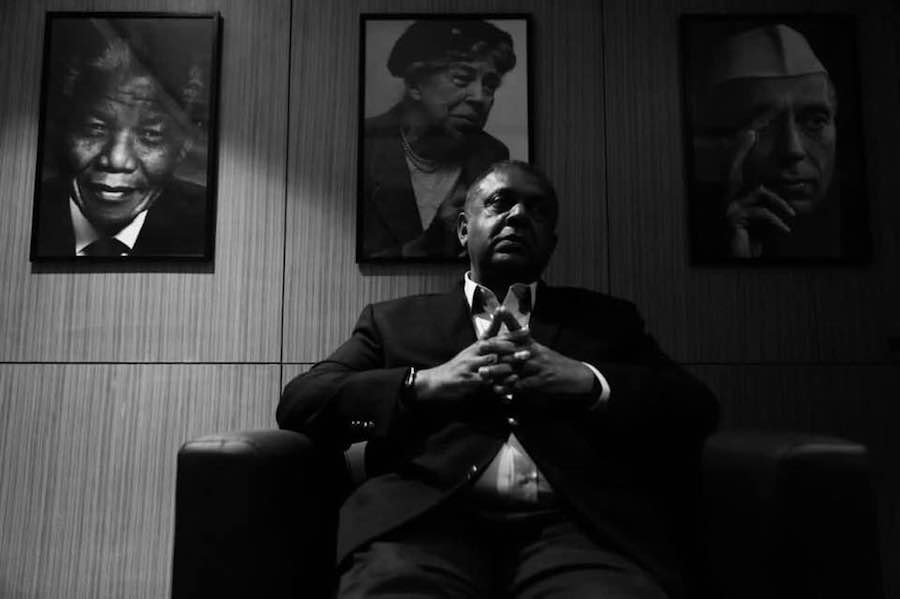
Born into a family of affluent and power, his father, late Mahanama Samaraweera was a cabinet minister of late premier Sirimavo Bandaranaike government and his mother, Khema Samaraweera was active in local politics too. Mangala had his secondary education at Royal College, Colombo before moving on to pursue higher studies at Walthamforest College, London. Being a non-conformist, he drifted away from the traditional school of thought, deep rooted in his motherland, when it came to chosing his future career and in a surprise move, he opted to read for a degree in clothing design and technology at St Martin’s School of Art of London.
Having embarked on a design career, he worked on numerous assignments as a designer and a consultant model during UNP government under Ministry of Textiles from 1977 to 1983. Politics would have been in his blood as suddenly, by a twist of fate, he entered active politics in 1983. Having successfully contested the general elections, he became a member of parliament in 1989 and was appointed Minister of Posts and Telecommunication subsequently, when Chandrika Bandaranaike Kumaratunge came into power in 1994, ending 17 years of UNP regime.
He had a chequered political career from the very outset, and was at the center of controversies but never gave up his own inimitable style of politics. In his political career spanning over 38 years, the government leaders always had trust in him, and they were always impressed by his multi-faceted capabilities and enormous capacities. Therefore, whatever the government, he served, he held most powerful ministerial positions, ranging from urban development, aviation, posts and telecommunication, media, sports, foreign affairs and finance.
Managala Samaraweera too had his ups and downs in his political journey. In 2007, he was sacked form the ministerial position he held under President Mahinda Rajapakse government, along with late Anura Banadaranaike. He was not moved by this act and didn’t take it as a setback either which would certainly speak volumes of his ‘never say die’ attitude and the colossus character. Then, he went on to form his own political party; Sri Lanka Freedom Party (Mahajana) faction in the immediate aftermath. The party was eventually merged with UNP in 2010. He campaigned tirelessly to bring the good governance government (Yahapalana regime) in 2015.
Unfortunately, it was to be the last phase of his political journey. He held two pivotal ministerial posts; Minister of Foreign Affairs and Minister of Finance from 2015-2017 and 2017-2019 respectively. He resigned the latter post just before the Presidential election results were announced in 2019. He further declared that he would not run for another term at the general elections held in 2020 and thus resigned to his homestead with dignity. However, he came forward to voice on certain issues affecting the country, intermittently though he was in a respite from politics. Particularly, he was critical of the present regime for mismanaging the economy of the country leading to insolvency.
After his demise, a plethora of condolence messages poured in, from local and foreign dignitaries. In a strange development, some local politicians became sudden admirers of Mangala Samaraweera although they decried his stances so bitterly when he was living. It was ironic that they admired him for the same norms what they condemned. He was showered praises posthumously for standing firm for peace, reconciliation and liberal democratic policies. He was eventually identified as a true proponent of communal harmony and equality among all races. His relentless contribution to his motherland was also recaptured by many. In fact, he was a game changer in local politics.
It is also noteworthy that he advocated for LGBT (lesbian, gay, bi-sexual and transgender) rights quite openly, declaring himself as a gay to amusement of people who still see it as a social disgrace, being unable to comprehend the global acceptance. He did munch his words on such taboo subjects with scant regard for possible repercussion that would follow. He even attended unofficial gay forums held in Sri Lanka of which the news surfaced much later. In the same ferocity, he asserted that he was a true Buddhist while lambasting Buddhist monks who tow the line of politics. By far, he was indeed the blacksheep in local politics and as one unkown author penned ‘The black sheep is sometimes the only one telling the truth’ would fittingly endorse his inimitable character. May you attain supreme bliss of Niravana, Managala Samaraweera, blacksheep and the great.

“Death will slay with his wings whoever disturbs the peace of the pharaoh”- so reads the inscription on the tablet found in Tutankhamen’s tomb. While sceptics claim that the curse is a hoax, scientists posit that the presence of mould spores inside the ancient burial chambers may have caused the mysterious deaths of pyramid explorers, resulting from an allergic reaction. Still others believe that the curse is real and the tomb builders may have reached down through forty centuries to avenge the desecration of the grave of their king. They argue that when one considers some of the isolated cases of deaths of people who were not directly involved in the opening of the tomb of the pharaoh, the theories of infections, allergies, bacteria, parasites, poison or radiation do not hold water.
Although the Cult of the Dead originated in India, it culminated in Egypt. The obsession of the Egyptians with this cult was such that they erected in the fertile Nile Valley the pyramids-gigantic shells of masonry which house the sarcophagi of their mummified kings, facilitating the entry of royalty, in an intact state of the body, into the hallowed precincts of their chief god Osiris, the god of death, agriculture, afterlife and resurrection. But these pyramids did not remain untouched, for hordes of tomb robbers plundered them of their treasures over the centuries despite the dreadful curses laid by the priests upon those who violate the slumbering peace of the royal departed. At the time of the fall of the Egyptian Empire in 1150 B. C. all the royal tombs had been broken into.
Quite accidentally and fortunately, the tomb of Tutankhamen (1341-1323 B. C.), commonly referred to as King Tut, had not drawn the attention of the thieves. Howard Carter (1874-1939), a renowned English Egyptologist, discovered the tomb on 04th November 1922, financed by Lord Carnarvon. On 22nd February 1923 Carnarvon entered the tomb first, followed by Carter.
Carnarvon had met with an automobile accident in 1901 in Germany, making him unhealthy and weak. As his physician recommended him a warmer climate, he travelled in 1903 to Egypt where he became interested in Egyptology.

Death strikes down people after opening of Tutankhamen’s grave
While the excavation of the resting-place of the young pharaoh was in progress, Carnarvon was bitten by a mosquito. Following an illness, he died at the Hotel Continental in Cairo on 05th April 1923. The cause of death was diagnosed as pneumonia. Carnarvon’s son told that as he entered the hotel room where his father was dying, all the lights suddenly went out and they had to light candles. As this was something curious, they asked the Cairo electric company, but they were unable to give any rational explanation for the lights going out and then on again. The son reported one other strange incident in Highclere, a village in Hampshire, England: Carnarvon died shortly before two o’clock Cairo time. About the same time, Susie, his fox terrier bitch whom his father loved so much, suddenly started howling, sat up on her hind legs (she had lost her front paw in an accident), and dropped dead.
A few years later Carnarvon’s brother committed suicide and another unexplained insect bite caused the death of his stepmother.
Arthur Mace (1874-1928), a Tasmanian-born English archaeologist and Egyptologist, who helped Carter to open the tomb, complained about growing exhaustion. He died after falling into a deep coma which physicians were unable to diagnose.
George Jay Gould (1864-1923), an American financier, travelled to Luxor (ancient city of Thebes, located along the Nile) and to the Valley of the Kings where Carter showed him the sensational discovery of the Tutankhamen’s grave. The next morning Gould was stricken with a high fever and that evening he died of a fatal illness which the doctors later diagnosed as bubonic plague.
Joel Wood, a British industrialist, visited the grave site, went back to England by ship, and died of a high fever.
Archibald Douglas Reid, a radiologist, who was the first to cut the cords around the mummy in order to X-ray the body, suffered from debilitating feebleness and in 1924, upon his return to England, died.
Carnarvon’s wife, Lady Almina, died allegedly of an insect bite in 1929 while Richard Bethell, Carter’s secretary, died the same year under strange circumstances: one morning Bethell was found dead in his bed, of a circulatory collapse. Lord Westbury, his 87-year-old father, on hearing of his son’s death, hurled himself from the seventh storey of his London home. While the corpse was taken to the cemetery, the hearse ran over a little boy.
Alfred Lucas (1867-1945), an English analytical chemist and a member of Carter’s team, was the government chemist employed by the Department of Antiquities in Egypt. He conducted the autopsy on the mummy of Tutankhamen along with Prof. Douglas Derry, another scholar, at the Anatomical Institute of Cairo University in 1925. The examination brought about tragic consequences, as Lucas died soon after from a heart attack, and a little later Derry died of circulatory collapse.
By 1929, twenty-two people who had been directly or indirectly involved in the tomb of Tutankhamen had met with an untimely death. Thirteen of them had taken part in opening the grave. Those who died included Professors Winlock and Foucrat, the archaeologists Garry Davies, Harkness, and Douglas Derry, and the assistants Astor and Callender.
Another legend says that a sailor, who won in a poker game an ornament in the shape of a scarab (a beetle sacred to the ancient Egyptians) from Tutankhamen’s tomb, gave it to his daughter as a birthday present, whereupon he left home again and was lost at sea. The girl, who received the scarab, fell ill and was diagnosed with leukaemia and died shortly thereafter. Her mother, fearing the misfortune the ornament had brought, sold the scarab to another person who too gave it to her daughter. She too contracted leukaemia and died.
The author Philipp Vandenberg in his book Der Fluch der Pharaonen (The Curse of the Pharaohs), written in German, in which he made a stunning investigation into the 4000-year-old secrets of the ancient Egyptians, cites the interesting case of Ezzeddin Taha, a physician and biologist at Cairo University. On 03rd November 1962, Dr. Taha announced in a press conference that he had tracked down the cause of death of the pyramid explorers, attributing it to a harmful disease-carrying fungus that caused feverish inflammations of the respiratory system. He said that this fungus had remarkable resistance to survive in mummies or grave chambers for 3000-4000 years. Itches in the form of skin rashes and laboured breathing had also long been observed in people who had worked intensively with Egyptian papyri. Dr. Taha, admitting however, that infections alone could not account for the deaths of so many scholars, assured that the curse of the pharaohs belonged to the realm of fairy tales and it could be averted by antibiotics. Later Dr. Taha, with two of his co- workers, were driving to Suez. About 70 km north of Cairo, his car suddenly swerved to the left of the straight desert road, right into the path of an approaching car. The doctor and his two aides died on the spot.
The author also recalls his conversation in Cairo’s Omar Khayyam Hotel, with Dr. Gamal Mehrez, the Director-General of the Antiquities Department of the Egyptian Museum of Cairo. Mehrez did not believe in the curse, as he had been involved in tombs and mummies all his life. He said that he was living proof of what was a coincidence. Four weeks after the conversation, Mehrez died of a circulatory collapse at the age of 52.

The bizarre case of the high priestess
Yet, more potent was the curse laid upon those who handled the mummy-case of a high priestess in the Temple of Amon-Ra, who was thought to have lived in Thebes in about 1600 B. C. As the mummy-case was found in an unusually good state of preservation, it was bought by a person named Douglas Murray while he was visiting Egypt many years back, and this curious object was sent off to London. His two companions died during the voyage back to England and they were buried at sea. When the ship arrived in the port of Tilbury the valuable Egyptian curiosities Murray had bought in Cairo had been stolen, except for the mummy-case. Two Egyptian servants who had handled the mummy-case also died within a year. As for Murray, he met with a terrible accident when his gun exploded in his hand unaccountably while being on a shooting expedition up the River Nile. His arm was amputated above the elbow.
When Murray looked at the face of the priestess carved on the mummy-case, her eyes seemed to come alive with a malevolent look at him that turned his blood cold. He hurriedly gave the mummy-case away to a lady whose mother broke her leg and died after months of prolonged suffering. The lady lost her fiancé and her pets died. She fell ill herself with a complaint that could not be diagnosed and lived in constant fear of death. The lady, on the advice of her lawyer who agreed to make her will, returned the mummy-case to Murray, whereupon she recovered from her illness, but Murray, whose health deteriorated, was left with the only option of presenting the accursed relic to the British Museum. But the series of strange events continued: a photographer took pictures of the mummy-case and when developed, it showed living, malevolent eyes in the carved face of the priestess. He died mysteriously a few weeks later. An Egyptologist who looked after the exhibit pending the museum’s decision to accept it, was found dead in bed. It was even said that the British Museum presented the unwanted relic to the New York Museum and despatched it on the ill-starred Titanic. Yet, perhaps it would seem far-fetched to hold the ancient Egyptians responsible for that particular disaster at sea.
But those who take the tomb curses seriously, believe that they apply to the first man who enters the burial chambers. It is also said that those who believe in curses are more likely to be struck down by them. It is worthy to note here that no disaster befell Carter (only his canary-bird, bitten by a cobra, died), who had carried out the real work of exploring the tomb of Tutankhamen. He continued his work until 1939 when he died, aged 64.
Although the Bible teems with curses, they were rare in ancient Egypt. The curses were uttered only by the pharaoh who spoke with divine legitimacy and authority. The lengthy history of Egypt has attested that the ancient Egyptians were the most intelligent people who had ever lived. Even Moses in the Old Testament, who was the leader of the Israelites and the lawgiver, and who saved his nation from the slavery in Egypt, was taught all the wisdom of Egypt. As a baby, he was found in the bulrushes by the bank of the River Nile and was adopted by the daughter of the pharaoh and raised as an Egyptian.
The author Homer and tragedian Euripides, the statesmen Lycurgus and Solon, the philosophers Thales and Plato, the mathematicians Eudoxus and Archimedes undertook voyages from Greece to Egypt to complete their education in these disciplines. Plato even went so far as to call his own people-the Greeks-children as compared to the Egyptians.
Solving the riddle
Vandenberg writes in his book that experiments that have been conducted indicate that certain geometric structures are able to accumulate energy and then give it off in more concentrated form. Scientific concern about this possibility has focused on the Egyptian pyramids. The French radiologist Jean Martial and Czech radio engineer Karl Drbal from Prague experimented with pyramid models and demonstrated the relationships between the pyramid shape and physical processes within it. Martial proved that the pyramids speed up mummification while Drbal confirmed how the exact alignment within a pyramid could sharpen a blunt razor blade. They questioned whether the Egyptian scholars possessed a knowledge of applications of energy which modern science has not discovered as yet. Can pyramid geometry mobilise psychic forces that cause death? Does this provide a clue to the unsolved mystery of the curse?
According to the author, an infection seems to be a plausible reason for the curse and many scientists have preferred to pursue this thought. The American doctors had discovered a disease among explorers of Inca caves in Peru. The disease, named histoplasmosis, is an infection caused by a fungus found in the droppings of bats. It can be fatal if spread all over the body. The cause of the puzzling deaths connected with the pharaohs’ tombs has also been attributed to this disease.
Another explanation for the curse of the pharaohs could be poisonous worms who produce a toxic substance. The poison, reaching the circulatory system of the victim through the intestinal blood vessels, destroys the red corpuscles, leading to anaemia. However, no deaths have been reported amongst archaeologists from the poison of these parasites, although it may cause desperate exhaustion.
Poison too has been cited by him as a much more tenable theory, considering the great Egyptian achievements in toxicology. Menes, the first pharaoh, grew poisonous plants around 3000 B. C. and had their efficacy recorded. Cleopatra (69-30 B. C.), the last ruler of the Ptolemaic Kingdom of Egypt, was a master mixer of poisons. The Roman General Marcus Antonius or Mark Antony (83-30 B. C.) ate with Cleopatra, his lover, only in the presence of a taster.
It would be equally safer to guess at the presence of poisonous gases and vapours, in precipitated form, in the burial chambers of the pharaoh. Such powerful poisons as aconite, arsenic and conium were used to paint artifacts and walls. In the airtight tombs, such vapours could precipitate and never disappear, damaging the health of those who come into contact with them, Vandenberg says.
According to chemists and bacteriologists, microbes that can survive for millennia, if given the right conditions, could be another possible explanation for the curse. Some bacteria become dangerous only after dying, when they secrete toxins that cause all kinds of diseases-especially meningitis. The pharaohs’ rock tombs and pyramids were ideal breeding grounds for bacteria.
Finally, the author quotes Prof. Luis Bulgarini, the well-known atomic scientist, who, to the surprise of archaeologists, said in 1949 that the priests and wise men of ancient Egypt understood the laws of atomic decay and were familiar with uranium. Bulgarini said that the Egyptians may have resorted to radiation to protect their sacred places, adding that the floors of the tombs could have been covered with uranium or the graves could have been finished with radioactive rock. ***
]]>Otto Adolf Eichmann was born in 1906 to a Calvinist Protestant family in Solingen, Germany. He attended the State Secondary School in Linz, Austria. It was the same school which Adolf Hitler had attended about 17 years before. He joined the Nazi party in 1932 and rose up in ranks when his superior officers noted his skills and efficiency. During the outbreak of the Second World War, he was a Lieutenant Colonel in the Gestapo. On 20, January 1942, Eichmann participated in the “Wannsee Conference” where all top officials of Nazi Germany gathered to find a “final solution of the Jewish question” under the dreaded high ranking officer- Rienhard Heydrich the director of the Reich Main Office.
May 1945 Germany surrendered and the war ended in Europe. Eichmann managed to escape from American custody in 1946. With the help of sympathetic Catholic priests, he succeeded in fleeing to Argentina via Genova Italy. There he changed his name to Ricardo Klement, found a job at the Mercedes – Benz Company in Bueno Ares.
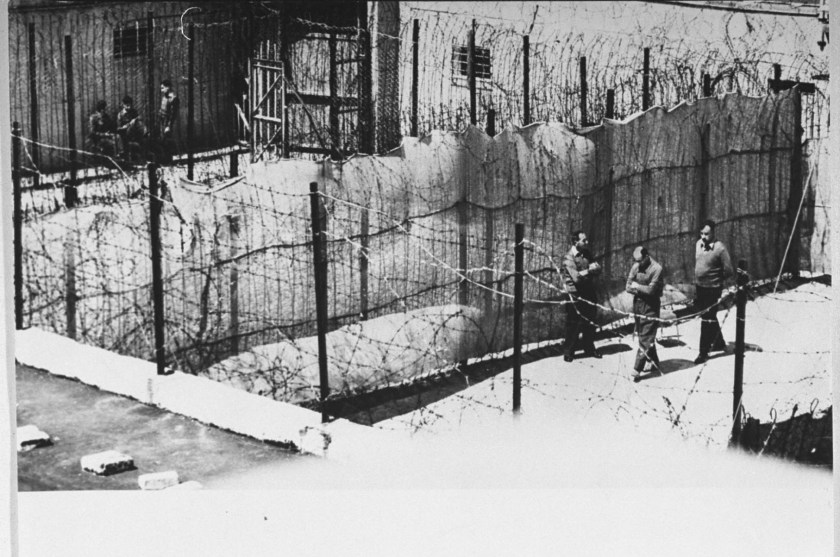
Meanwhile, the state of Israel and Holocaust survivors were looking for justice. Their intention was to bring all Nazi war criminals to trial. In 1960 the Israeli intelligence service was tipped of Eichmann’s presence in Argentina. After much verification and reassurances, it was confirmed that it was Eichmann indeed. Plans were made to dispatch a special team to Argentina for his capture and return to Israel. Many books and movies have revealed the full story of this daring operation hence the writer will not get into the mission details. Eichmann was captured on May 11, 1960, by the Israeli team when he was returning home after work. On 20, May he was flown out of Argentina secretly
Argentina was furious and called for an urgent meeting of the United Nations Security Council in June 1960 in the wake of fruitless negotiations with Israel. At the council the Israeli representative Golda Meir (later prime minister of Israel) countered the accusation of the Argentinian authorities of violation of their sovereignty by arguing that the abductors of this fugitive were not Israeli agents, but private individuals and hence, this incident was only an “isolated violation of Argentinian Law”. Later Argentina and Israel issued a joint statement on August 3, admitting the violation of territorial integrity of Argentina, but agreeing to end the dispute.

Gideon Hausner the attorney general of Israel, signed a bill indictment against Eichmann on 15 accounts, including crimes against Jewish people and crimes against humanity. The trial began on April 11, 1961, and the prosecutors called witnesses to testify and presented hundreds of documents as proof. Israel and the rest of the world listened to the unspeakable horrors committed against humanity by Germany and its Nazi leaders.
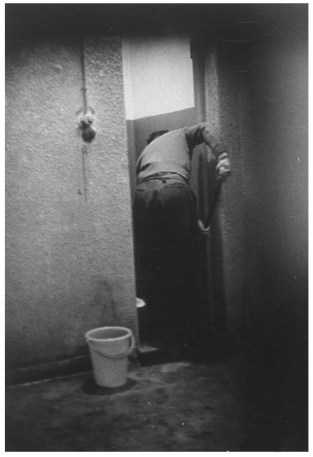
Otto Adolf Eichmann was found guilty on December 12, 1961, and was sentenced to death by hanging. Eichmann petitioned Yitzhak Ben-Zvi, the second president of Israel (from 1952-1963), along with Eichmann’s wife Vera and brothers for clemency. Prime Minister David Ben-Gurion convened a special cabinet meeting to resolve the issue. The cabinet decided not to grant presidential clemency to Eichmann.
On May 31, 1962 just before midnight the sentence was carried out at Ayalon prison, Ramla, Israel. His execution was attended by a few officials, four journalists and a Canadian clergyman, his spiritual counsellor while he was in prison. After his body was cremated, the ashes were scattered in the Sea beyond Israel’s territorial waters.
]]>