Autism and its early detection
On the second of April every year the world lights in blue to spread awareness on Autism or Autism Spectrum Disorder (ASD) and the rights of individuals’ worldwide living with ASDs. According to the World Health Organization, 1 in 270 individuals worldwide experience ASDs (1) and Sri Lanka reports a prevalence of 1 in 93 children as having ASDs (2). ASD is a neurodevelopment disorder which begins during early childhood and may persist into adolescence and adulthood. ASDs in children can often be identified and diagnosed during the ages of 2-3 years or even as early as 6 months. Several factors including the interaction of genetic and physiological factors especially when combined with a non-stimulating environment is seen as prominent in influencing the development of this group of diverse disorders.
ASDs are characteristic of deficits in social communication and social interaction across multiple contexts as well as restricted, repetitive patterns of behaviour, interests or activities. These characteristics often affect the social development of those who experience ASD as they may lead to;
- reduced ability in effectively communicating with others
- reduced sharing of emotions
- reduced interest in actively listening to another party during conversations
- reduced maintenance of eye contact when interacting with others
- difficulty in initiating and maintaining friendships
Due to the aforementioned factors, the relationships between children with ASD and their parents/primary caregivers and peers may seem distant. However, though social development may be affected, it is noteworthy that hindered intellectual development is not characteristic of ASDs, even though it can act as a co-occurring condition.
Children with ASD may prefer spending time on their own and in doing so they may prefer playing with a certain part of a chosen toy (e.g. the wheels of a toy car) or an object with a lot of attention directly focused on it. They may also prefer arranging certain items or their toys in a
preferred order. These can be a result of the need for a strict and familiar schedule that is characteristic of ASDs which makes it uncomfortable for them to experience novelty where the need for routine makes it challenging to adapt to new activities. Below are some red flags that will help in identifying symptoms of ASD from an early stage and may signal the possibility of ASD.

Signs in toddlers and infants
- At 6 months – the child does not reciprocate smiles given by others and is not able to understand when others are trying to interact with him/her.
- At 6 – 12 months – the child does not give or maintain eye contact with those who try to connect/communicate with him/her, the child does not communicate through smiles, cries, or any other form of communication other than speech, as commonly noticed by caregivers the child does not respond to their name being called despite of having normal hearing
- At 12 months – the child does not point at things and express his/her needs
- At 12 months – the child does not say single words
- At 24 months – the child finds it difficult to form meaningful sentences which may at least consist of two words
- At any stage of childhood – observed loss of developmental skills (social skills, speech skills) acquired during early childhood.
Signs that may indicate ASD at any stage
- An inability to maintain eye contact may be visible – however, it is noteworthy that this alone should never be considered symptomatic of ASD and those who experience shyness, social phobia as well as hearing difficulties too can show a lack of maintaining eye contact during interpersonal interactions.
- Complete lack of speech skills or late development of speech skills.
- Preferring to spend time alone or stay isolated.
- Difficulty interacting with others, esp. on an emotional level.
- Repeating the same word or phrase continuously
- Inability to adapt to changes in the daily routine or changes that may happen in their surroundings.
- Exclusive interest in a limited number of things or one chosen thing
- Repetition of activities (e.g. showing behaviours such as rotating in the same place)
- Hypersensitivity or hypersensitivity to noises, tastes, smells, light, and colours
However, it is noteworthy that individuals without ASD may show similar behavior and most importantly everyone who experience ASD may not collectively show all these symptoms. Therefore it is advisable to consult your physician in case you see such characteristics in your child. It is also important to attend routine checkups with your paediatrician to understand the developmental milestones your child is reaching and to see if any deviations have happened so that developmental delays/disorders can be detected and addressed early.
While medicine will not cure ASD, professional interventional methods ensure successful management of it. These include speech therapy, occupational therapy, social skill-building, evidence based psychosocial interventions such as behavioural therapies and engaging parents in the management process. Moreover, to ensure the right of education for every child, engaging the school systems in such interventions can also be immensely helpful as it will collectively help the child to adjust to situations better and improve their social skills. If you have concerns about this
condition it is always best to visit a psychiatrist, a psychologist or your child’s paediatrician for further professional advice.
Omella Outschoorn BSc (Hon) Psy (UK), MPhil in Clin Psy. (Col, SL)
Clinical Psychologist | Assistant Researcher, Faculty of Medicine,
University of Colombo, Sri Lanka
World Health Organization. Autism Spectrum Disorders. 2021. Available from: Autism spectrum disorders (who.int)
Perera H, Wijewardena K, Aluthwelage R. Screening of 18–24-month-old children for autism in a semi-urban community in Sri Lanka.
Annals of Tropical Pediatrics. 2009;55(6):402–405. doi: 10.1093/tropej/fmp031.
]]>The term “spa” currently applies to a few concepts with some ambiguity.
It encompasses a wide range of services and experiences, and can mean everything from a small facial and massage business to expansive destinations of pampering. .
“I don’t go to relax; I go to get rehabilitated,”
The word spa was first used as far back as the eras of Ancient Greece and Rome to describe naturally occurring thermal springs. These locations of bathing and relaxation were believed to benefit health and wellbeing, and in this sense not much has changed to date. Spas remain havens of luxury; the only difference today is that they have changed shape and form to fall into various different categories. Our top voter recommendations.

Centara Ceysands Resort & Spa
- Laying between the Bentota River and the Indian Ocean. You reach the hotel via boat from across the river and welcomed into complete beachside luxury. Being a Thai chain, they provide Thai massages too.
Santani Wellness Resort & Spa
Surrounded by misty blue mountains, the resort offers soul sacred healing powers. Detox treatments, yoga and Ayurvedic wellness treatments specializes to suit your personal body type.

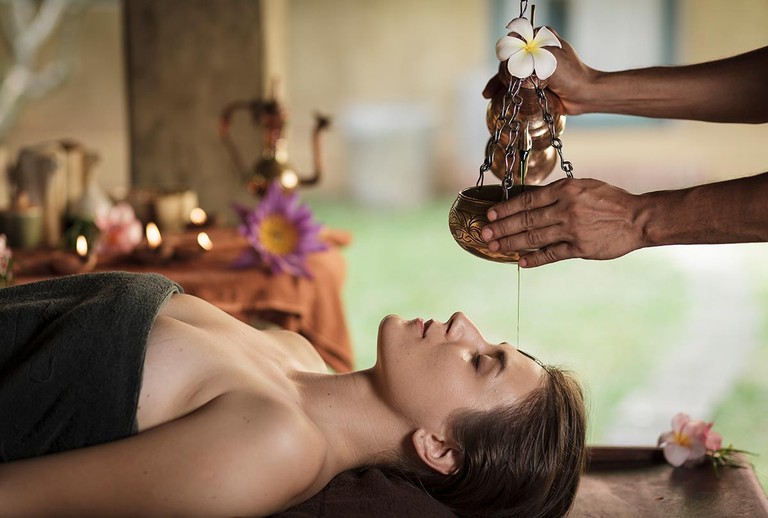
TOP 10 BENEFITS OF SPA TREATMENTS
1. HELPS TO DE-STRESS
It goes without saying that visiting a spa is a fantastic way to relax and de-stress. A visit to the spa offers a great opportunity to separate yourself from life’s everyday stressors and have some precious ‘me time’. Allowing yourself this time to wind down and relax has so many additional benefits, such as a clear mind and increased productivity once you leave your treatment!
2. HELPS WITH ANTI-AGEING
Many spa treatments can actually help with anti-ageing. Facials are known to help delay and prevent the onset of wrinkles by stimulating skin cells and hydrating the skin. Additionally, generally giving yourself time to relax and de-stress is a great anti-ageing technique in itself! It can be hard to afford the time for relaxation day-to-day, but assigning yourself some time to do so at the spa can be extremely advantageous.
3. PROMOTES A BETTER SLEEP
If you struggle with sleep, one of the many benefits of a spa trip is that many treatments can help you to catch more of those valuable Z’s. Massages completely relax your muscles and lower your blood pressure, also helping you to maintain a healthy heart rate, all of which contribute to a better night’s sleep.
4. RELIEVES ACHES AND PAINS
General aches and pains are a common occurrence for many, with exercise, sleeping on an unsupportive mattress, and sitting for long periods of time at a desk all contributing to them. A great way of relieving these aches is via a relaxing massage, either full body or one that focuses on your problem areas, which helps to fully relax the muscle tissue.
Our Hot Stone Massage, Swedish Massage, Deep Muscle Massage and Muscle Reviver are all fantastic at massaging out those nuisance aches and pains.
5. SUPPORTS WEIGHT LOSS
There are various theories when it comes to the relationship between spa treatments and weight loss, but many support a relationship between the two. Hot spa treatments open up the skin’s pores, help the body to ward off toxins, and also encourage the body to burn calories. Additionally, deep tissue massages can help the body to break down fatty deposits through the pressure and friction exerted on the skin.
Of course, all of these would need to be in conjunction with diet and exercise to have a profound effect, but it’s rather nice knowing that you’re burning a few calories and fighting off that cellulite during your lovely massage!
6. IMPROVED BLOOD FLOW AND CIRCULATION
Another fantastic benefit of a body massage, particularly when having them frequently, is that they regulate your blood pressure and also improve your blood circulation. This has many advantageous effects to your health, including support with helping the body to fight off illnesses. For more benefits of improved blood circulation.
7. PREVENTING VARICOSE VEINS
Being on your feet all day can really start to take its toll on your body. Standing up for long periods of time is linked to developing varicose veins, which are swollen and enlarged veins. However, leg massages can help to prevent varicose veins from developing in the first place. If you’re on your feet all day, treat your legs to the massage they deserve!
8. INCREASED HAPPINESS
Among the many benefits of spa treatments is the biological effect it has on your body, particularly in regards to your happiness levels. Massages at the spa are known to release serotonin, which is the hormone associated with happiness, and thus helps to improve your mood once your massage has finished! This doesn’t just have an effect post-massage, but you can reap the benefits of this boost for the following days too.
9. REDUCED FREQUENCY OF HEADACHES
Many of us are prone to headaches every now and then, but they can become particularly more frequent during periods of high stress. Luckily, one of the brilliant benefits of visiting a spa is that many treatments, such as head massages and hand massages, can contribute to decreasing the frequency of headaches. The reason behind this being that massages help to relieve the tension that often causes headaches in the first place.
10. PROMOTES RADIANT SKIN
If you have problem skin or your face is feeling particularly dry, a facial can help to thoroughly clean and hydrate the skin by giving it the nourishment it needs to look bright and glow. During winter, the harsh outdoor elements combined with home and car heating can take its toll on your skin and dry it out. However, a quality facial can help to relieve this by thoroughly cleaning and hydrating the skin.
We, alongside our wonderful ESPA products, offer some fantastic facials to rejuvenate your skin. Having expert therapists using quality products is imperative for allowing you to get the most out of your facial, which is why we offer only the best!
